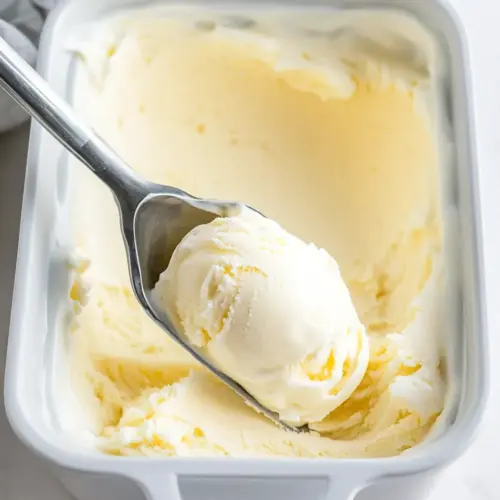
Vanilla Ice Cream Recipe
Vanilla Ice Cream Recipe is a creamy, classic custard style ice cream with a rich texture and true vanilla aroma. This easy dessert feels both indulgent and simple, perfect for summer gatherings or a cozy night in. The custard base yields a smooth scoopable finish, making it an ideal easy weeknight dessert to impress guests and family members alike.
Equipment
- Medium sauce pot
- Cooking thermometer
- Fine-mesh strainer
- 2 quart storage container
- Ice Cream Maker
Ingredients
- 2 cups heavy cream Provide a rich, creamy base and contribute to the velvety mouthfeel of the ice cream; heavy cream brings necessary fat that enhances flavor and texture. Use chilled cream for a smoother churn and to help stabilize air incorporation during freezing. When combined with milk and eggs, heavy cream creates a luxurious body and prevents iciness in the final product.
- 1 1/2 cup s2% milk Offer a lighter dairy component that balances richness while adding body to the custard; 2% milk supplies water content and natural sugars. Incorporate milk with cream to achieve a scoopable consistency and to moderate the overall fat level. Ensure milk is fresh and cold to maintain a stable emulsion during heating and cooling steps.
- 3/4 cup granulated sugar Sweeten the custard base and aid in melting point depression, which keeps the ice cream scoopable; granulated sugar dissolves during heating to create a smooth texture. Adjust sugar carefully for desired sweetness and freezing properties, since sugar also affects firmness. Dissolve sugar fully into the milk and cream to avoid grittiness in the finished ice cream.
- 7 egg yolks Enrich and thicken the custard while adding a rich, custardy flavor; egg yolks act as natural emulsifiers and stabilizers, creating a creamy, smooth texture. Temper yolks with warm dairy to prevent curdling, then gently cook to the proper temperature to achieve a safe, pourable custard that coats the back of a spoon. Properly cooked yolks ensure body without a cooked eggy taste.
- 1 tablespoon vanilla extract Impart aromatic vanilla flavor and round out the sweetness; vanilla extract provides the classic flavor profile associated with vanilla ice cream. Add vanilla after removing the custard from heat to preserve its delicate aroma and prevent loss of volatile compounds. Use high-quality extract for a clean, pronounced vanilla character.
- 1/2 teaspoons ea salt Enhance and balance overall flavor by subtly elevating sweetness and reducing flatness; salt rounds out the profile and accentuates other flavors. Dissolve salt into the dairy mixture so it integrates evenly throughout the custard. Use measured amounts to avoid detectable saltiness while improving depth and complexity.
Instructions
- Set a medium-sized sauce pot over medium heat. Clip a cooking thermometer to the side of the pot.: The aroma when the pot warms is subtle, a faint steaminess that signals the dairy will heat gently. Use medium heat so the mixture warms evenly without scorching, and clip a cooking thermometer to the side for accurate monitoring. You should hear a soft simmer start, not a violent boil, which helps dissolve sugar and bring warmth without curdling. The reason this gentle approach matters is it preserves the smoothness of the dairy, preventing proteins from tightening too fast and creating grainy texture. A common mistake is cranking the heat, which leads to hotspots and possible scalding of the milk and cream.
- Add the heavy cream, milk, and sugar. Stir and warm until all the sugar has dissolved into the cream mixture.: As you pour in the heavy cream and the fixed spacing 1 1/2 cup 2% milk , the mixture looks glossy and slightly viscous. Stir continuously to dissolve the granulated sugar , feeling the graininess disappear as the sugar integrates. This stage smells like warm cream and sugar, comforting and mellow. Stirring evenly ensures uniform heat distribution, which prevents localized overcooking and helps the sugar dissolve fully. If you stop stirring, the sugar can settle and cause uneven sweetness or burning at the pot bottom.
- Whisk in the egg yolks, one at a time, to make sure it is fully incorporated before adding the next one. Once all the egg yolks are well combined, stir and watch the temperature. Once it reaches 165-170 degrees F, remove from heat. Then stir in the vanilla extract and salt.: When you start adding the egg yolks , do it one at a time while whisking constantly. The custard will feel silkier as yolks blend in. If you add yolks too quickly, you risk scrambling them, which creates small cooked bits. Use a tempering motion by slowly incorporating warm dairy into the yolks before returning them to the pot to avoid curdling. The sound is quiet now, with occasional tiny bubbles, and the color deepens toward a custardy yellow. If the mixture thickens too fast, reduce heat slightly to maintain control.
- Set a fine mesh strainer (sieve) over a 2 quart storage container. Pour and strain the ice cream mixture into the container, to remove any cooked egg particles. Cover and refrigerate until the mixture is COLD. (The colder the mixture is when you add it to the ice cream maker, the better the texture will be. Sometimes I make the mixture the night before I need it.): The temperature window is crucial, the custard will thicken and coat the back of a spoon. At this point you notice steam and a fragrant, warm sweetness in the air. Removing from heat at the advised temperature preserves silkiness without scrambling the eggs. Stir in the vanilla extract and salt immediately so the flavors marry while the custard cools. A frequent error is overheating past 170 degrees F, which risks curdling and a grainy texture, requiring straining and possibly more chilling to recover.
- Pour the cold ice cream mix into a 1.5-2 quart ice cream maker. Churn the ice cream for 25 minutes, or according to the settings on your machine.: Pouring the hot custard through a fine mesh captures any tiny cooked egg particles, leaving a glossy, smooth liquid. The act of straining also aerates slightly and releases a warm, rounded scent of vanilla extract . Cover the container and refrigerate until the mixture is cold, because chilling helps the fats firm and the flavors meld, which improves the final texture when churned. A common mistake is skipping the chill, which leads to poor incorporation of air in the ice cream maker and a denser, icier result.
- Move the ice cream back to a clean storage container. Cover and freeze until ready to serve.: As you transfer the chilled custard, you will see it move like thick silk into the churn. Churn for about 25 minutes or according to your machine, watching as the mixture transforms into soft, billowy ice cream. The sound is rhythmic, and the texture evolves from liquid to a thick, spreadable cream that clings to the paddle. This mechanical action incorporates air and freezes small ice crystals, creating the smooth texture you want. Mistakes to avoid here include churning a too-warm mix which prevents proper aeration, or over-churning which can lead to an overly firm or icy finish.
- Move the ice cream back to a clean storage container: After churning, transfer the soft ice cream into a clean container, smoothing the top for even freezing. You will notice a bright, cold aroma and a creamy sheen on the surface. Cover and freeze until fully firm, which allows the interior to stabilize and the texture to set to scoopable hardness. Leaving it uncovered can create freezer burn or ice crystals on the surface, so ensure an airtight seal. If you freeze immediately without smoothing, you might end up with uneven texture due to trapped air pockets.
Notes
- Chill overnight for best texture, when the custard is cold it churns into smaller ice crystals and a smoother finish.
- Whisk slowly when tempering to avoid scrambled egg yolks, add warm dairy gradually to keep the custard uniform.
- Use a fine mesh strainer to catch imperfections, this step ensures a silky mouthfeel without cooked bits.
- Follow machine guidelines for churn time, different makers have distinct paddles and freeze times that affect final density.
- Freeze in a shallow container to speed up firming and reduce large ice crystal formation, smoothing the surface before sealing helps too.
- Softening tip let the ice cream sit at room temperature for up to 10 minutes before scooping for easier serving and better texture.