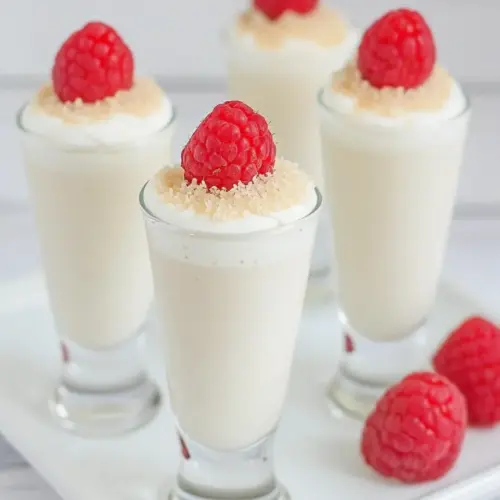
Vanilla Bean Cheesecake Shooters
Vanilla Bean Cheesecake Shooters are creamy, airy, and easy to make, offering individual portions of silky cream cheese folded with whipped whipping cream and brightened with lemon juice and fragrant vanilla bean paste. Perfect for casual gatherings or special occasions, these mini desserts deliver a delightful contrast of textures and an elegant presentation that invites you to make them again and again.
Equipment
- Mixing Bowls
- Electric Mixer
- Piping bag or spoon
- Shot glasses or small glasses
Ingredients
- 4 ounce s cream cheese, at room temperature Soften to room temperature and provide a rich, creamy base for the cheesecake mixture, ensuring smooth texture when beaten with sugar and flavorings. Balance sweetness and acidity from lemon while contributing structure to hold the shooter layers together. Allow for easier incorporation with whipped cream to create a light, velvety consistency.
- 1/2 cup sugar Sweeten the cream cheese mixture to taste while helping to dissolve and integrate flavors, creating a uniform, dessert-worthy profile. Assist in achieving the proper consistency and mouthfeel by interacting with the fat in cream cheese and whipped cream. Help to slightly stabilize the filling so it sets nicely in shooter glasses.
- 1/2 teaspoon vanilla bean paste (may substitute extract, if desired) Add concentrated vanilla flavor and aromatic flecks that elevate the cheesecake’s profile, enhancing the overall sensory experience with warm, floral notes. Provide more intense and stable vanilla character than extract, complementing the tanginess of lemon. Can be swapped with extract if necessary, though paste adds visible vanilla specks.
- 1 tablespoon freshly squeezed lemon juice Brighten and balance the richness with fresh acidity, cutting through the fat and adding a subtle citrus note that enhances other flavors. Contribute slight tang that helps the cheesecake feel less cloying and promotes a cleaner finish on the palate. Aid in setting the mixture slightly by reacting with the dairy components for improved texture.
- 1/2 cup whipping cream, whipped Whip to soft peaks and gently fold into the cream cheese base to lighten the texture, creating an airy, mousse-like filling ideal for shooters. Add volume and a delicate mouthfeel while tempering the density of the cream cheese, resulting in a smoother, more luxurious bite. Help stabilize the final layer so it holds shape when spooned into glasses.
- Graham cracker crumbs, optional Provide optional buttery crunch and textural contrast when sprinkled as a base or topping, offering classic cheesecake flavor notes without altering the filling. Allow customization of sweetness and crunch level depending on the amount used, making each shooter more visually appealing and varied in texture. Serve as a convenient gluten-containing crust alternative for individual servings.
- Fresh berries and mint to garnish, if desired. Garnish with bright, fresh fruit and aromatic mint leaves to add color contrast, fresh acidity, and herbal brightness that lift the dessert. Offer optional flavor complements that cut through richness and provide visual appeal for presentation, making each shooter look finished and inviting. Allow personalization with seasonal berries and varying mint varieties for different flavor accents.
Instructions
- In a medium bowl, whip cream cheese and sugar till lightened. Mix in vanilla bean paste and lemon juice. In a separate bowl, whip cream to firm peaks. Fold together cream cheese mixture and whipped cream.: The mixture should smell faintly tangy and sweet, with the cream cheese softening into a smooth, pale mass that loses its cold firmness. You'll notice a subtle change in texture as the sugar dissolves into the cream cheese , and the beaters will move more freely when the mixture is properly aerated. Why this matters: aerating the cream cheese makes the final filling lighter, helping it meld seamlessly with whipped whipping cream . Troubleshooting: if the mixture looks lumpy, the cream cheese was too cold; let it sit a bit and then rewhip gently. Sensory cues include a faint sweet aroma and a glossy, soft consistency rather than a dense block.
- Spoon some graham cracker crumbs into the bottom of 4-8 shot glasses (mine held 1 1/2 ounces) or other small glasses (optional). Fill or pipe cheesecake mixture into glasses. Chill one hour before serving.: At this point the paste releases little dark flecks and a warm, fragrant perfume that brightens the whole bowl, while the lemon juice adds a citrusy lift that cuts through the richness. You should hear a quieter, smoother hum from the mixer as liquids incorporate, and the mixture may thin slightly, showing a sheen. Why this matters: the acid balances the fat from the cream cheese and helps keep the flavor lively rather than flat. Troubleshooting: if the acid causes the mixture to appear curdled, you likely added too much or mixed too aggressively; a few gentle stirs and a short rest will usually harmonize it again. Visually, the flecks of vanilla bean paste should be evenly distributed and the aroma should be inviting and balanced between sweet and bright.
- Garnish with a berry or a berry slice and mint, if desired.: You will hear the mixer intensify and see the whipping cream transform from glossy liquid to a billowy cloud that holds shape. Firm peaks mean the cream stands up when you lift the beaters and shows a rounded tip, but it still looks smooth and silky. Why this matters: firm peaks give structure when folded into the denser cream cheese base, creating a mousse like texture that is light yet stable. Troubleshooting: stop just before overwhipping to avoid graininess or separation into butter. Sensory notes include a sweet dairy scent and the visual cue of stable peaks that gently wobble but do not collapse.
- Fold together cream cheese mixture and whipped cream: As you fold, you'll notice the mixture becoming uniform and cloudlike, with the pale cream cheese base taking on an airy lift from the whipped whipping cream . Use a gentle under and over motion so you preserve the air; you should feel a silky resistance as the two components combine, and a glossy finish should develop. Why this matters: gentle folding keeps the mixture light without deflating it, which is essential for the delicate mouthfeel of the shooters. Troubleshooting: vigorous stirring will make the filling dense and heavy, so always fold slowly. Sensory signals include a tender, mousse like texture and a balanced vanilla and lemon scent that is neither too sharp nor too sweet.
- Spoon some graham cracker crumbs into the bottom of 4 to 8 shot glasses or other small glasses: When using Graham cracker crumbs , press a thin layer into the base of each glass so you get a slight crunch against the creamy top. The crumbs should smell toasty and sweet, providing a textural point of contrast that perks up each bite. Why this matters: that crunchy base keeps the experience interesting and echoes a classic cheesecake crust without overwhelming the mini portion. Troubleshooting: avoid adding too many crumbs or they will dominate the delicate filling; a light layer is usually enough. Visual cues include a neat, even crumb layer that creates a clear line once the filling is piped or spooned over it.
- Fill or pipe cheesecake mixture into glasses: The filling should glide smoothly from your spoon or piping bag, settling into the glass with a satiny surface that reflects light slightly. Piping gives a neat, professional look and creates uniform servings, while spooning is quicker and more rustic. Why this matters: consistent portions ensure even chilling and a cohesive presentation. Troubleshooting: if the mixture seems too loose, a short chill will firm it up before filling; if too stiff, give it a gentle fold to loosen it. Sensory notes include the soft sweet scent of vanilla and cream, and the visual of a perfectly smooth top that invites garnish.
- Chill one hour before serving: As the shooters chill, they set into a creamier, firmer texture where flavors meld and the filling takes on a spoonable consistency. You may notice the aroma becomes more integrated, less raw, and the surface may develop a slight sheen. Why this matters: chilling stabilizes the structure so the shooters hold their shape, and chilling also improves the flavor by harmonizing the ingredients. Troubleshooting: do not rush this step; insufficient chilling yields a runny filling. Visual cues include a firmer profile and a slightly matte top rather than a wet, glossy surface.
- Garnish with a berry or a berry slice and mint, if desired: A single berry perched on top adds bright color and a burst of tang, while a small sprig of mint brings a fresh herbal note and a fragrant finish. The garnish should sit lightly on the chilled surface and smell bright and fruity. Why this matters: a fresh garnish lifts the look and flavor, offering contrast to the creamy base. Troubleshooting: avoid overly heavy garnishes that can sink into the filling; choose small, fresh pieces for best results. Sensory cues include a fresh fruity aroma and a pleasing pop of color against the pale filling.
Notes
- Highlight the vanilla: Use high quality vanilla bean paste so the flecks and aroma shine through, giving a gourmet touch without changing technique.
- Make ahead advantage: Prepare the filling and store it covered in the refrigerator for up to 24 hours, then fill glasses just before guests arrive for the freshest presentation.
- Layer for texture: Spoon a small amount of Graham cracker crumbs first, then alternate filling and crumbs for bites that shift between creamy and crunchy.
- Uniform servings: Use a piping bag or a small scoop for even portions, which helps the shooters chill uniformly and look polished on the table.
- Fresh garnish: Add a single berry and a tiny sprig of mint right before serving to keep appearance and aroma at their peak.
- Temperature matters: Keep the shooters chilled until the last moment; the contrast of cold filling and room temperature garnish is a small but impactful detail.