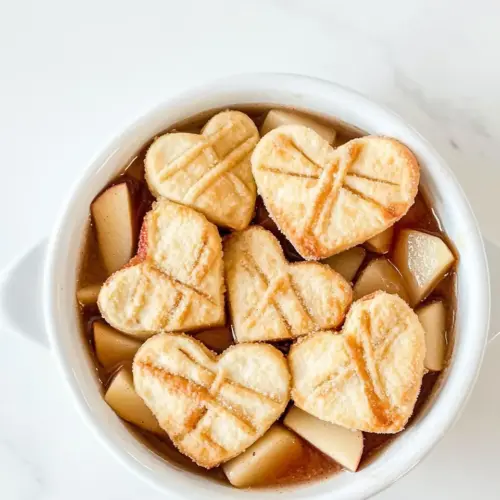
Vanilla Apples with Sweetheart Croutes
Vanilla Apples with Sweetheart Croutes combine tender, vanilla scented apples and crisp heart shaped white country bread for a simple yet elegant treat. Sweet, slightly caramelized fruit meets buttery, golden croutes in an easy, quick dish that works for breakfast or a light dessert. This easy recipe makes a charming, cozy option for an easy weeknight or special morning.
Equipment
- Large Skillet
- Cookie Cutter
- Knife
- Platter
Ingredients
- 3 tablespoons butter, divided Melted and divided for browning and flavor, provides richness and helps toast the bread edges; use part to sauté apples until tender and part to brown the heart-shaped croûtes for a golden, buttery finish.
- 2 large Gala apples (or another variety of red apple) Sliced into rounds or wedges and retained with skins for texture and sweetness; cooking down with butter and vanilla delivers tender fruit that complements the crunchy croûtes and contributes natural juice and body to the dish.
- 2 tablespoons vanilla extract Pure and aromatic, infuses the cooked apples with warm floral vanilla notes; stir in during cooking to meld flavors and enhance the dessert’s overall sweetness and perfume.
- 3 slices white country bread, cut into heart shapes with a cookie cutter Cut into heart shapes to create visually appealing croûtes that crisp when toasted; press slightly before toasting and brush with butter so they achieve an even, golden surface to pair with the apples.
- sugar, for sprinkling (optional) Optional sprinkled lightly for added sparkle and surface sweetness; apply after toasting to provide a slight crunchy contrast and enhance perceived sweetness without altering texture significantly.
Instructions
- Melt 2 tablespoons of the butter in a large skillet.: The skillet will sing as the butter liquefies, producing a nutty scent and a glossy surface. Listen for a gentle hiss when the pan is hot enough, it means you are at the sweet spot for sautéeing. This warming stage is essential because it primes the pan so the apples begin to brown instead of sticking. A common mistake is using too high heat which makes the butter darken quickly, give it a moment and keep the flame moderate to avoid bitter notes. Swirl the butter so it coats the pan and watch the edges for tiny foam bubbles, that signals readiness.
- Core and finely slice the apples (leave the peel on if your intended eaters will go for that - otherwise, peel the apples first). Add them to the skillet, cooking for about 3 minutes, then add the vanilla and cook for about another 5 minutes total, turning once (until browned). Remove the apples to a platter.: As the butter warms, you will notice a sweet, fresh aroma from the sliced apples . Finely sliced pieces release juices faster and soften evenly, creating tender, lightly caramelized edges. Leaving the peel on adds visual contrast and a faint chew, while peeling yields a silkier texture. Watch the fruit in the pan for tiny beads of syrup forming, that is your cue the sugars are concentrating. Avoid overcrowding the skillet otherwise the slices will steam instead of browning, which will rob them of golden color and caramelized flavor.
- Add the remaining 1 tablespoon butter to the pan and quickly fry the sweetheart croutes until browned and slightly crisp.: In this early sear stage the apples will begin to turn translucent at the edges while their centers remain firm, and you may hear a soft sizzle as their juices mingle with the butter . This short, controlled cook keeps texture intact and builds initial color. Keep the heat at medium so the fruit gently softens rather than collapsing. A usual oversight is moving the slices too often, which prevents proper browning; let them sit briefly so they can form light caramelized surfaces.
- Arrange the croutes on the plate with the apples; sprinkle with sugar (if using).: Introducing the vanilla at this point fills the pan with a warm, floral scent that mingles with the developing caramel from the apples . As you turn the slices once, look for even golden brown patches and a syrupy glaze forming on the surface, that indicates the sugars have concentrated properly. The gentle turning preserves shape and ensures both sides pick up color. Be careful not to overcook, because too long will make the slices overly soft and lose their pleasant bite.
- Remove the apples to a platter: When you lift the apples out, they should glisten and show slightly deepened color, leaving fragrant drips in the pan. Resting them briefly on a platter lets them settle so juices redistribute and they hold a good shape against the croutes. If you pile them too high they will steam and soften further, so arrange them in a single layer when possible. A common slip is serving them directly from the pan while still bubbling, which can cause juices to run and dilute the crispness of the croutes.
- Add the remaining 1 tablespoon butter to the pan: That extra butter revives the pan and adds a fresh gloss for browning the bread. The moment it hits the surface you will hear a lively sizzle, signaling the right temperature for quick toasting. This last bit of fat ensures the croutes crisp nicely and pick up a golden edge while taking on the pan's lingering vanilla and apple notes. Watch closely because bread can go from golden to burned in a heartbeat if left unattended.
- Quickly fry the sweetheart croutes until browned and slightly crisp: As the croutes hit the skillet they should hiss softly and begin to develop small brown flecks along their edges, turning crisp where they meet the pan. The centers should remain slightly tender for contrast, and the aromatic butter will leave a sheen and hint of flavor. Flip them once to toast both sides evenly, aiming for deep golden coloring. The usual mistake here is using too much butter which can make the croutes soggy, so a quick sear is preferred over a slow soak.
- Arrange the croutes on the plate with the apples: The visual reward arrives now, with heart shaped croutes nested next to glossy apples . Arrange thoughtfully so each croute gets a few slices of fruit, creating a balance of crunch and softness. The plate will steam slightly as you compose it, releasing the full scent of vanilla and browned butter . Avoid stacking too many pieces together, which can cause steam and reduce crispness; keep portions light and tidy.
- Sprinkle with sugar (if using): A delicate dust of sugar brightens the presentation and adds a tiny crunch. When sprinkled at the last moment it sparkles and provides a contrast to the warm, soft apples . If you prefer less sweetness, skip this step, because the cooked fruit and vanilla already impart plenty of flavor. One pitfall is adding sugar too early which can melt into syrup and mask the crystalline texture you want to preserve.
Notes
- Pick the right apple, I prefer Gala for its balance of sweetness and firmness, but any crisp red apple will do. Firmer apples hold their shape and caramelize better, while softer varieties will collapse more quickly.
- Use slightly stale white country bread, it browns without absorbing all the butter. If your bread is fresh, dry it in a low oven for a few minutes to help achieve better croutes.
- Measure the butter in two parts, using 2 tablespoons for the fruit and 1 tablespoon for the croutes keeps both components properly textured and flavored without making the dish greasy.
- Add the vanilla toward the end so the aroma stays bright, stirring gently to disperse it evenly without cooking it off into bitterness.
- Serve immediately, the croutes are best warm and crisp, so assemble right before serving to maintain contrast between crunchy bread and tender apples.