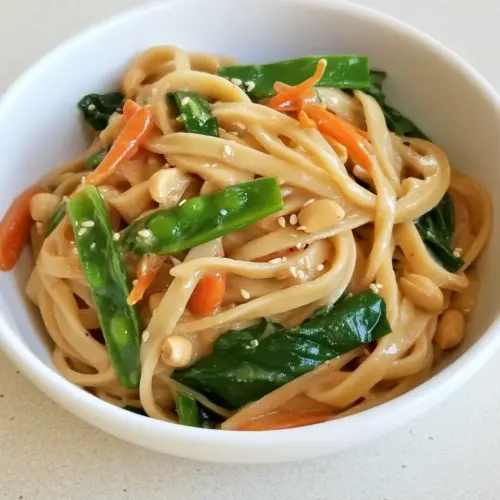
Udon Noodles with Asian Vegetables and Peanut Sauce
Udon Noodles with Asian Vegetables and Peanut Sauce is a creamy, savory noodle bowl with bright ginger and crisp vegetables. This easy weeknight dinner brings chewy udon, crunchy bok choy and snow peas, and a silky peanut sauce for a balanced, satisfying meal. Quick to assemble and great for leftovers, it’s an inviting option when you want flavor without fuss.
Equipment
- Small Saucepan
- Whisk
- Large Bowl
- Pot
- Colander
Ingredients
- 1/4 cup + 2 tablespoons water Measure specified amount of water to adjust sauce consistency and help dissolve sugar and cornstarch; use hot or room temperature depending on recipe step. Provide steam in cooking if added to vegetables or sauce, ensuring even heat distribution and proper sauce texture. Balance liquid for desired creaminess without thinning peanut butter too much.
- 1/4 cup creamy peanut butter Spoon creamy peanut butter to form the base and body of the sauce, contributing rich, nutty flavor and smooth texture. Emulsify with liquids to create a glossy, cohesive dressing that clings to noodles and vegetables. Add depth and a subtle savory note that complements soy and vinegar.
- 2 tablespoons brown sugar Spoon brown sugar to introduce sweetness and a hint of molasses that rounds sharp and salty flavors in the sauce. Dissolve fully into warm liquid to balance acidity from rice vinegar and the saltiness of soy sauce. Caramel undertones enhance color and overall complexity.
- 2 tablespoons low sodium soy sauce Pour low sodium soy sauce to supply umami and savory saltiness while controlling sodium levels for a balanced dish. Blend with peanut butter and vinegar to create a layered flavor profile that seasons noodles and vegetables evenly. Use low sodium to prevent overpowering the other components.
- 2 tablespoons rice vinegar Measure rice vinegar to deliver bright acidity and mild tang that cuts through richness and refreshes the palate. Combine with sugar and soy to make a balanced sauce that lifts the dish and enhances vegetable flavors. Adjust slightly to taste for desired brightness.
- 1 1/2 teaspoons peeled and minced fresh ginger Peel and mince fresh ginger to add warm, spicy aroma and a peppery, slightly citrusy bite to the sauce and stir-fry. Incorporate early in cooking to release essential oils and infuse the dish with lively flavor. Provide a fresh contrast to creamy peanut and sweet elements.
- 1 1/2 teaspoons dark sesame oil Drizzle dark sesame oil to contribute toasty, aromatic depth and finish; a small amount adds pronounced sesame character without overpowering. Stir into the sauce or drizzle over finished dish to enhance nuttiness and fragrance. Use sparingly because of intense flavor.
- 1/2 teaspoon cornstarch Dissolve cornstarch to act as a thickening agent that gives the sauce a silky, clingable consistency when heated. Mix into water or other cold liquid before adding to hot sauce to prevent lumps and ensure smooth texture. Create a glossy finish that coats noodles and veggies.
- 1/2 teaspoon chili garlic sauce (optional) Spoon chili garlic sauce to introduce optional heat and garlicky spice, elevating the sauce with layered chili flavor. Add gradually to control spiciness and preserve balance with peanut sweetness and soy umami. Use as an adjustable element for preferred heat level.
- 2 medium garlic cloves, minced Mince garlic cloves to provide pungent, savory aromatics that deepen the sauce and stir-fried vegetables when sautéed briefly. Add early to warm oil to bloom flavor without burning, enhancing overall savory profile. Complement ginger and sesame for classic Asian aromatics.
- 8 ounces uncooked udon noodles (thick, round fresh Japanese wheat noodles) or spaghetti Cook udon noodles (or substitute spaghetti) to supply the hearty, chewy carbohydrate base that soaks up the peanut sauce and carries the vegetables. Prepare according to package instructions and drain, reserving some cooking water to adjust sauce if needed. Provide satisfying texture contrast to crisp vegetables.
- 4 cups sliced bok choy (about 2 bunches) Slice bok choy to contribute leafy greens with mild, slightly bitter flavor and crunchy stems that add textural variety. Stir-fry briefly to wilt leaves while keeping stems tender-crisp, then toss with sauce and noodles for balanced mouthfeel. Provide fresh, green vegetable volume and nutrients.
- 2 cups snow peas, halved crosswise Halve snow peas crosswise to add sweet, crisp pods that maintain bright color and snap after quick cooking. Toss into the stir-fry near the end to preserve crunch and fresh flavor, enhancing the dish's visual appeal and texture contrast. Offer bite-sized, easy-to-eat vegetable pieces.
- 1 cup shredded carrot Shred carrot to introduce natural sweetness, vivid color, and firm crunch that complements softer noodles and greens. Add raw or briefly sauté to retain bite and brightness, contributing to visual contrast and nutritional variety. Provide thin, uniform pieces for even texture distribution.
Instructions
- Combine the first 10 ingredients (through garlic) in a small saucepan; stir with a whisk until blended. Bring to a boil; cook, stirring constantly, about 1 minute. Set aside.: The moment the ingredients meet you should notice a thick, paste like mass that is slowly turning into a cohesive sauce, smell the fragrant blend of ginger and garlic lifting from the pan. Use a whisk to coax the peanut butter into the water so no lumps remain, this creates a satiny base which will cling to the udon noodles . A common issue is overheating too quickly which can make the oil separate, so keep the heat gentle and stir constantly. If you see any graininess, keep whisking off heat for a minute to smooth it out. Visually aim for a glossy, uniformly colored sauce that pours slowly off the whisk.
- Cook the noodles in boiling water for 8 minutes and drain well. Combine the noodles, peanut sauce, bok choy, snow peas, and carrot in a large bowl; toss well to coat.: As the sauce reaches a simmer you will hear a gentle bubbling and see steam rise; this brief cook sets the cornstarch so the sauce thickens and develops body. The aroma becomes more integrated, with the dark sesame oil and soy sauce combining into a warm, nutty scent. Stirring constantly prevents scorching, which would impart a burned flavor. Avoid leaving it unattended because quick boiling can cause separation or clumping; if it thickens too quickly, take it off heat and whisk in a splash more water .
- Set aside: After that short cook, let the saucepan rest so the sauce cools slightly and the flavors marry; you will notice a smoother texture as it relaxes. This pause keeps the sauce from being too hot when it meets the noodles, which helps maintain a glossy finish rather than turning oily. A misstep here is tossing while the sauce is boiling hot, which can make the sauce thin or cause the oil to float; give it a couple of minutes to stabilize before using.
- Cook the noodles in boiling water for 8 minutes and drain well: When boiling the udon noodles , watch for that visual cue of plump, slightly translucent strands and a tender springy bite. The kitchen will fill with a comforting wheaty aroma. Test a strand at 7 minutes so you do not overcook, as overcooked udon noodles become mushy and will lose texture when tossed with the sauce. Drain thoroughly to avoid diluting the sauce, and if needed, give them a quick gentle rinse under warm water to remove excess starch, being careful not to cool them too much.
- Combine the noodles, peanut sauce, bok choy, snow peas, and carrot in a large bowl; toss well to coat: Once everything is ready, the first sensory cue is the glossy sheen as the peanut sauce envelops the udon noodles ; you should hear a soft rustle from the veggies as they tumble together. Tossing releases aromas from the ginger and garlic , and you will see vibrant green from the bok choy and snow peas contrasted with the orange of the carrot . Tossing right away ensures the sauce warms the vegetables slightly without wilting them completely, preserving crispness. A common mistake is under tossing which leaves pockets of dry noodle and uneven flavor; make sure every strand is coated and taste to adjust seasoning if needed.
Notes
- Warm the peanut butter slightly before mixing so it blends without lumps, giving a silkier sauce that clings better to the udon noodles.
- Reserve a little noodle cooking water in case you need to loosen the sauce later; the starchy water helps the sauce adhere without watering down flavor.
- Slice vegetables uniformly so they cook evenly and present well, keeping the snow peas crisp and the bok choy tender.
- Adjust sweetness and acidity at the end, a pinch more brown sugar or a splash more rice vinegar can brighten or round the sauce to your preference.
- Mix gently but thoroughly when combining to avoid bruising delicate leaves while ensuring every noodle gets sauced.