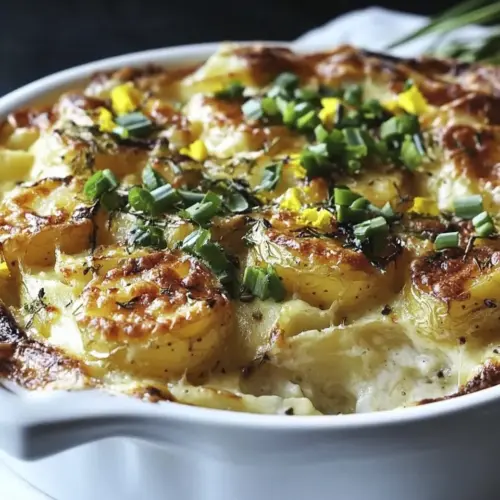
Twice Fired Potatoes Au Gratin
Twice Fired Potatoes Au Gratin is a creamy, crispy casserole that layers tender russet potatoes with a rich, cheesy sauce. This easy weeknight dinner transforms simple pantry staples into an indulgent crowd pleasing side or main, delivering golden browned top and silky interior. Make it for gatherings or cozy meals, it reheats well and is a reliable comfort dish you will make again.
Equipment
- 6 quart pot
- 3 quart casserole dish
- Medium Saucepan
- Whisk
- Knife
- Cutting Board
- Tongs
Ingredients
- 3 lbs russet potatoes Provide starchy body and structure when sliced or diced; contributes creaminess when baked and crisps when twice-fried. Choose even-sized pieces for uniform cooking and rinse to remove excess starch for better texture. Russets hold shape and absorb flavors from cheese and sauce during baking.
- 5 Tbs Sweet Cream Butter Add rich, silky fat and enhance flavor in the béchamel; melts into the pan to help form a roux with flour. Use room-temperature butter for even incorporation and to lend a glossy mouthfeel to the sauce. Sweet cream butter also contributes a slightly sweet, milky note that balances savory elements.
- 6 Tbs Flour Thicken the milk into a smooth, velvety sauce by cooking with melted butter to form a roux. Whisk constantly when adding milk to prevent lumps and achieve a creamy consistency that coats the potatoes. Helps stabilize the sauce so it sets nicely during the second bake.
- 2 cloves garlic minced Provide aromatic depth and a savory base to the sauce; releases flavor when minced and sautéed briefly. Add early with the roux so garlic infuses the béchamel without burning, giving a subtle savory lift. Minced garlic complements the cheeses and enhances overall aroma.
- 4 C milk Create the creamy liquid base for the sauce and dissolve the roux to coat the potatoes; supplies moisture and tenderness. Warm slightly before adding to prevent shock to the roux and ensure smooth sauce without lumps. Milk also helps distribute the salt and spices evenly through the dish.
- 2 teaspoons salt Season the sauce and potatoes to bring out natural flavors and balance richness. Dissolve into the béchamel early to layer seasoning throughout the dish and adjust to taste before baking. Salt also enhances the perceived cheesiness and overall savory profile.
- 1 dash Cayenne Pepper - ground Add subtle heat and a warming background spice to cut through richness when used sparingly. Sprinkle in during sauce preparation to distribute gently and avoid overpowering the delicate cream and cheese flavors. Cayenne brightens the finish and enhances complexity.
- 3 cups Shredded Cheddar Provide melty, savory richness and strong cheddar flavor that defines the gratin character. Layer shredded cheddar between and on top of the potatoes to create gooey pockets and a browned, flavorful crust. Use freshly shredded cheese for better melting and texture.
- 1/3 cup grated parmesan the real stuff is better - green can is ok if needed Contribute nutty, salty umami and a sharp finishing note when grated over the top or stirred into the sauce. Use higher-quality Parmesan when possible for deeper flavor; pre-grated green-can works in a pinch. Its granular texture helps create a crisp, golden crust during the final bake.
Instructions
- Preheat the oven to 350. Fill a 6 quart pan with water. Peel the potatoes and put the potatoes in the water whole. Boil until a fork pierces the potato flesh easily. Remove the potatoes from the water with tongs. Set on a cutting board and cool until you are able to handle without burning yourself. Hot potato! Once cooled enough to touch, cut into 1/4 - 1/2 inch slices (close is good enough) and place in a 3 quart casserole dish.: When you step into the kitchen you should notice a steady warmth building as the oven reaches 350 degrees, and a consistent preheat ensures the casserole will bake evenly. The sound you want from the oven is a quiet hum rather than loud cycling, which tells you it is nearing the set temperature. This matters because an oven that is too cool will extend baking time and may stop the top from browning properly, leaving the interior hot but the crust pale. If your oven runs hot or cold, use an oven thermometer for accuracy. A common mistake is slipping into other tasks while preheating, so set a timer to check in rather than guessing the temperature.
- In a medium sauce pan while the potatoes are cooling, add the butter and allow to melt over medium heat. Add the flour and allow it to cook with the butter for 1-2 minutes. Add the garlic and cook for another 2 minutes. Use a whisk and whisk in the milk. Allow to cook - stirring constantly until milk is warm. Add the salt and the cayenne. Stir in the cheddar and the parmesan and cook till melted. Pour the cream/cheese mix over the potatoes and using a fork move the potatoes around to allow the cream to go between the potato pieces.: As the water heats you will see small bubbles forming on the pan bottom, then a rolling boil once it reaches the right stage; that’s the cue to add the potatoes . Boiling in ample water helps the potatoes cook through uniformly and prevents them from sticking together. If the pot is too small, the water will cool drastically when you add the potatoes , which stretches cooking time and can yield uneven doneness. Don’t over crowd the pot, because that slows the return to a boil and lengthens cooking unpredictably.
- Bake at 350 for 45 minutes. Let stand for 5 minutes before serving. Garnish with pepper and green onion.: You will feel a slight resistance as you peel raw potatoes , and placing whole tubers into the boiling water keeps more of their texture intact. Whole potatoes are less likely to fall apart than cut pieces, which helps when you slice them later for the casserole. A frequent error is peeling too thinly and wasting flesh, or too thickly and leaving too much skin. Try to keep peel thickness moderate to preserve structure without excess waste.
- Boil until a fork pierces the potato flesh easily: Watch for a gentle rolling boil; when the fork slides in with minimal resistance the potatoes are ready. The internal texture should be tender but not mealy, because overcooked potatoes can disintegrate when sliced and become gummy in the casserole. If you test one and it is still firm, return the pot to a steady simmer and check every few minutes to avoid overcooking.
- Remove the potatoes from the water with tongs: Use tongs or a slotted spoon so you do not splash boiling water. As you lift a tuber, notice the steam that rises; let them rest briefly so that the residual heat finishes the internal cook without turning the flesh wet. Handling them carefully preserves shape, which matters for uniform slices. A mistake here is plunging still scalding potatoes into cold water, which can make them soggy; instead let them cool just enough to handle.
- Set on a cutting board and cool until you are able to handle without burning yourself: The cooling phase is sensory; you should feel just warm, not painfully hot, when slicing. If you rush this step you risk injury or smashed slices from the heat. Cooling also firms the flesh slightly, producing cleaner cuts and better layering. If you are impatient, use a fan or let them rest on the counter rather than shocking them in cold water, which harms texture.
- Hot potato!: Once cooled enough to touch, cut into 1/4 to 1/2 inch slices and place in a 3 quart casserole dish : As you slice, notice how the knife glides through if the interior is properly cooked; each slice should hold together but still yield under gentle pressure. Layering the slices in the casserole provides spots for the sauce to pool and bind, creating creamy pockets. Cutting too thinly or too thickly changes the mouthfeel, so aim for the suggested thickness for consistent results. A common oversight is overcrowding the dish; leave slight gaps so sauce can circulate.
- In a medium sauce pan while the potatoes are cooling, add the butter and allow to melt over medium heat: The butter should foam gently as it melts, releasing a rich aroma. This melted fat forms the base for the roux, and the right temperature prevents browning, which would shift the sauce flavor. If the butter browns, start over to avoid a toasty taste that competes with the cheese. Stir steadily to keep the butter uniform in the pan.
- Add the flour and allow it to cook with the butter for 1 to 2 minutes: You will see the mixture thicken and become slightly glossy, and that tells you the raw flour flavor is cooking off. This step builds structure for the sauce, so resist the urge to rush it. Undercooked roux can leave a chalky note, while overcooked roux will darken and reduce thickening power. Stir continuously to develop a smooth paste without lumps.
- Add the garlic and cook for another 2 minutes: The garlic will become fragrant, filling the kitchen with a warm, savory scent without turning bitter. Cooking it briefly in the roux mellows its edge and lets it infuse the base. Avoid browning the garlic , as that bitterness can carry through. If you smell any acrid notes, reduce the heat immediately.
- Use a whisk and whisk in the milk: As you add the warmed milk , whisk vigorously to form a silky emulsion. The texture should transition from pasty to saucy, smooth and glossy, with no visible lumps. Warm milk blends more readily and speeds thickening, while cold milk can create stubborn lumps. If lumps form, strain the sauce or blend it briefly to restore silkiness.
- Allow to cook, stirring constantly until milk is warm: You will notice the sauce thicken as it heats; when it coats the back of a spoon it is on the right track. Stirring keeps the sauce from scorching on the pan bottom and ensures uniform thickness. A common error is stepping away and letting the sauce cling and brown at the edges. Keep a steady stir and moderate heat for the best texture.
- Add the salt and the cayenne: These seasonings lift the sauce and add a subtle warmth. Mix them in and taste cautiously, because the addition of cheddar and parmesan will increase overall saltiness. Start with the stated amounts and adjust based on your cheese's salt level. Over salting is hard to correct after the cheese is added, so err on the side of restraint.
- Stir in the cheddar and the parmesan and cook till melted: As the cheeses melt you will see the sauce become glossy and slightly thickened, and aroma will deepen into a savory, nutty note. Stirring helps the cheeses integrate smoothly; if the heat is too high the fats can separate and the sauce will become greasy. Melt gently and remove from direct high heat if you notice oil pooling. Using freshly grated cheddar and parmesan melts more cleanly than pre shredded varieties.
- Pour the cream slash cheese mix over the potatoes and using a fork move the potatoes around to allow the cream to go between the potato pieces: When you pour, listen to the gentle pooling sound as the sauce fills crevices, and see it seep between layers to coat each piece. Moving the potatoes with a fork encourages the sauce to infiltrate rather than just sit on top, which yields a uniformly luscious bake. Avoid vigorous stirring that breaks slices; gentle coaxing is enough. If the sauce appears too thin, a few minutes in the oven will thicken it, but overly thin sauce can make the casserole runny, so watch consistency before baking.
- Bake at 350 for 45 minutes: During baking you should see the surface bubble and turn an even golden brown as the cheese caramelizes slightly. The smell will shift to a toasty, inviting aroma, and the edges may crisp slightly, creating attractive contrast. If the top browns too quickly while the center is still underdone, tent loosely with foil to preserve moisture while the center finishes. An oven that is too hot risks a burnt top and undercooked middle, so trust the time and visual cues.
- Let stand for 5 minutes before serving: Resting allows the sauce to settle and thicken slightly, making slicing cleaner and the texture more cohesive. Notice how the bubbling slows and the steam eases off; that indicates it is ready to handle. Cutting too soon will cause the sauce to run and weaken the layered presentation. Five minutes may feel long, but it improves both appearance and mouthfeel.
- Garnish with pepper and green onion: A final sprinkle of freshly ground pepper and thinly sliced green onion adds color contrast and a hint of sharpness against the creamy backdrop. The green onion brings freshness that lightens each bite. Avoid adding too much garnish, which can overwhelm the delicate balance you built during cooking.
Notes
- Prefer fresh cheese Grate your own cheddar and parmesan when possible because freshly grated cheese melts more smoothly and provides superior flavor compared with pre packaged shredded varieties.
- Watch your roux temperature Cook the flour in the melted butter for the full 1 to 2 minutes to remove raw flour taste, but do not let it darken or you will lose the bright dairy profile.
- Warm the milk Heating the milk slightly before adding it to the roux prevents lumps and helps the sauce come together quickly, producing a silkier finished texture.
- Slice thickness matters Aim for 1 quarter to 1 half inch slices of potatoes to achieve a balance between creamy interior and saucy pockets, thinner slices can collapse and thicker ones may not absorb enough sauce.
- Rest before serving Allow the casserole to rest for about 5 minutes after baking so the sauce sets and slices hold their shape, improving presentation and avoiding a runny serving.
- Adjust salt last Add salt conservatively to the sauce before you add the cheeses, then taste and tweak after they have melted since cheeses vary widely in saltiness.