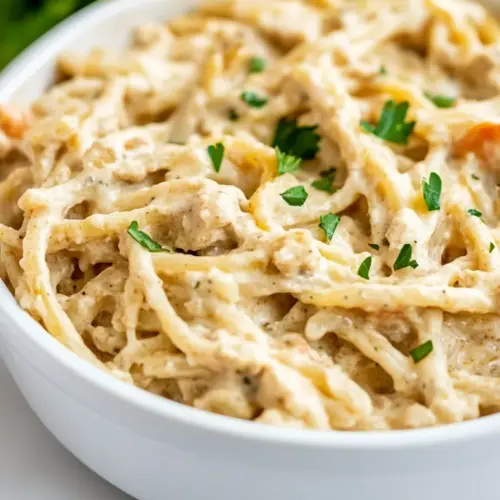
Turkey Tetrazzini
Turkey Tetrazzini blends creamy sauce, tender turkey, and perfectly cooked spaghetti into a comforting casserole. This creamy, cheesy, and satisfying dish makes an easy weeknight dinner and a perfect use for holiday leftovers. The silky sauce and golden top invite seconds, making it a must make when you want a crowd pleasing, cozy meal.
Equipment
- 3-Quart Saucepan with Lid
- 9x13-inch Casserole Dish
- Pasta Cooker Set
Ingredients
- 1 pounds spaghetti Boil until al dente and provide the pasta backbone that absorbs sauce and binds all components together for a hearty casserole. Ensure strands are drained and slightly undercooked to finish cooking in the oven without becoming mushy.
- 1/2 cup butter (unsalted) Melt to create a rich base fat that browns aromatics and forms the roux when combined with flour, contributing a silky mouthfeel and depth to the sauce. Use unsalted to better control seasoning throughout the dish.
- 2 tablespoon olive oil Heat gently to sauté vegetables and prevent butter from burning while adding a fruity, slightly peppery flavor that complements the sauce. Combine with butter early to extract more flavor from aromatics without overpowering them.
- 1 small onion (chopped) Sweat until translucent to release sweetness and aromatic depth that forms the flavor foundation of the casserole. Chop finely for even distribution and quick, consistent cooking within the sauce.
- 3 cloves garlic (minced) Mince and sauté briefly to introduce sharp, savory notes that lift the overall flavor profile and balance the creaminess of the sauce. Add toward the end of Sweating to avoid bitterness from overcooking.
- 1/2 cup all-purpose flour Whisk into melted fats to form a roux that thickens the sauce and creates a smooth, velvety texture that clings to pasta and turkey. Cook briefly to remove raw flour taste before gradually incorporating liquids for lump-free consistency.
- 8 ounce cream cheese (room temperature) Soften at room temperature and whisk into the roux to add tangy creaminess and extra body, enriching the sauce and improving its spreadability in the casserole. Ensure fully softened to avoid lumps when blended with hot liquid.
- 3 cups chicken broth (low sodium) Pour slowly into the roux to build the saucy base, contributing savory depth and a light broth flavor that thins the dairy elements to a creamy consistency. Use low-sodium to better manage overall salt levels in the finished dish.
- 2 cups milk Add gradually with the broth to achieve desired creaminess and to mellow the sauce while contributing a slight sweetness and dairy richness. Choose whole or 2% for best texture and avoid scalding when combining with hot liquids.
- 1 teaspoon Italian seasoning Sprinkle to introduce a balanced blend of herbs like oregano and basil that complements poultry and cheese, adding aromatic complexity without extra salt. Adjust amount to taste to enhance the overall Italian-inspired profile.
- salt and pepper (to taste) Season to taste to enhance all flavors and balance the saltiness from cheeses and broth while controlling the final seasoning of the casserole. Add incrementally, tasting as the sauce finishes to avoid over-salting.
- 2 cups Parmesan cheese (grated) Fold in for nutty, salty richness and a savory finish that helps thicken and bind the casserole while providing a distinctive umami cheese character. Grate finely for even melting and distribution throughout the dish.
- 4 cups turkey (cooked and chopped) Stir through the pasta mixture to supply tender, lean protein and hearty texture, anchoring the dish as a comforting main course. Use cooked, chopped turkey for convenience and to allow even heating without drying during baking.
Instructions
- Preheat the oven to 350°F.: The kitchen will take on a faint warm scent as the oven climbs to temperature, giving you a predictable environment for baking. Preheating ensures that when the casserole goes in, it cooks evenly from the moment it is placed inside. If you skip preheating, the dish may need extra time and the top can brown unevenly, causing inconsistent texture.
- Cook the spaghetti according to package instructions until al dente, tender but still firm when bitten.: As the pasta boils, it releases a comforting wheat aroma, and you should watch for that perfect slightly resistant bite. Cooking to al dente is crucial because the pasta will finish softening during baking, preserving structure and preventing a gluey result. A common misstep is overcooking, which yields a mushy casserole, so test a strand a minute earlier than the package time.
- Add the butter and olive oil to a saucepan and melt over medium heat. Add the onion and cook for about 5 minutes until the onion has softened. Stir in the garlic and cook for an additional 30 seconds until aromatic.: You will hear a gentle sizzle when the butter and olive oil mingle, and the onion will soften and become translucent, giving off a sweet, savory scent. The brief cook for the garlic releases its perfume without burning it. This step builds the sauce base; rushing it can leave raw onion or charred garlic flavors that throw off the final balance.
- Whisk in the flour and cook for about 2 minutes. Add the chicken broth, milk, Italian seasoning, salt, pepper and bring to a boil. Stir in the cream cheese and 1 1/2 cups of the Parmesan cheese until melted.: When you whisk the flour into the fat, it forms a smooth roux that thickens the sauce and removes any raw flour taste. Adding the chicken broth and milk slowly while whisking prevents lumps, and bringing the mixture to a boil is your cue that the sauce has reached thickening temperature. Melting in the cream cheese and part of the Parmesan cheese transforms the texture into a glossy, clingy sauce. If you add cold dairy too quickly, the sauce can seize or become grainy, so temper carefully and stir constantly to maintain a silky texture.
- Stir in the cooked turkey then add the cooked spaghetti. Toss everything together until well combined. Transfer everything to a greased 9×13-inch casserole dish and top with remaining 1/2 cup of Parmesan cheese.: As you fold turkey into the sauce, you'll notice the meat warming and taking on more of the sauce's aroma, creating a unified savory profile. Tossing with the hot spaghetti ensures each strand is coated so the casserole is saucy rather than dry. Transferring to the casserole dish and sprinkling the remaining Parmesan cheese gives you a surface that will brown and crisp, offering contrast to the creamy interior. Avoid packing the dish too tightly, which can trap steam and make the top soggy instead of lightly browned.
- Transfer the casserole dish to the oven and bake for 30 – 45 minutes until heated through and the top is starting to brown.: The kitchen will fill with a rich, cheesy aroma as the casserole bakes and the top develops golden patches. Baking melds flavors and allows the sauce to bubble slightly, creating those satisfying pockets of creaminess under a toasted top. Check the casserole around the 30 minute mark to gauge browning, and tent with foil if it browns too quickly. A frequent error is leaving it in too long which can dry out the surface, so aim for a gentle golden color and bubbling edges.
Notes
- Cool the pasta: Allowing the spaghetti to cool slightly after draining prevents the sauce from thinning too much with steam, keeping the casserole saucy.
- Low sodium broth: Using low sodium chicken broth lets you dial in salt at the end, especially since Parmesan cheese can add significant saltiness.
- Room temperature cream cheese: Softened cream cheese blends smoothly into the sauce, avoiding lumps and ensuring a glossy texture.
- Even turkey pieces: Chop the turkey into uniform pieces so every bite has a balanced meat to pasta ratio.
- Watch the top: Keep an eye on the baking time and tent with foil if the Parmesan cheese browns too quickly while the interior needs more time to bubble.
- Make ahead and freeze: Assemble up to the baking step, then cover and freeze. Thaw overnight in the fridge before baking for an easy weeknight meal.
- Freshly grate cheese: Freshly grated Parmesan cheese melts better and gives a superior flavor to pre grated varieties.
- Adjust consistency: If the sauce seems too thick before mixing with spaghetti, whisk in a little extra milk to reach the desired creaminess.
- Test for doneness: Look for bubbling around the edges and a lightly golden top as indicators the casserole is heated through.
- Leftover reheating: Reheat gently in a covered dish at a moderate oven temperature to preserve moisture and avoid drying out the turkey.