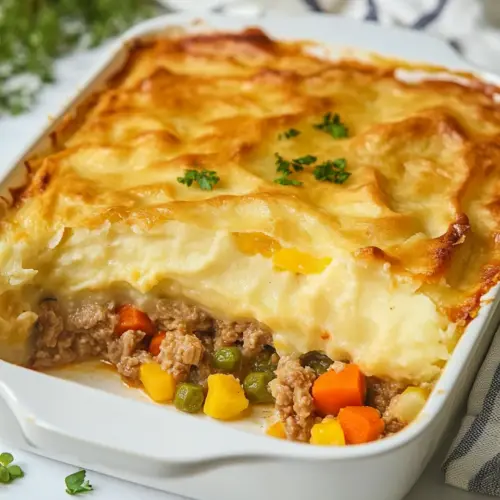
Turkey Shepherds Pie
Turkey Shepherds Pie is a creamy and comforting casserole with a savory ground turkey filling, a fluffy russet potatoes topping, and a golden cheddar cheese finish. This easy weeknight dinner balances protein and vegetables into a family friendly dish that reheats beautifully, making it perfect for busy evenings and small holiday gatherings.
Equipment
- Large Skillet
- Baking Dish
- Pot for boiling potatoes
- Spatula
Ingredients
- 2 pounds russet potatoes peeled and quartered Boil and mash to create a fluffy, creamy base for the pie topping; peel and quarter for even cooking and smooth consistency when riced or mashed. Season and mash with butter and milk to achieve a rich texture that browns slightly under the oven's heat.
- 1/4 cup milk Warm and loosen to make the mashed potatoes creamy and spreadable; add gradually while tasting to control consistency. Use at room temperature to help incorporate butter smoothly and prevent a gluey texture.
- 2 tablespoons unsalted butter Melt and enrich to add a silky mouthfeel and savory depth to the mashed potatoes; incorporate with milk for a classic creamy finish. Use unsalted butter to control overall seasoning and to help create a golden crust on top if desired.
- Salt and pepper to taste Season to enhance overall flavor balance throughout both the filling and potato topping; sprinkle and taste during cooking to avoid over-salting. Combine with freshly ground pepper to highlight the turkey and vegetable components without overwhelming them.
- 1 tablespoon olive oil Heat and sauté to provide a flavorful cooking medium for aromatics and ground turkey; warm in the skillet before adding onions. Use olive oil for its mild fruitiness and higher smoke point that supports even browning.
- 1 large onion diced Sauté and soften to build the savory aromatic base of the filling; dice finely for even distribution and cook until translucent for sweetness. Caramelize lightly if desired to intensify flavor and add complexity to the turkey mixture.
- 2 cloves garlic minced Mince and release to provide pungent, aromatic depth to the filling; add toward the end of sautéing onions to prevent burning. Use fresh garlic to brighten the meat mixture and complement the herbs and broth.
- 1 1/2 pounds ground turkey Brown and crumble to form the hearty protein core of the shepherd's pie; cook thoroughly until no pink remains and moisture has reduced. Season while cooking to incorporate flavors, and break apart for an even distribution in the filling.
- 1 teaspoon dried thyme Infuse and aromatize to lend earthy, herbal notes that complement turkey and vegetables; sprinkle into the meat while it cooks for integrated flavor. Use dried thyme for its concentrated taste and ability to withstand longer cooking times.
- 1/2 teaspoon dried rosemary Fragrance and accent to add resinous, piney undertones that pair well with thyme and poultry; crumble finely before adding to avoid leathery bits. Use sparingly due to its strong flavor, letting it meld into the sauce for balance.
- 2 tablespoons all-purpose flour Thicken and bind to create a cohesive gravy that clings to meat and vegetables; sprinkle into the fat and cook briefly to remove raw flour taste. Combine with broth gradually to form a smooth, velvety sauce that enriches the filling.
- 1 1/2 cups low-sodium chicken broth Deglaze and simmer to form a savory gravy base that concentrates flavors from the pan; add gradually to control sauce thickness. Choose low-sodium broth to manage overall salt while providing a complementary poultry essence to the filling.
- 1 cup frozen mixed vegetables peas, carrots, corn Add and contribute to texture, color, and subtle sweetness in the filling; use frozen for convenience and even distribution. Stir into the simmering gravy to heat through and retain a pleasant bite without becoming mushy.
- 1/2 cup shredded cheddar cheese Sprinkle and melt to provide a creamy, tangy finish that binds and gratins the potato topping; add toward the end of baking for a melted golden layer. Use shredded cheddar for its sharp flavor and smooth melting properties that enhance the dish.
Instructions
- Preheat the oven to 400°F. Begin by preparing the mashed potato topping; boil the potatoes until tender, then mash with milk and butter, season with salt and pepper, and set aside.: When the oven warmth fills the kitchen you will notice a subtle dry heat that helps form a golden top during baking. Preheating ensures the casserole cooks evenly from the moment it goes in, giving a crisp edge to the mashed potatoes and allowing the cheddar cheese to brown attractively. A common error is skipping preheat which leads to uneven bubbling and a soggy edge. If your oven runs hot or cool, use an oven thermometer to confirm true temperature and avoid overbrowning.
- In a large skillet, heat olive oil over medium heat. Add onions and garlic, and cook until softened. Increase the heat and add ground turkey, thyme, rosemary, salt, and pepper. Cook until the turkey is browned.: As the russet potatoes simmer they give off a gentle starchy scent and when pierced with a fork they should slide off easily, signaling tenderness. Drain them well to avoid watery mash, then return them to the warm pot so residual steam helps evaporate extra moisture. Add warmed milk and unsalted butter for a silky texture, mashing to your preferred smoothness, and season with salt and pepper to taste. For a fluffier topping avoid overmixing which can make the potatoes gluey. Set the mash aside but keep it warm; if it cools too much it stiffens and becomes harder to spread.
- Sprinkle flour over the turkey mixture, stir, and cook for 1 minute. Pour in chicken broth and bring to a simmer. Add frozen vegetables, cook until mixture thickens, then transfer to a baking dish.: Warmth from the pan should shimmer the surface of the olive oil , signaling it is ready for the aromatics. Add diced onion first so it can soften and sweeten, then the minced garlic to release fragrance. These moments build a fragrant foundation for the filling. If you overheat the oil, the aromatics can burn and impart bitterness, so keep the heat steady and stir occasionally to promote even cooking.
- Spread the mashed potatoes over the turkey mixture in an even layer. Sprinkle with cheddar cheese, and bake for 20-25 minutes, until the top is golden and the edges are bubbly.: As the onion sweats, you will notice a sweet, savory scent and translucent edges developing; this is the sign to add the minced garlic so it flavors the oil without charring. Softened onions create a tender texture base that melds with the ground turkey . Avoid rushing by using high heat which leads to uneven browning and can produce bitter charred bits instead of gentle caramel notes.
- Increase the heat and add ground turkey, thyme, rosemary, salt, and pepper: When the pan is hotter the ground turkey will sizzle upon contact, producing browned bits that contribute deep savory flavor. Sprinkle in thyme and rosemary now so their oils bloom in the heat, and season with salt and pepper . Let the meat develop color before breaking it up, that crusty browning is key to a rich filling. A typical pitfall is stirring constantly which prevents proper sear; allow brief undisturbed contact to form those flavorful edges.
- Cook until the turkey is browned: As the ground turkey browns you will hear a steady sizzle and see the surfaces take on golden notes. Browning creates complexity and deepens the savory profile of the dish. Once the turkey is mostly done, check for any white or pink patches and give it one last stir to finish cooking through. Overcooking can dry the turkey, so pull it off the heat as soon as it is cooked but still moist.
- Sprinkle flour over the turkey mixture, stir, and cook for 1 minute: The moment you add the all-purpose flour you will notice the mixture thicken slightly as the raw edge cooks away; brief cooking removes the floury taste and prepares it to thicken the broth. Stir thoroughly to coat all pieces of turkey so the final gravy is smooth. A common mistake is adding cold liquid right away, which can cause lumps; toast the flour briefly and mix well before adding broth.
- Pour in chicken broth and bring to a simmer: As the low-sodium chicken broth hits the pan it will steam and loosen the mixture, creating a glossy sauce as it reduces. Bring it to a gentle simmer rather than a hard boil to concentrate flavor without breaking down textures. Simmering gives time for the thyme and rosemary to infuse, and for the flour to thicken the liquid into a cohesive filling. If the simmer is too vigorous you risk shrinking the vegetables and toughening the meat.
- Add frozen vegetables, cook until mixture thickens, then transfer to a baking dish: Adding the frozen mixed vegetables straight into the hot filling warms them quickly and preserves bite and color. Stir as the sauce reduces so it clings to the peas , carrots , and corn . Visual cues are a glossy, slightly coat-like gravy and tender vegetables with retained texture. Avoid overcooking at this stage which causes a mushy filling; the oven will finish the job and meld layers.
- Spread the mashed potatoes over the turkey mixture in an even layer: When you dollop the warm mash over the filling, the contrast of steaming filling and creamy potatoes is immediate. Use a spatula to smooth the surface so there are no gaps where the filling might bubble over. Textural balance matters here; a too-thin layer may burn while a too-thick one takes longer to brown. If the mash has cooled, warm it briefly to make spreading effortless.
- Sprinkle with cheddar cheese, and bake for 20 to 25 minutes, until the top is golden and the edges are bubbly: As the casserole bakes the cheddar cheese melts into a savory blanket and the edges begin to bubble and brown, releasing a toasty aroma. The visual cue to look for is an evenly golden top with bubbling at the edges. If you want extra browning, place under the broiler for a minute, watching closely to avoid scorching. Overbaking dries out the mash so remove promptly when golden.
Notes
- Swap cheeses thoughtfully — If you prefer a milder finish, choose a softer cheese, but stick to the amount so the texture of the topping remains balanced.
- Keep vegetables vibrant — Add the frozen mixed vegetables at the last simmer so they stay bright and retain bite instead of turning mushy.
- Control salt with broth — Use low-sodium chicken broth to better manage final seasoning and avoid an overly salty filling.
- Warm liquids before adding — Warm your milk and butter slightly so the mashed potatoes stay fluffy rather than cooling and stiffening when combined.
- Test oven temperature — Use an oven thermometer to ensure your oven reads true, leading to evenly browned cheddar cheese and a perfectly baked finish.