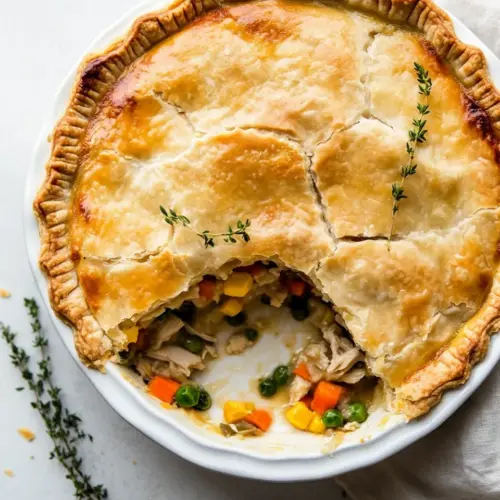
Turkey Pot Pie
Turkey Pot Pie is a creamy, savory comfort dish that turns leftover turkey into a flaky, golden crusted meal. With aromatic herbs, tender diced turkey, and a glossy herb infused filling, it makes an easy weeknight dinner or cozy weekend supper. Perfect for meal prep and freezing, this recipe delivers warm, homey flavors that are worth making again and again.
Equipment
- nonstick skillet
- Sheet Pan
- Pie Dish
- Mixing Bowl
Ingredients
- 1/2 tablespoon extra-virgin olive oil Heat lightly to provide a subtle, fruity fat for sautéing aromatics and helping ingredients brown without overpowering the pie filling.
- 1 large shallot chopped Chop finely to add a mild, sweet onion flavor and tender texture that softens quickly when cooked, forming the aromatic base of the filling.
- 3 tablespoons fresh parsley chopped Chop coarsely or finely to introduce bright, herbaceous notes and a fresh finish that balances savory richness in the pot pie.
- 1 tablespoon fresh thyme chopped Chop finely to deliver earthy, slightly minty flavor and fragrant warmth that complements poultry and binds other herbs together.
- 1 tablespoon fresh sage chopped Chop finely to contribute a savory, slightly peppery aroma with hints of mint that enhances the overall poultry filling complexity.
- 2 small celery stalks chopped Chop into small pieces to add a crisp, vegetal backbone and subtle aromatic bitterness that helps build savory depth in the filling.
- 5 ounces frozen mixed vegetables Keep frozen until use to provide a mix of tender vegetables for color, texture, and nutritional balance, boosting the classic pot pie profile.
- 2 1/4 cups turkey or chicken broth Simmer or heat to create a flavorful liquid base that dissolves starches and concentrates savory taste, ensuring a cohesive gravy for the filling.
- 1/2 teaspoon chicken or turkey bouillon Dissolve into the broth as a concentrated seasoning to intensify savory poultry notes and round out the stock’s umami character.
- 1/2 teaspoon kosher salt Measure precisely to season the filling, enhancing and balancing flavors while helping to control the overall sodium level of the dish.
- 1/4 teaspoon freshly ground black pepper Grind fresh to season and add bright, slightly spicy heat that lifts the savory components without dominating the herb blend.
- 3 cups leftover cooked turkey breast diced small and skin removed Dice into small, uniform pieces to provide the primary protein and classic turkey flavor, contributing texture and heartiness to each slice.
- 2 1/2 tablespoons cornstarch Whisk with a little liquid to act as a thickening slurry that creates a glossy, stable gravy when cooked, ensuring the filling sets properly.
- 1 prepared pie crust – dairy free if needed (I used my favorite whole wheat pie crust) Unroll or fit into a pie dish to form the flaky, structural shell that holds the filling and bakes into a golden, crisp crust suitable for dairy-free needs.
- 1 large egg beaten Beat lightly and brush over the crust to promote even browning and help any edges seal, giving the pie an attractive, glossy finish.
Instructions
- Preheat the oven to 400°F. Lightly coat 4 mini pie dishes (for mini pies) or 1, 9-inch regular pie dish with nonstick spray.: The warm, dry air of a fully preheated oven ensures the crust starts crisping immediately, producing that desirable flaky top. You should hear a faint hum from the oven and feel consistent heat when you open the door briefly to place the pies on a sheet pan. This matters because an oven that is not hot enough will cause the crust to absorb moisture from the filling and become soggy rather than golden. A common mistake here is rushing and putting pies into an oven that has not reached temperature, resulting in uneven browning and a limp crust. To avoid this, check the oven light and wait until it fully cycles to temperature before baking.
- In a large, deep nonstick skillet, heat the oil over medium heat. When the pan is hot, add the shallot, parsley, thyme, and sage and cook until almost soft and fragrant, 2 to 3 minutes.: The moment the extra virgin olive oil begins to shimmer, it releases a soft fruity aroma that welcomes the shallot and herbs. As they cook, you will notice their scent bloom into something savory and herbaceous, and the shallot will soften to a translucent sheen. This step builds the flavor foundation, allowing the herb oils to infuse the fat, which then carries flavor throughout the filling. A common pitfall is cooking at too high a temperature, which can brown and bitter the shallot; keep the heat moderate and stir frequently so everything warms evenly.
- Add the celery and cook until the vegetables are soft, 3 to 5 minutes.: As the celery softens, it releases a subtle vegetal scent and loses its raw crunch, integrating into the aromatic base. You'll hear a gentle sizzle and see the pieces become glossy and slightly translucent, which tells you they have released moisture and flavor. This gentle cooking helps the filling meld into a cohesive texture later, rather than having distinct raw vegetable bites. Avoid undercooking which leaves fibrous texture, or overcooking which can make them mushy and indistinguishable.
- Add the frozen mixed vegetables, 2 cups broth, the bouillon, salt, and black pepper, and bring to a boil. Simmer for about 5 minutes, stirring frequently, until the flavors meld.: When the frozen vegetables hit the pan, they will lower the temperature briefly, then begin to steam and release perfumed starches into the liquid. The broth combined with bouillon creates a savory pool that will smell rich and inviting as it comes to a boil. Simmering concentrates flavors and softens the vegetables so they integrate into the filling. A typical error is letting the mixture boil too hard which can evaporate too much liquid and overconcentrate saltiness, so keep a gentle boil and stir to prevent sticking.
- Add the leftover turkey.: At this stage, the aroma will shift as the warm sauce envelopes the diced turkey . The meat should be added so it can heat through and absorb surrounding flavors rather than cooking further. You will feel a reassuring steam and see the turkey pieces become glossy as they mingle with the simmered vegetables. A common mistake is adding cold, large chunks which cools the sauce and prevents even reheating; make sure the turkey is diced small and warmed gently for even texture.
- Meanwhile, combine the remaining 1/4 cup broth with the cornstarch in a bowl and mix well to dissolve. Add to the skillet and cook over medium-low heat, stirring until thickened, 4 to 6 minutes.: The cornstarch slurry will transform the mixture from soupy to velvety, and you will notice the sauce become shiny and coat the back of a spoon. The gentle medium low heat activates thickening while preventing the starch from breaking down, which keeps the texture smooth. Stir constantly to distribute heat and avoid localized lumps forming. If you add cornstarch directly to hot liquid without dissolving, you risk clumps and an uneven texture, so always make a well mixed slurry first.
- Remove from the heat and transfer to the prepared pie plate(s). Place the plate(s) on a sheet pan to catch any drips.: The filling will hiss softly as it is transferred and the steam will carry herb and broth aromas. Moving the pie dish to a sheet pan is practical because bubbling filling can overflow, and the sheet pan protects your oven and makes it easy to slide the pies in and out. Transfer while the filling is hot so the pie crust seals to warm filling correctly. A common oversight is skipping the sheet pan which leads to oven spills and harder cleanup.
- Roll out the pie crust to be slightly larger than your dish (if cooking mini pies, cut out 4 rounds slightly larger than the pie plates). Place the crust over the turkey filling. Crimp the edges or fold over the edge of the pie plate. Cut slits in the top of the crust with a thin, sharp knife. These small cuts will function as vents to allow steam to escape while the pie bakes.: As you drape the crust over the warm filling you will feel its pliability, and after crimping the edges it should form a neat seal. Cutting vents lets steam escape so the filling does not make the crust soggy from the inside. You will hear a subtle tearing sound if the crust is too dry, so if it resists, allow it to rest a few minutes at room temperature. A common mistake is sealing the crust without vents which traps steam and soggifies the top rather than letting it crisp.
- Brush the crust with the egg and immediately transfer to the preheated oven to bake on the sheet pan for 25 to 35 minutes, or until the crust is golden and the filling is hot and bubbly.: The beaten egg will give the crust a rich, glossy sheen as it bakes and helps develop an even golden color. In the oven you should see the edges take on a warm tan quickly and then deepen to a rich golden brown while the filling bubbles at the vents. Baking on a sheet pan promotes even heat circulation and prevents drips. A frequent error is removing the pie too soon; the filling should be visibly bubbling and the crust uniformly colored to ensure it is fully heated and the texture is correct.
Notes
- Make it dairy free Use a dairy free or whole wheat prepared pie crust as noted, and confirm your pie crust ingredients if avoiding dairy. This preserves texture while meeting dietary needs, and the egg wash is optional if you need a fully egg free finish.
- Freeze for quick dinners Assemble pies without egg wash, freeze until solid, then wrap tightly for long term storage. When ready to bake, brush with egg and bake from frozen at the recommended temperature until golden and heated through, adjusting time for size.
- Scale to serve more people Multiply the filling ingredients proportionally and use a larger pie dish or multiple mini pans. Baking time will vary, so watch for a bubbling filling and golden crust rather than strictly following minutes.
- Use chicken if preferred The recipe works interchangeably with cooked shredded or diced chicken for similar flavor and texture, making this a flexible leftover friendly option when turkey is not available.
- Boost vegetable content Increase the frozen mixed vegetables slightly if you want a more vegetable forward pie, being mindful to adjust broth and thickener so the filling is not too loose.
- Prep ahead for ease Cook and cool the filling, then refrigerate up to a day before assembling and baking. This streamlines dinner night and lets the flavors meld, often improving the overall taste.