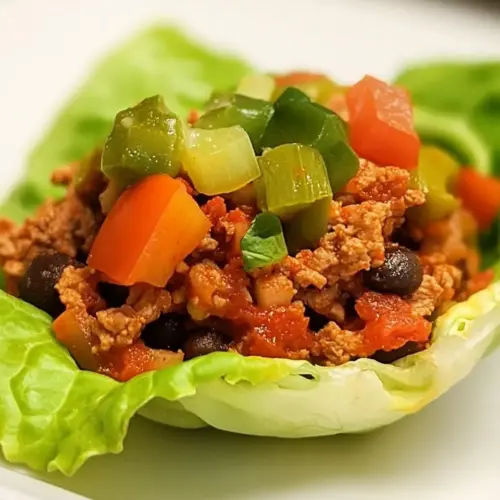
Turkey Picadillo
Turkey Picadillo is a bright, savory tomato and olive packed filling spooned into crisp lettuce cups. This easy weeknight dinner blends lean turkey with warm spices for a light yet satisfying meal, perfect for summer gatherings or quick family dinners. The contrast of warm filling and cool crunchy lettuce makes it irresistible, so try it for a flavorful, low fuss option tonight.
Equipment
- Large non-stick frying pan
- Wooden Spoon
Ingredients
- 4 tsp . olive oil Heat or sauté with other aromatics to form the cooking fat base that helps brown and flavor the turkey.
- 1 lb . lean ground turkey (or use ground beef if you prefer) Provide the primary protein and bulk for the picadillo, browning and breaking apart to absorb spices and liquids for a lean filling.
- 1 onion, chopped small Soften and sweeten when cooked, contributing moisture and a mild aromatic backbone that complements peppers and spices.
- 1 large green bell pepper, chopped small Add a crisp, slightly bitter green note and texture when softened, balancing sweetness from onions and acidity from tomatoes.
- 1 14.5 oz. can chicken broth (see notes) Deglaze the pan and add a savory, poultry-flavored liquid component that helps create a saucy consistency and meld flavors; choose low-sodium if desired.
- 1 14 oz. can crushed tomatoes Supply body, acidity, and tomato richness to form the saucy base that binds the meat and seasonings together.
- 2 tsp . ground cumin Introduce warm, earthy, slightly citrusy heat that complements tomato and meat and helps define the dish’s Latin-inspired flavor.
- 2 tsp . ground coriander Bring floral, lemony, and slightly sweet notes that enhance complexity and lift the overall spice profile of the picadillo.
- salt and fresh-ground black pepper to taste (I didn’t use much salt, about 1/4 tsp) Season the dish to taste, balancing and enhancing other flavors; add sparingly and adjust at the end to avoid over-salting.
- 2 tsp . Green Tabasco sauce (or more to taste; see notes) Contribute vinegary heat and tang for brightness and a subtle spicy kick that can be adjusted to personal preference.
- 1/2 cup chopped green olives + a few sliced green olives to garnish (preferably Spanish olives) Add briny, savory, and slightly bitter olive flavor that provides contrast, texture, and an authentic Mediterranean-Latin touch.
- 2 T green olive brine (from the jar of olives) Provide additional salty, briny liquid to intensify olive flavor and integrate its taste into the cooking sauce.
- 2 heads iceberg lettuce Serve as crisp, cool vessels for scooping the picadillo, offering textural contrast and a refreshing counterpoint to the warm filling.
Instructions
- Heat 2 teaspoons olive oil in a large non-stick frying pan.: The first thing you will notice is the gentle shimmer of the oil as it warms, releasing a faint grassy scent. Warming oil properly ensures even browning when the ground turkey hits the pan, creating those small brown bits that carry deep flavor. If the oil smokes, the pan is too hot, so turn it down, because burnt oil will add bitterness. A common pitfall here is adding meat to oil that is not hot enough, which causes it to steam rather than brown, leaving you without those savory browned edges.
- Add the turkey, and cook over medium heat until it’s starting to brown, about 6-7 minutes.: As the meat sizzles, listen for a steady, gentle crackle and watch the surface change from pink to pale tan with flecks of caramelized color. Stir occasionally to break the meat into small pieces, allowing each to sear. This browning creates Maillard flavor, essential for the recipe's savory depth. Avoid crowding the pan, or the turkey will release moisture and you will miss that toasty aroma. If you see too much liquid pooling, increase heat briefly to evaporate it.
- Push the meat over and add the other 2 teaspoons of oil (or as needed).: When you move the cooked portion, you should see browned fond on the pan surface, which is flavor gold. Adding a bit more olive oil revives the cooking surface and helps the next batch of vegetables to soften without sticking. If you skip this, the onions can grab and burn on any dry patches. A common error is adding too much oil, which can make the final filling greasy, so a small amount is usually enough.
- Add the chopped onion and green bell pepper, and continue to cook, turning occasionally, until the onions and peppers are soft and starting to brown on the edges.: You'll smell sweet, caramelized notes as the onion and green bell pepper soften, and you'll see their color deepen at the edges. This step builds the aromatic base that balances the meat and tomatoes. Cook until tender but not mushy to retain pleasant texture in the lettuce cups. Stir occasionally to prevent sticking, since burned bits can create an acrid taste.
- Add the chicken stock, crushed tomatoes, ground cumin, ground coriander, and salt and pepper to taste and simmer over low heat until the liquid has mostly evaporated, about 20 minutes.: The pan will steam briefly as the chicken broth and crushed tomatoes hit it, releasing a rich, tomatoey aroma. The spices will bloom and infuse the liquid, creating a deep, cohesive flavor. Simmering gently allows flavors to concentrate and marry, producing a luscious texture that clings to the meat. If you simmer too hard, you risk over reducing and drying the mixture, so keep the heat low and patient.
- When there is only a small amount of liquid left, stir in the Green Tabasco Sauce, chopped green olives, and green olive brine, stirring to combine all the ingredients.: At this stage, the mixture should be thick enough that a wooden spoon leaves trails when drawn through it. Adding the Green Tabasco sauce gives a bright, vinegary heat while the chopped green olives and their brine add a saline lift that cuts through the tomato richness. Stir thoroughly so the briny pieces are evenly distributed. A frequent slip is adding these too early, which can mute their fresh tang, so wait until the sauce is mostly reduced.
- Cook about 5-10 minutes longer, or until the pan is nearly dry.: During this final simmer, listen for a gentle bubbling and watch as the mixture thickens; the surface should glisten without pooling liquid. This reduction concentrates flavors and helps the filling adhere nicely to iceberg lettuce cups. If you let it get completely dry, pieces can become pasty, so aim for a slightly glossy, clingy texture. Overcooking here can toughen the meat, so keep an eye on it.
- While the meat is simmering, peel off any damaged outer leaves of lettuce, cut away the core, and cut the heads in half.: The sound of tearing crisp leaves is satisfying, and you should aim for cups that hold their shape. Clean, dry leaves make assembly tidy and pleasant to eat. If leaves are wet, pat them dry, since moisture will make the filling slide out. A common mistake is not trimming the core enough, which makes it hard to separate intact cups.
- To serve, peel off a double layer of lettuce to form a cup, fill with the hot meat mixture, garnish with green olive slices, and eat!: The contrast between warm, savory filling and cold, crisp lettuce is delightful; you will notice steam rising when you spoon the mix in, and the first bite should blend salty, tangy, and spiced notes. Arrange the cups on a platter for guests to assemble their own, letting people add extra hot sauce if they like. Be careful when handling hot filling, and serve promptly so the lettuce stays crisp. If the filling is too hot, let it rest a few minutes to avoid wilting the leaves.
- If this makes more than you’ll eat at one time, just refrigerate the filling and the lettuce leaves separately, then heat the Picadillo mixture in a small pan or in the microwave when you want to eat the leftovers!: Proper cooling preserves texture, and refrigerated filling actually deepens in flavor overnight. Reheat gently over medium low heat, adding a splash of broth if needed to loosen the sauce, and reassemble with fresh chilled leaves for the best contrast. Avoid reheating multiple times, because repeated heating will dry the meat and soften the lettuce too much.
Notes
- Keep the pan hot for browning A properly heated pan creates those flavorful browned bits on the ground turkey, which are foundational to the dish. If the pan is too cool the meat will steam and taste flat.
- Measure spices early Having the ground cumin and ground coriander ready prevents over spicing. I mix them together and add them with the tomatoes so they bloom evenly.
- Control salt with olives and broth Since the green olives and chicken broth carry salt, I hold back on added salt until the end to avoid an overly briny outcome.
- Trim lettuce carefully Remove the core cleanly so you can pull off neat cups. Dry leaves make for a nicer bite and prevent sogginess.
- Store filling and leaves separately Refrigerate the filling in a sealed container and keep the leaves dry in a separate bag. Reheat the filling and assemble fresh cups for best texture.