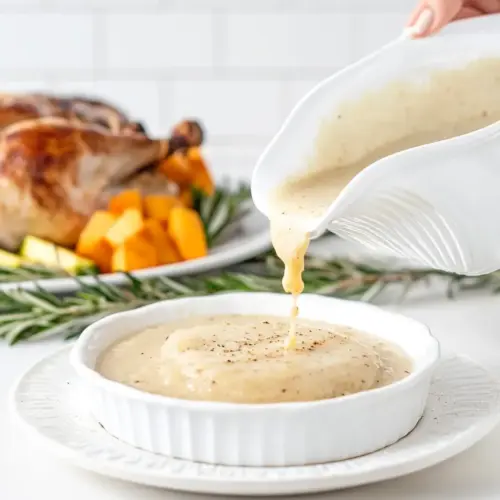
Turkey Gravy Without Drippings
Turkey Gravy Without Drippings is a creamy, savory sauce made from a simple roux and rich turkey stock. It is an easy weeknight or holiday accompaniment that yields a smooth, glossy finish perfect for mashed potatoes and roasted poultry. Whisk gently and adjust seasoning to taste for a fail safe gravy that adds comforting flavor to any meal.
Equipment
- Saucepan
- Whisk
- Measuring Cups
- Fine-mesh strainer
Ingredients
- 1/4 cup butter Melted contributes rich fat and a silky mouthfeel that forms the base of the gravy; it helps carry flavor and provides a smooth texture when combined with flour to make a roux. Gently browning prevents a raw butter taste and adds a subtle nutty note to the sauce.
- 1/4 cup all-purpose flour Toasted creates the thickening agent by cooking with butter into a roux that gives body and stability to the gravy; it must be cooked briefly to remove raw flour taste while avoiding burning. Properly incorporated, it ensures a glossy, lump-free consistency when liquid is added gradually.
- 2 1/2 cups turkey stock Simmered supplies savory liquid and depth of flavor that defines the gravy’s turkey character; using stock builds complexity and balances the fat and roux for proper consistency. Slowly adding it while whisking helps achieve a smooth, velvety sauce without lumps.
- 1 tablespoon fresh parsley, chopped Chopped provides fresh herbaceous brightness that lifts the savory gravy and adds a hint of color; it should be stirred in at the end to preserve its flavor and aroma. Parsley complements the stock’s richness without overpowering the overall sauce.
- 1 teaspoon ground pepper Ground adds sharp, warming heat and aromatic complexity that enhances the gravy’s savory profile; it should be adjusted to taste and added gradually to avoid overwhelming the sauce. Freshly ground pepper yields the best fragrance and subtle bite.
- 1/2 teaspoons salt Measured supplies necessary saltiness to balance flavors and enhance the natural taste of the stock and butter; it should be added sparingly and adjusted at the end to avoid over-salting. Tasting as you go ensures the proper seasoning for the finished gravy.
Instructions
- In a medium saucepan, melt the butter over medium heat.: You will notice the butter soften and then foam slightly as it heats, with a gentle nutty aroma developing if left too long. Using medium heat ensures the butter melts evenly without browning, which helps maintain a light roux. Stir occasionally with a whisk or wooden spoon to distribute the heat. A frequent mistake is turning the heat too high, which can scorch the butter and create bitter flavors, so keep the temperature steady.
- Whisk the flour into the melted butter. Allow this mixture to cook for two minutes, making sure you are stirring to prevent it from burning.: As you whisk in the flour , the mixture will turn into a smooth paste and begin to smell toasty, signaling that the raw flour taste is cooking away. The color will move from pale to a slightly deeper cream, and the texture should feel velvety on the whisk. Constant stirring prevents hot spots and lumps from forming. Avoid undercooking this step, as undercooked roux leads to a floury taste, and overcooking will darken the roux, changing the final flavor profile.
- Slowly whisk in the turkey broth, parsley, pepper, and salt. Allow the mixture to come up to a simmer while stirring. Serve warm.: When you start adding the turkey stock , pour just a small stream at first while whisking vigorously so the liquid integrates smoothly into the roux, creating a glossy emulsion. The sauce will loosen and then thicken as more stock is incorporated, and you will hear a gentle simmer begin to form. Adding the parsley releases a fresh green scent and the aroma of the pepper will bloom. A common error here is dumping all the stock in at once, which can create clumps, so patience is essential for a silky finish.
- Allow the mixture to come up to a simmer while stirring.: As the gravy reaches a simmer, small bubbles will rise and the surface will move with even motion, while the color deepens slightly. Keep stirring to ensure even thickness and to prevent the bottom from sticking. Simmering activates the thickening power and develops flavor, so allow it to maintain a gentle simmer for a minute or two so the texture becomes smooth and glossy. Watch for too vigorous a boil because that can break the emulsion and make the sauce grainy, so maintain a gentle heat.
- Serve warm.: Once the gravy has a smooth sheen and coats the back of a spoon, you will know it is ready to serve. The aroma should be savory and herb forward from the turkey stock and parsley , with a balanced salt and pepper presence. Transfer to a warmed gravy boat or bowl to keep it from cooling too quickly. A typical mistake is letting the gravy sit cold before serving, which allows it to thicken too much; gently rewarm if needed and whisk to restore the glossy texture.
Notes
- Finish with aromatics: Stir in finely minced fresh parsley at the end to brighten the sauce and add a fresh finish that contrasts the savory stock notes.
- Adjust thickness: If you prefer a thicker gravy, reduce the turkey stock slightly, or for a thinner sauce add a bit more stock gradually while whisking.
- Use alternative stocks: Swap in chicken or beef stock if you do not have turkey stock, but taste as you go because each stock has a different salt level and intensity.
- Control seasoning: Add pepper and salt in small increments, tasting between additions so you do not over season the gravy.
- Make ahead: Prepare the gravy, cool it quickly, and refrigerate. Rewarm gently while whisking to return it to a silky state before serving.
- Strain for silkiness: For an ultra smooth finish, pass the gravy through a fine mesh strainer before serving to remove any bits of roux or herb.