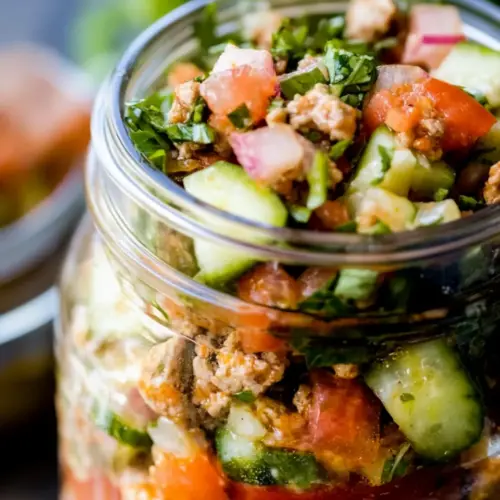
Turkey Burger Mason Jar Salad Recipe
Turkey Burger Mason Jar Salad Recipe delivers warm, savory crumbled turkey with a silky tomato Dijon dressing and crisp romaine for an easy weeknight dinner or portable lunch. The combination is juicy, satisfying, and high protein, making it perfect for summer meal prep. Try it when you want something quick, flavorful, and ready to go.
Equipment
- Grill
- Large Pan
- Food Processor
- Jars
Ingredients
- 3 frozen turkey burger patties Cook frozen until fully browned and cooked through, providing the primary protein and hearty base for the burger salad; thaw slightly before slicing to distribute warm meat over the greens and tomatoes. Use patties as crumbled or whole pieces depending on desired texture and serving presentation.
- 1/2 tablespoon olive oil Sauté lightly to coat the pan and prevent sticking while adding a subtle fruitiness and richness that complements the turkey; helps in softening onions to release their sweetness. Measure carefully to avoid greasiness on the salad layers.
- 1 1/2 cups onion sliced Slice thinly to develop layers of caramelized sweetness when sautéed or served raw for crunch; contributes bulk and aromatic depth that balances tomato acidity and mustard tang. Use consistent slices for even cooking and attractive jar layering.
- Pepper to taste Season generously to adjust overall flavor profile and enhance other savory components without overpowering; provides a bright, sharp contrast to richer elements like tomato paste and olive oil. Grind fresh at serving time if possible for optimal aroma.
- 1/2 cup + 2 tablespoons tomato paste Stir into cooked onions and tomatoes to create a concentrated, savory tomato element that adds body and umami to the dressing or topping; contributes thickness and deep tomato flavor to bind ingredients. Combine with seasonings and vinegars to make a cohesive sauce.
- 1 tablespoon + 1/2 teaspoon Dijon mustard Emulsify with oils or blend into the tomato mixture to introduce tangy, sharp mustard notes that cut through richness and brighten the salad. Use measured amounts to balance acidity while supporting the dressing’s emulsification.
- 1 teaspoon balsamic vinegar Acidify the dressing or tomato mix to enhance brightness and balance sweetness, lending depth and subtle complexity to the overall flavor profile. Add sparingly and taste as it can quickly dominate other delicate ingredients.
- 1/2 teaspoons salt Season sparingly to control sodium levels while enhancing overall taste and bringing out natural flavors in the turkey and vegetables; helps to intensify other aromatics when combined. Dissolve into liquids for even distribution throughout the salad.
- 1/2 teaspoon garlic powder Add a warm, savory undertone to the seasoning blend to complement garlic and onion flavors; works especially well in dry rubs or mixed into tomato-based dressings. Use measured amounts to avoid overwhelming milder ingredients.
- 1/2 teaspoon onion powder Provide a subtle sweet-onion flavor that layers with fresh onion slices and cooked aromatics, offering depth to dressings and tomato mixtures. Blend evenly with other dried spices for consistent seasoning.
- 4 large Roma tomatoes chopped and divided Chop and divide to supply fresh, juicy acidity and vibrant color; part can be mixed into a tomato sauce or dressing while the rest tops the salad for texture contrast. Use ripe Roma tomatoes for firm flesh that holds up in jars.
- 1/2 tablespoon Italian seasoning Season the tomato mixture or dressing with herbal Mediterranean notes to complement the turkey and romaine, adding aromatic complexity and savory depth. Sprinkle evenly to ensure balanced herb distribution.
- 1/4 teaspoon granulated sugar Balance acidity and round out tomato brightness with a touch of sweet flavor, smoothing harsh edges in the dressing or sauce. Dissolve into the tomato paste mixture for subtle sweetness without cloying the salad.
- 2 tablespoons olive oil Finish dressings or lightly drizzle over the assembled jar to add richness and mouthfeel while helping to meld flavors together; also used for sautéing aromatics. Use extra-virgin for higher flavor quality and a fresher finish.
- 1 cup large head of romaine lettuce chopped Chop into bite-sized pieces to provide crisp, refreshing greens that offer a crunchy contrast to warm turkey and saucy tomato components, forming the salad’s base and bulk. Pack loosely in jars to preserve texture and prevent wilting.
Instructions
- Preheat your grill to medium heat. Lightly spray or brush both sides of the frozen turkey burgers with oil and place on grill about 4 inches above heat. Grill burgers 8 minutes on one side. Turn and grill other side 7 minutes or until done and a meat thermometer inserted in center of the burger registers 165 degrees Fahrenheit. Transfer to a plate and cover to keep warm.: You will notice a steady, even heat when the grill is ready, with minimal flare ups. Preheating ensures the patties sear quickly, creating the Maillard browning that adds savory depth. If you skip preheating, the patties can stick and cook unevenly. A common mistake is too high heat which chars the exterior while leaving the center undercooked, so aim for a consistent medium.
- While the burgers cook, heat the olive oil in a large pan over medium-high heat. Cook the onions until caramelized and golden brown, about 10-15 minutes, stirring occasionally. Season with salt and pepper.: The oil promotes browning and prevents sticking, creating a thin, savory crust that sizzles when it hits the grates. Holding the patties about 4 inches above heat reduces flare ups and allows steady cooking through the center. If you add too much oil, you will get excess smoke and a greasy patty, so use just a light coat.
- In a small food processor, combine the tomato paste, Dijon mustard, balsamic vinegar, salt, garlic powder, onion powder, 1 chopped Roma tomato, Italian seasoning, sugar, and a few twists of pepper until smooth and broken down, scraping the sides down as necessary. It will take a few minutes to get this really smooth. Make sure the tomato is completely broken down, as the water in it is necessary to keep the tomato sauce fluid.: Listen for a consistent sizzle and observe the patties for juices rising to the surface, a sign that the internal temperature is rising. This long first side allows a deep crust to develop, locking in moisture. Turning too early prevents that crust from forming and can cause the patties to break apart.
- Once smooth, keep the food processor running and stream in the olive oil. Process until well combined.: After flipping, the second side will brown and give off a slightly sweet aroma from caramelized surface proteins. Rely on a meat thermometer to reach 165 degrees Fahrenheit , which ensures safety and juiciness. Overcooking past this temperature dries the meat, so remove promptly once the thermometer reads target temp.
- Divide the tomato sauce between each of the 3 jars, followed by the cooked onions and then the remaining chopped tomato. Crumble the turkey burgers and divide between the jars. Finally, fill the jars with the lettuce.: Carryover heat will finish the patties gently while you prepare the sauce and onions, and covering traps steam that keeps the interior tender. A thin foil tent works well. Avoid sealing too tightly for long periods because trapped moisture can make the crust soft.
- Seal and refrigerate until ready to eat.: The oil should shimmer but not smoke, and you will smell a warm, nutty scent as it heats. This step primes the pan for the onion to caramelize evenly. If the oil smokes, lower the heat to protect flavor and prevent burning.
- Cook the onions until caramelized and golden brown, about 10 to 15 minutes, stirring occasionally: Watch the onions transform from opaque and crunchy to soft, sweet ribbons that smell intensely savory and slightly sweet. Stirring occasionally lets them brown without burning, and patience is rewarded with deep flavor. Rushing this step by using high heat will scorch the edges and create bitterness.
- Season with salt and pepper: Adding salt at this stage draws out moisture and accelerates caramelization, while freshly ground pepper brightens the finish. Taste a small spoonful to ensure balance. Over seasoning early can make it hard to adjust later, so season progressively.
- In a small food processor, combine the tomato paste, Dijon mustard, balsamic vinegar, salt, garlic powder, onion powder, 1 chopped Roma tomato, Italian seasoning, sugar, and a few twists of pepper until smooth and broken down: As the ingredients whirl, the paste loosens and aromas open, creating a concentrated tomato base. The chopped Roma tomato adds necessary water to help the mixture become silky. If the processor stalls, scrape the sides and continue; an under processed sauce will be chunky and the texture can make the dressing separate.
- It will take a few minutes to get this really smooth: Keep working the mix until you no longer see tomato chunks, and the paste has distributed evenly, releasing a tangy, herb laden scent. A smooth sauce emulsifies better when you add oil, so take the time here. Rushing results in a gritty, uneven texture that will not coat the romaine lettuce well.
- Make sure the tomato is completely broken down, as the water in it is necessary to keep the tomato sauce fluid: The tiny droplets of tomato juice help create a cohesive, pourable dressing that melds with tomato paste . If you skip breaking it down, the sauce can be too thick. A watery but well emulsified sauce is better than a dry paste that clumps in the jar.
- Once smooth, keep the food processor running and stream in the olive oil: As you slowly add the olive oil , you will hear the mixture lighten and the sauce will take on a glossy sheen, signaling an emulsion is forming. This step gives the dressing body and helps it cling to both warm and cold components. Pouring the oil too quickly risks breaking the emulsion, leaving a separated sauce.
- Process until well combined: The final texture should be silky and homogeneous, with the aroma of Dijon mustard and balsamic vinegar brightening the tomato base. Stop and taste, adjusting seasoning if needed. A sauce that tastes flat likely needs a touch more acid or salt, so tweak carefully.
- Divide the tomato sauce between each of the 3 jars, followed by the cooked onions and then the remaining chopped tomato: You will build layers that protect the lettuce from the wetter components. The sauce at the bottom acts as a flavor reservoir, the warm onions provide savory pockets, and fresh tomato adds bursts of juiciness. A frequent error is placing lettuce too low, which leads to soggy leaves.
- Crumble the turkey burgers and divide between the jars: Crumbling the warm patties releases juices that mingle with the sauce and onions, creating a hearty layer that is satisfying in every bite. The contrast between warm meat and cool vegetables is part of the appeal. Avoid overly fine crumbles which can make the jar feel dense rather than layered.
- Finally, fill the jars with the lettuce: Top each jar with chopped romaine lettuce to keep it crisp and bright. The clean, cool crunch is the last sensory element and makes eating from the jar pleasant. Make sure the lettuce is dry, because moisture will compromise the texture over time.
- Seal and refrigerate until ready to eat: Sealing preserves freshness and allows flavors to mingle while keeping the lettuce crisp. I refrigerate for a short time before transport, and these jars hold well for a few days. Do not keep them unrefrigerated for long periods, as the meat and sauce need to stay chilled for food safety.
Notes
- Switch the cooking surface If you do not have a grill, pan sear the patties in a cast iron skillet over medium high heat, watching for the same golden crust and checking internal temperature, which will still target 165 degrees Fahrenheit.
- Boost the sauce intensity If you love bold flavor, increase the amount of tomato paste slightly and add an extra 1/4 teaspoon of Italian seasoning, then balance with a pinch more granulated sugar for harmony.
- Make ahead smartly Prepare the sauce and caramelized onions a day ahead and store separately; assemble jars the morning you plan to eat to maximize crispness of the romaine lettuce.
- Adjust salt carefully Taste the sauce before dividing it, because the turkey burger patties and cooked onions will add additional salt; under seasoning early lets you fine tune later.
- Pack for travel Keep the jars upright in an insulated bag with an ice pack if you need to transport them, ensuring food safety and preserving texture for several hours.