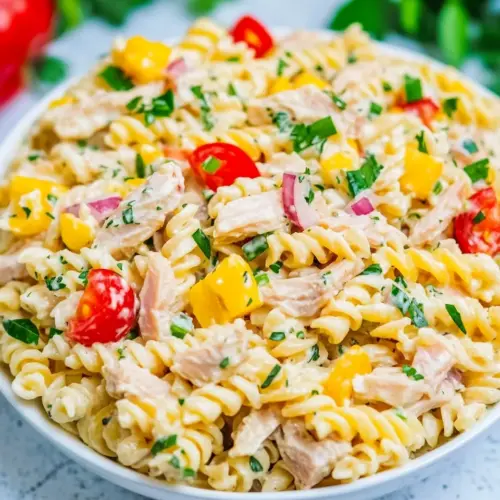
Tuna Pasta Salad
Tuna Pasta Salad is a creamy, bright, and easy cold pasta dish with flaky tuna, sweet corn, and crisp red bell pepper. This refreshing salad is perfect for an easy weeknight dinner or a picnic, offering satisfying protein and crunchy texture. Make it ahead for a flavorful, fuss free meal that keeps well in the fridge and pleases a crowd.
Equipment
- Large Pot
- Colander
- Large Bowl
- Small mixing bowl
- Whisk
Ingredients
- 8 ounces uncooked pasta Cooked to al dente and tossed with other ingredients to provide bulk, texture, and a neutral base that soaks up the dressing flavors. Acts as the primary carbohydrate and makes the salad hearty enough to serve as a main or side. Holds its shape after chilling for an appealing presentation.
- 8 ounces tuna in water, drained Flaked and drained to add savory, protein-rich bites throughout the salad for substance and a seafood flavor. Provides healthy fats and umami while keeping the dish nutritious and satisfying. Easily combines with creamy dressing without overpowering other elements.
- 1 cup canned or frozen sweet corn, drained or thawed Sweet and tender kernels added for pops of natural sweetness, color contrast, and a pleasant bite. Balances the savory tuna and creamy dressing while contributing additional fiber and texture. Can be used from canned or thawed frozen stocks depending on convenience.
- 1/2 cup small diced red bell pepper Crisp, small-diced to contribute fresh crunch, vibrant color, and a mild sweet-pepper flavor that brightens the salad. Adds a contrasting texture to soft pasta and tuna while offering visual appeal. Helps keep each forkful interesting and balanced.
- 1/2 cup small diced red onion Sharp and small-diced to introduce pungent, slightly sweet onion flavor and a crunchy texture that lifts the overall taste. Provides aromatic depth and a subtle bite that complements creamy elements. Distributes evenly through the salad for consistent flavor.
- 2 tablespoons fresh dill, chopped Freshly chopped to impart aromatic, herbaceous notes and a bright, slightly citrusy flavor that lightens the creamy dressing. Enhances freshness and ties together the seafood and vegetables with herbal complexity. Used sparingly to avoid overpowering other flavors.
- 1/2 cup mayonnaise Creamy binder that lends richness, smooth mouthfeel, and a slightly tangy profile to coat the pasta and tuna evenly. Balances acidity and seasonings while helping ingredients adhere together for easy serving. Can be adjusted for creaminess level.
- 1/2 cup plain non-fat Greek yogurt Thick and tangy base added to lighten the mayonnaise while contributing protein and a yogurt-like acidity. Helps create a balanced, creamy dressing with reduced fat compared to using mayonnaise alone. Provides body and contributes to a smooth texture.
- 1 teaspoon fresh lemon juice Freshly squeezed to add brightness and a mild citrusy acidity that cuts through the richness of the mayonnaise and yogurt. Enhances overall flavor balance and prevents the salad from tasting heavy. Also helps tie together the seafood and herbs.
- 1/2 teaspoon dijon mustard Piquant emulsion ingredient to add subtle sharpness and depth within the dressing, enhancing savory notes without dominating. Helps emulsify the dressing slightly and contributes a balanced mustard flavor. Works with lemon juice to round out the profile.
- 1/2 teaspoon garlic powder Earthy seasoning added to impart mild garlic flavor consistently throughout the salad without raw garlic intensity. Enhances savory depth and complements tuna and mayonnaise for a cohesive taste. Allows for easy distribution and longer shelf stability.
- 1/2 teaspoon paprika Smoky spice sprinkled to contribute warmth, subtle smokiness, and a hint of color to the finished salad. Enhances depth of flavor and pairs well with tuna and paprika-friendly garnishes. Used sparingly to avoid overwhelming the dish.
- Kosher salt, to taste Added gradually to adjust overall seasoning and bring out the flavors of tuna, vegetables, and dressing while ensuring balance. Provides necessary salinity to enhance taste perception and unify components. Tasted and adjusted to personal preference.
- Black pepper, to taste Freshly ground to taste for finishing seasoning that adds mild heat and aromatic pungency to lift the salad. Helps round out flavors and offer a subtle peppery bite that contrasts creamy elements. Adjusted at the end to suit preferences.
Instructions
- Cook pasta to al dente according to instructions on the pasta box.: Warm, starchy steam rises as the pot comes to a gentle boil, and you should notice the faint wheaty scent of the pasta , a reassurance that it is cooking properly. The al dente texture is important because it gives a slight resistance to the bite, preventing the pasta from turning mushy once chilled in the salad. A good test is to bite into a piece, looking for a tiny white core to disappear, which signals it is tender yet firm. If you overcook, the pasta will become soft and gummy and will soak up too much dressing, so check early to avoid this common error. Use plenty of boiling water so the pieces can move freely and not stick together.
- Once cooked, drain, and rinse with cold water. Set aside to cool.: As you hear the water pour away, the steaming smell will change to a more neutral, cooled aroma. Rinsing under cold water shocks the pasta , stopping the cooking and preventing that residual heat from wilting other ingredients. It also washes away excess starch, which helps the dressing cling to the pasta rather than creating a gluey texture. A frequent mistake is skipping the rinse, which can lead to clumping and a pasty mouthfeel. Drain thoroughly so the salad does not get watery.
- In a large bowl add tuna, corn, bell pepper, red onion, and dill.: When the ingredients hit the bowl, you will notice a medley of colors and scents, the salty savory of the tuna and the herbaceous lift from chopped dill . Folding these ingredients together by hand ensures even distribution, allowing the sweet corn and crisp red bell pepper to contrast with the flaky tuna . Avoid pressing too hard when mixing, because that can break the tuna into unappealingly tiny pieces rather than pleasant flakes.
- Add in the cooled pasta and toss.: As you combine the cooled pasta with the other components, you should see the bowl transform into a cohesive salad with color and body. Toss gently to coat every piece, which helps each forkful deliver a balance of protein, veg, and starch. If the pasta is still warm, it may soften the vegetables, so ensure it is cool for the best texture. Overzealous tossing can bruise delicate bits of dill , reducing aromatic impact.
- Cover in dressing and stir to combine.: Pouring the creamy dressing over the salad should create a glossy sheen across the ingredients, the aroma of lemon juice brightening the mixture. Stirring until the dressing is evenly distributed ensures every bite has moisture and flavor without being saturated. Go slowly so you can control consistency, adding more dressing only if necessary. A common pitfall is overdressing, which makes the salad heavy and masks the individual flavors.
- Taste and season to taste with kosher salt and black pepper.: This is the moment where the salad comes alive, as a pinch of kosher salt opens the flavors and a twist of black pepper adds a finishing edge. Taste from different parts of the bowl because flavors can concentrate unevenly, and season gradually, since both canned tuna and canned corn can be salty. Adding all the salt at once risks over seasoning; instead, incrementally adjust until the balance feels right to your palate.
- Cover the salad and let sit in the refrigerator for at least 30 minutes.: Chilling allows the dressing to settle into the pasta and lets flavors marry, yielding a more harmonious dish. You will notice the aroma shift from bright and separate to a mellow, unified scent after resting. If you skip this resting step, the salad may taste a bit raw and the dressing will not integrate as fully. Be sure to cover it tightly to avoid absorbing other refrigerator odors.
- Add all the ingredients for the dressing to a small mixing bowl and whisk to combine.: Whisking should create a silky, slightly aerated dressing that clings well to the pasta and vegetables, with a faint tang from the Greek yogurt and a smooth mouthfeel from the mayonnaise . The tiny bubbles formed during whisking lighten the texture slightly and help the seasoning distribute evenly. Over whisking is seldom an issue here, but under mixing can leave pockets of concentrated flavors. Taste the dressing before adding so you can adjust the acidity or seasoning as needed.
Notes
- Swap the pasta shape Choose a spiral or shell pasta to trap dressing in the curves, boosting flavor in every bite.
- Adjust the mayo yogurt ratio For a lighter dressing, increase the plain non fat Greek yogurt and reduce the mayonnaise by up to half.
- Soften the onion bite If raw red onion is too assertive, rinse diced pieces in cold water for a few minutes to mellow them.
- Double the herbs Add more chopped fresh dill for extra herbal brightness, but add gradually to avoid overpowering.
- Chill before serving Refrigerate at least 30 minutes so the dressing soaks into the pasta for a more integrated flavor.