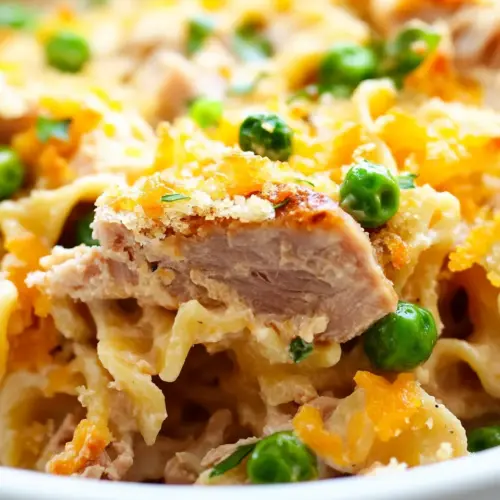
Tuna Noodle Casserole
Tuna Noodle Casserole is a creamy, cheesy, and comforting bake that combines tender egg noodles with flaky tuna, vibrant peas, and a crunchy panko topping. This easy weeknight dinner is hearty and budget friendly, delivering rich savory notes and a golden crust that everyone loves. Make it when you want a satisfying family meal that comes together quickly and reheats beautifully.
Equipment
- Large Skillet
- 9 X 13 baking dish
- Saucepan
Ingredients
- 12 ounces egg noodles Boil until tender and provide the pasta base that holds the casserole together; ensure noodles are al dente to avoid mushiness after baking. Offer substantial texture and starchiness that helps thicken the sauce when mixed. Complement the other components by absorbing flavors from the sauce and tuna.
- 3 tablespoons butter Melt to create a flavorful cooking fat for sautéing aromatics and forming the roux; add a rich, slightly sweet dairy note to the dish. Coat the noodles and other ingredients for a glossy mouthfeel and help the breadcrumb topping brown in the oven. Contribute to overall richness and depth of flavor.
- 1 small onion diced Sauté after dicing to build savory sweetness and aromatic complexity as the base of the sauce. Provide texture and subtle bite that contrasts with soft noodles and creamy sauce. Caramelize slightly to enhance umami and balance the richness of dairy components.
- 4 cloves garlic minced Mince and cook briefly to release pungent, savory oils that brighten and deepen the casserole’s flavor profile. Blend seamlessly into the sauce to add aromatic lift without overpowering delicate ingredients like tuna and peas. Support savory balance alongside onion and celery.
- 1 cup celery diced Dice and sauté to add a mild, crunchy aromatic layer that enhances the savory base; celery brings fresh, slightly bitter notes. Provide structural contrast to soft noodles and creamy sauce while contributing moisture. Help carry flavors and aroma throughout the casserole.
- 1 cup mushrooms sliced Slice and sauté to introduce earthy, savory notes and tender texture that complement the creamy sauce. Absorb surrounding flavors while adding meaty mouthfeel that pairs well with tuna. Browning lightly enhances umami and overall depth.
- 1/4 cup flour Whisk into melted butter to form a roux that thickens the sauce and gives it body; use evenly to avoid lumps. Provide the starchy backbone that helps the sauce cling to noodles and tuna. Cook briefly to remove raw flour taste before adding liquids.
- 2 cups chicken broth Simmer with the roux to create a flavorful, savory liquid base for the sauce; choose low-sodium if controlling salt levels. Supply concentrated savory depth and help achieve desired sauce consistency when combined with milk and flour. Balance the dairy and seafood flavors in the casserole.
- 1 cup milk Stir into the roux and broth mixture to produce a creamy, smooth sauce; warm before adding to prevent curdling. Add dairy richness and slight sweetness while thinning or thickening the sauce as needed. Bind ingredients together for a cohesive casserole texture.
- 1 1/2 cups frozen peas Fold in while partially thawed to add pops of sweetness, color, and textural contrast; peas also contribute light vegetal flavor. Maintain frozen status until mixing to preserve shape and prevent overcooking. Provide nutritional value and brighten the overall dish.
- 15 ounces can solid white albacore tuna drained Flake into the sauce after draining to add hearty, savory protein and a mild seafood flavor that defines the casserole. Use solid white albacore for firm texture and clean taste that mixes well with creamy components. Distribute evenly so each serving contains tuna.
- 1/2 cup sour cream Stir in to increase creaminess and introduce tangy richness that balances the sauce; blend thoroughly for uniform texture. Soften the sauce and help it cling to noodles while adding a subtle acidic counterpoint to cheese. Adjust amount to control overall tang and moisture.
- 2 cups shredded cheddar cheese Sprinkle and melt into the sauce to contribute sharp, savory cheese flavor and gooey texture throughout the casserole. Combine with other dairy elements to create a cohesive, cheesy profile and help gratin the top slightly. Choose a sharpness level that complements tuna without overwhelming it.
- 1 cup panko bread crumbs Scatter over the top to provide a crunchy, golden crust after baking; panko yields an airy, crisp texture. Absorb some butter for browning and contrast against the creamy interior. Create visual appeal and a pleasant textural finish to each serving.
- 4 tablespoons unsalted butter melted Drizzle over panko or mix with breadcrumbs to add richness and promote even browning of the topping; melted butter also helps crumbs crisp. Impart a silky mouthfeel and help the crust adhere to the casserole surface. Enhance flavor and color during baking.
- 1/4 cup parmesan cheese grated Grate and combine with breadcrumbs or sprinkle over the topping to lend a nutty, salty, umami finish that elevates the crust. Add depth and a savory accent that complements cheddar and balances the creamy interior. Use sparingly to avoid overpowering the other cheeses.
Instructions
- Preheat oven to 375 degrees F. Lightly grease a 9 x 13 baking dish and set aside.: Warmth fills the kitchen as the oven comes to temperature, creating an even heat that will brown the topping and finish the casserole with a gentle, steady heat. This step ensures the baking dish is ready so the moment you assemble the pan you can move it into an environment that crisps the panko without drying the interior. If you skip preheating you may end up with uneven browning, and the baking time will be unreliable. A common mistake is not greasing the dish well enough, which can make serving messy and remove some of the topping when you scoop portions.
- Cook the egg noodles per package directions, aiming for al dente. Drain and add them to the prepared baking dish.: The noodles should feel tender with a slight bite at the center, providing body that will absorb sauce without collapsing. After draining, toss them briefly to separate and spread them evenly in the dish for uniform sauce coverage. You will notice a faint wheat aroma as they steam, and they should not stick together if boiled and drained properly. Overcooking leads to a mushy texture after baking, so test a noodle a minute or two before the package time ends to achieve the right chew.
- Place a large skillet over medium heat, add butter and melt it. Add diced onion and saute for about 5 minutes, add garlic and saute for another 30 seconds. Add mushrooms and celery and saute for another 5, until softened.: As the butter melts it will release a warm, nutty scent that signals the start of flavor building. The onion should become translucent and slightly sweet, while the garlic turns fragrant quickly so watch it closely. When you add the mushrooms they will release moisture and begin to brown, concentrating their savory character, and the celery will soften but keep a little crunch. This combination creates a bed of complex aroma and texture that elevates the finished casserole. Avoid turning up the heat too high, which causes the garlic to burn and develop bitterness.
- Add flour, stir and cook for 1 minute. Slowly, while stirring continuously, add the chicken broth and after that the milk. Bring mixture to a simmer, and cook for a few minutes, until it thickens.: The short cook time on the flour removes raw starch and allows the roux to take on a light toasty scent. Adding the chicken broth and milk gradually while whisking prevents lumps and yields a glossy, smooth sauce that will coat the back of a spoon. As it simmers you will notice the sauce thicken and the kitchen will smell rich and savory. This step is the backbone of the casserole, creating the luxurious texture that binds ingredients. If you rush adding liquid you will create clumps, so keep stirring and add the liquid slowly for the best consistency.
- Stir in sour cream, until fully combined.: Once the sauce has thickened, the addition of sour cream contributes a subtle tang and silky body that lifts the overall flavor profile. Incorporating it off heat or with gentle warmth helps keep the texture smooth rather than breaking. The sauce will take on a slightly tangy aroma and become silkier to the touch. If you stir vigorously at high heat you risk curdling the dairy, which would alter both mouthfeel and appearance.
- Stir in frozen peas and drained tuna.: The frozen peas will soften and provide bright pops of color, while the flaked tuna distributes savory, briny notes that make the casserole feel hearty. Fold them gently into the sauce so you preserve the pea texture and avoid pulverizing the tuna. You will feel the sauce thicken slightly as the ingredients absorb some moisture. Overmixing can break the tuna into an indistinct paste, reducing the pleasant flaky contrast you want in each bite.
- Pour the mixture over the noodles in the pan. Sprinkle generously with cheddar cheese evenly.: Pouring the warm sauce over the egg noodles brings everything together, the steam rising and carrying a comforting scent that announces dinner. Spread the sauce to coat noodles evenly, then top with shredded cheddar cheese so it melts uniformly into the surface, creating pockets of molten richness. The visual should be glossy and slightly bubbling as it goes into the oven. If you pile sauce unevenly you will find some dry pockets after baking, so take a moment to distribute it consistently.
- In a small bowl, combine all the topping ingredients and stir. Sprinkle evenly on top of the dish.: The topping of panko bread crumbs , melted butter , and grated parmesan cheese should look like coarse sand when mixed, with butter coating the crumbs to encourage golden color. Sprinkle it to form a thin, even layer that will crisp in the oven and contrast the creamy interior. You should hear a slight crunch after baking and see a warm amber hue on top. If the topping is too thick it can insulate the casserole and slow heating, leaving the center less heated through, so keep it balanced.
- Bake in the preheated oven, uncovered, for about 20-30 minutes, or until the topping is lightly browned.: As the casserole bakes you will notice savory steam and a bubbling edge where sauce peeks through, while the topping shifts from pale to golden, releasing a toasty aroma. The cheese will melt into glossy ribbons and the crumbs turn crisp under the heat, offering audible contrast when you cut into the dish. Use visual cues more than time alone, checking for a light brown top and bubbling sides. Baking too long will dry out the interior, so remove the casserole once the topping has achieved an even golden color.
- Serve hot.: Bring the dish straight from the oven to the table while the topping is still crisp and the interior is warm and saucy. You will notice a pleasing steam and an inviting fragrance as you plate it, and the combination of creamy noodles, flaky tuna, and crunchy topping is best enjoyed right away. If kept too long the topping softens and the textures homogenize, so aim to serve promptly for the ideal balance.
Notes
- Prep Mise en Place Start by having all ingredients measured and ready, especially the diced vegetables and drained tuna, so the sautéing and sauce building flow without pauses which helps prevent overcooking any component.
- Watch the Aromatics Sauté the onion until translucent and garlic only until fragrant, this prevents bitter burnt garlic and builds a sweet base that underpins the whole casserole.
- Control the Heat Keep medium to medium low heat while forming the roux and adding liquids to avoid scorching the dairy and to achieve a glossy, smooth sauce free of lumps.
- Even Cheese Distribution Sprinkle the cheddar cheese evenly so every scoop gets melted cheese pockets, which improves texture and taste across the whole pan.
- Topping Balance Mix the panko with melted butter and parmesan cheese so it browns uniformly; too much topping can insulate the casserole, while too little leaves it soft on top.
- Check for Bubbling When baking, remove the casserole as soon as you see bubbling at the edges and a light golden top to keep the interior creamy rather than dry.