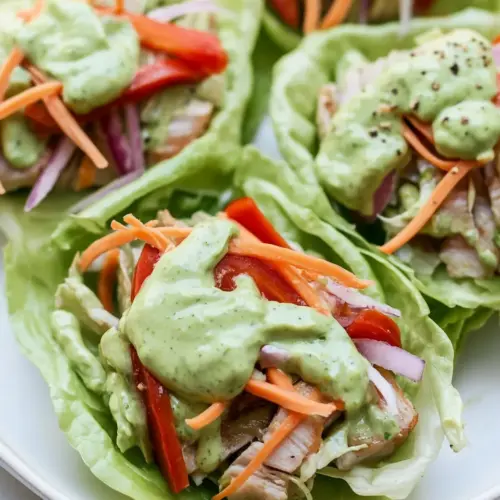
Tuna Lettuce Wrap with Avocado Yogurt Dressing
Tuna Lettuce Wrap with Avocado Yogurt Dressing is a creamy, crunchy, and easy summer lunch featuring flaky tuna, silky avocado yogurt, and crisp Butter or Bibb lettuce. Bright lime and cilantro lift every bite, making this an ideal easy weeknight lunch or light dinner. It's quick to assemble and perfect when you want fresh flavors without fuss.
Equipment
- Blender
- Cutting Board
- Knife
- Spoon
Ingredients
- 4 large leaves Butter or Bibb Lettuce Provide crisp, tender leaves that serve as natural, low-carb cups for holding the tuna mixture and toppings. Offer a mild, slightly sweet flavor that complements richer components while adding refreshing texture. Help present the dish attractively and make it easy to pick up and eat without utensils.
- 4 oz good quality tuna in olive oil, drained (I used Tonino) Add rich, savory protein with a silky mouthfeel thanks to the olive oil packing, infusing the wrap with umami and healthy fats. Contribute substantial body and satiety while pairing well with acidic and creamy elements in the dressing. Offer convenient, ready-to-use protein that speeds preparation and boosts nutritional value.
- 1 heart of palm, drained and sliced Bring a firm yet tender, slightly tangy crunch that contrasts softer components and provides visual interest when sliced. Impart a subtle briny, artichoke-like note that enhances the overall Mediterranean flavor profile. Act as a unique textural element that pairs well with creamy avocado and yogurt.
- 1/4 cup cherry tomatoes, quartered Introduce bright, juicy bursts of acidity and sweetness that cut through the richness of the tuna and dressing. Add vivid color and a light, fresh flavor that lifts each bite and balances heavier ingredients. Provide small, manageable pieces that distribute evenly throughout the wraps.
- 1/4 cup shredded or grated carrot Supply delicate natural sweetness and a slightly crunchy texture when shredded, adding color and mild earthiness to the filling. Help absorb some dressing and meld flavors while contributing to the overall balance of textures. Offer a nutritious source of beta-carotene and fiber in the wrap.
- 2 thinly sliced red onion, separated into rings Offer sharp, slightly pungent slices that add layered flavor and a crisp, aromatic bite to each wrap. Provide visual rings that separate ingredients and contribute a pleasant textural contrast. Can be adjusted in quantity for milder or stronger onion presence depending on preference.
- 2 tablespoons Avocado Yogurt Dressing, recipe follows Provide creamy, tangy coating that binds the tuna filling while delivering bright, herbaceous and spicy notes from the dressing components. Enhance mouthfeel and add moisture so the wraps are flavorful and cohesive without being soggy. Act as a central flavor amplifier tying various ingredients together.
- 1/2 cup 2% Greek yogurt, or dairy free version Deliver thick, creamy body and tanginess to form the base of the avocado yogurt dressing, adding protein and a smooth texture. Help mellow spicy elements and integrate fat from the avocado into a cohesive emulsion. Offer a lighter alternative to mayonnaise while still providing rich mouthfeel.
- 1/4 small avocado, 1 oz Contribute rich, buttery creaminess and mild, nutty flavor that enriches the dressing while supplying healthy monounsaturated fats. Help create a silky texture and smooth consistency when blended with yogurt and seasonings. Add a subtle green hue and extra richness to the final sauce.
- 3 tbsp fresh chopped cilantro Add fresh, citrusy herbaceousness that lifts and brightens the dressing and tuna mixture with a fragrant finish. Provide small bursts of flavor that complement the avocado and yogurt while adding visual flecks of green. Help balance richness and add aromatic complexity.
- 1/2 jalapeno pepper, seeds and membrane removed for mild heat Introduce a mild, clean heat when included, with seeds and membrane removal reducing intensity for a gentle warmth. Add vegetal brightness and slight peppery flavor that pairs well with cilantro and lime. Allow easy adjustment of spiciness to suit personal taste preferences.
- 1 clove garlic Impart sharp, savory depth and aromatic pungency that rounds out the dressing blend and enhances overall flavor complexity. Blend smoothly into the yogurt-avocado mixture to provide a subtle bite that complements cilantro and lime. Small amounts go a long way toward balancing richness.
- Juice from 1/4 lime Add bright acidity and a zesty lift that cuts through the creamy elements and ties flavors together with citrusy freshness. Help brighten the tuna and vegetables, making each bite more lively and balanced. Provide slight aromatic nuance as well as acidity for preservation of vibrancy.
- 1/8 tsp kosher salt Season gently to enhance and unify flavors without overpowering, bringing out natural tastes of tuna, vegetables, and dressing components. Help control overall sodium so the delicate lettuce cups and dressing remain balanced and not overly salty. Allow precise adjustment for personal preference and dietary needs.
- freshly ground pepper, to taste Contribute adjustable earthy spice and a finishing bite to heighten overall flavor when freshly ground to taste. Help round out the seasoning profile and provide aromatic warmth that complements the herbs and citrus. Permit diners to tailor the pepper level to their liking.
- 1 tablespoon water, as needed Adjust texture of the dressing for desired consistency by loosening it slightly, ensuring easy spreading and coating of the tuna and vegetables. Provide a neutral medium to achieve a silky emulsion without diluting flavor when used sparingly. Help reach the ideal viscosity so the dressing clings to ingredients.
Instructions
- Place all the ingredients in a small blender and blend until smooth. If the dressing is too thick, add more water as needed.: When you start the blender, listen for a steady, even whir, and watch the mixture transform from chunkiness to a glossy, pale green emulsion. The aroma should shift from raw garlic and jalapeno to a mellow, herbaceous scent of cilantro and lime, with the creamy notes of avocado and Greek yogurt coming forward. This texture matters because a fully emulsified dressing clings to the flaky tuna and shredded carrot , creating cohesive bites. A common mistake is underblending, which leaves small pieces of avocado or jalapeno that make the dressing uneven; blend until you see a uniform color and glossy sheen. If the blender sounds like it is straining, stop and scrape down the sides, then pulse again to avoid overheating the ingredients.
- Place lettuce leaves on a plate or cutting board. Top each leaf with 1 oz of tuna, hearts of palm, tomatoes, carrots and red onion.: Start with just a teaspoon at a time, then pulse and check the flow; you want a pourable consistency that will drizzle without pooling in the lettuce. As you thin the dressing, smell the mixture to ensure the lime and cilantro remain prominent, because over thinning can dilute the flavor. The right viscosity is crucial so the dressing adheres to the fillings rather than weighing them down, which affects the texture of each bite. People often add too much water at once and end up with a runny dressing, so add gradually and test by lifting a spoon to see how the dressing ribbons off. If it ever tastes flat after thinning, a tiny squeeze of lime can rebrighten it.
- Drizzle each wrap with 1 tablespoon of dressing and eat right away.: Lay the Butter or Bibb lettuce leaves with the cups facing up so they can cradle the fillings. Inspect them visually for tears or bruises and choose the sturdiest ones for assembly. The visual cue to look for is a vibrant green color and slightly glossy surface, which indicates freshness and pliability. Handling them gently prevents bruising, which would cause the leaves to leak or lose structure. A common slip is stacking too many leaves together, making assembly awkward, so work with one or two leaves at a time to keep presentation neat.
- Top each leaf with 1 oz of tuna, hearts of palm, tomatoes, carrots and red onion: Aim for a balanced layering so each wrap has a little bit of every texture. Start with a layer of flaked tuna , spreading it gently so you can still see the leaf beneath, then nestle slices of hearts of palm and quartered cherry tomatoes , sprinkle the shredded carrot , and finish with a few thin red onion rings. Listen for the faint rustle of the lettuce as you add ingredients, and watch how the colors contrast; that visual pop makes the wraps appealing. The reason for this specific order is practical, the tuna anchors the fillings while the vegetables add brightness and texture. Avoid piling too high, because overstuffed wraps are hard to eat and likely to spill.
- Drizzle each wrap with 1 tablespoon of dressing and eat right away: When you drizzle, observe how the dressing clings and slightly glazes the fillings, creating tiny glossy highlights on the tuna and vegetables. The lime scent should become more pronounced at this moment, and the first bite will offer a cool, creamy contrast to the crunchy lettuce . Serve immediately because the dressing will eventually soften the lettuce if left too long, changing the intended texture. One frequent error is overdressing, which makes the leaves soggy; measure carefully and add more only if needed. Enjoy the sound of the initial crunch and the layered flavors that make this wrap so satisfying.
Notes
- Measure the dressing: Use a tablespoon per wrap as a guideline to prevent soggy leaves and keep each bite balanced.
- Pick the right lettuce: Butter or Bibb is ideal for pliability and mild sweetness, making folding easier and the bite gentler.
- Drain the tuna well: Excess oil can weigh down the wrap and alter the dressing viscosity, so drain and gently press out extra liquid.
- Blend until silky: A smooth dressing clings better to fillings, so blend until you see a glossy, consistent texture without visible chunks.
- Keep ingredients cold: Chilled components help the wraps feel refreshing and maintain crisp textures, especially in summer.