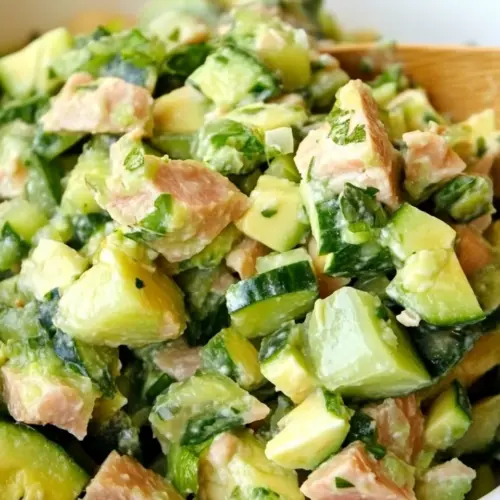
Tuna Cucumber Avocado Salad
Tuna Cucumber Avocado Salad is a creamy and crisp summer bowl that combines flaky tuna, buttery avocado, and crunchy cucumber with bright lime and fresh herbs. This easy weeknight lunch or light dinner offers contrasting textures and simple flavors that come together in minutes. Make it for quick entertaining or a no fuss meal that feels both fresh and satisfying.
Equipment
- Mixing Bowl
- Knife
- Cutting Board
- Fork
- Can opener
Ingredients
- 1 large European cucumber (see notes) Peel or leave skin on depending on preference and slice into rounds or half-moons to provide crisp, hydrating texture and a mild cucumber flavor that refreshes the salad. Use seeds removal if concerned about excess moisture and dilute dressing, and pat dry to maintain crunch. European cucumbers have thin skin and fewer seeds, making them ideal for salads without peeling.
- 1/2 cup chopped cilantro (more or less to taste, see notes) Finely chop and sprinkle over the salad to add bright, citrusy, and slightly peppery herbal notes that elevate the overall flavor profile. Adjust quantity to taste to control freshness and herb intensity; cilantro also contributes visual green color and aroma.
- 1/4 cup thinly sliced green onion Thinly slice and scatter across the dish to introduce a mild onion sharpness and subtle crunch without overpowering the other flavors. Use both white and green parts for a balance of crisp texture and gentle scallion bite that complements the tuna and avocado.
- 1 avocado Pit and dice or slice to contribute creamy, buttery texture and rich mouthfeel that balances the crisp cucumber and tender tuna. Add at the end to avoid browning and squeeze lime juice over it to preserve color and enhance flavor with a bright acidity.
- 1 T fresh-squeezed lime juice (see notes) Squeeze fresh juice over the salad to add bright acidity that prevents avocado browning and ties together the flavors of cilantro and tuna. Adjust amount to taste and use immediately after juicing for maximum freshness and tang.
- 1 can (5 oz.) tuna packed in olive oil Drain and flake into chunks to supply savory umami and protein-rich substance that forms the salad’s heart; tuna packed in olive oil adds additional richness and silky mouthfeel. Use olive oil from the can sparingly to control oiliness and mix evenly with other ingredients.
- salt and fresh-ground black pepper to taste Season lightly to balance flavors, using salt to enhance savory notes and freshly ground black pepper to add mild heat and complexity. Add gradually and taste as you go to avoid over-seasoning, especially if the tuna is already salty.
Instructions
- Peel strips from the cucumber if desired, then cut into fourths lengthwise and slice into bite-sized pieces. (You can skip this step for fresh garden cucumbers.): Close your eyes to the rhythm of the knife when you start slicing the cucumber , you will hear a crisp, clean sound as the blade meets firm flesh; that is the cue you want. Visually, aim for pale, translucent crescents or small chunks with seeds centered, which will keep moisture balanced. The reason for cutting into fourths lengthwise first is to create stable pieces that are easy to slice, ensuring each piece is similar in size to the diced avocado . A common mistake is making pieces that are too large, which overwhelms other textures and can make the salad watery; correct this by pitting the cucumber seeds if they are very watery, or choose slightly smaller cuts. If your cucumber is garden fresh and tender skinned, you can skip peeling; the peel gives contrast and color when left on.
- Chop the cilantro (if using).: When you chop cilantro , pay attention to aroma; a bright, citrusy scent indicates freshness. Chop with a gentle rocking motion to avoid bruising the leaves excessively, which can turn the herb bitter and darken it. Finely chopped bits distribute flavor evenly through the salad, so each bite gets that herbaceous lift. Over chopping can make the herb turn pasty and lose its perfume, so stop when pieces are uniformly small but still fresh looking. If you notice a sharp, soapy smell, you may have a bunch that some people find intense, in which case reduce the amount to taste.
- Thinly slice the green onion.: As you thinly slice the green onion , listen for the faint crisp snap, and look for concentric rings in the slices; those rings release mild onion juices that enhance savoriness without overpowering. Use a sharp knife to avoid crushing the onion and releasing too much moisture. The white portion will carry more bite than the green, so incorporate both for balance. A typical misstep is slicing too thickly, which leads to pungent bursts; slice thin and separate the slices with your fingers so they mingle through the salad.
- Whisk together the mayo and 1 tablespoon lime juice to make the dressing.: You will notice the mixture turning glossy and slightly thick when you whisk mayo with fresh lime. The acid from the lime brightens the mayonnaise and helps it coat other ingredients without masking them. Whisk until smooth, then taste for balance; add a touch more lime if you prefer tang, but be cautious because extra acid can break down the avocado . A common error is over diluting the dressing with water or oil, which reduces its ability to cling to pieces; keep it viscous enough to lightly envelop the vegetables and tuna .
- Dice the avocado into 1/2 inch pieces,: As you dice the avocado , notice the creaminess and faint sweet aroma; aim for uniform half inch cubes so they keep their shape when mixed. Use a gentle sawing motion with your knife rather than pressing down hard, which can crush the flesh. Dicing to this size keeps the avocado perceptible against the crunchy cucumber and flaky tuna . Avoid overly soft avocados that will become mushy during tossing; if an avocado is too ripe, scoop it into the bowl last and fold delicately.
- Put avocado in a bowl large enough to hold the whole salad, and toss with 1 tablespoon of lime juice.: When you toss the diced avocado with lime, you should immediately notice a brighter color and less browning. The citrus helps preserve the fruit while adding a clean tang that balances the richness. Choose a roomy bowl so you have space to fold ingredients without crushing the pieces. A mistake to avoid is adding the avocado too early and letting it sit, which invites discoloration; toss and proceed to combine quickly for the freshest look and flavor.
- Add the chopped cucumbers, chopped cilantro (if using), and sliced green onions to the avocado and gently combine.: As you fold these components into the bowl, aim for an even dispersal so each scoop has herb, onion, and crunch. The visual should be a mosaic of pale green cucumber, darker herb flecks, and creamy avocado gleams. The sensory payoff is in the textural interplay; that is why gentle combining is essential, it protects delicate avocado cubes while blending flavors. A frequent mistake is aggressive stirring that turns the salad into a uniform paste instead of a composed mixture.
- Add the dressing and stir just enough to combine.: After adding the dressing, you will see it coat surfaces lightly, bringing a sheen and slight gloss to the salad without pooling. The viscosity of the mayo mixture should cling to the pieces, unifying them while leaving texture intact. Stir just enough so the dressing is distributed, because too much motion will break down the avocado and make the salad watery. If you notice excess liquid developing, stop stirring and gently fold instead to preserve structure.
- Drain the oil from the tuna and use a fork to partly break apart the tuna into chunks.: When draining the oil from the can, you want the tuna moist but not oily; tilt and press gently to remove excess. Fork the tuna so it separates into large flakes rather than small shreds, that way you get satisfying bites of fish. You will notice a subtle savory perfume when you break it up, and that is the flavor anchor for the salad. A typical error is overworking the tuna into tiny pieces, which makes the texture uniform and dulls contrast.
- Stir tuna into the salad and GENTLY combine (don’t over-stir; you want the tuna to remain chunky.): As you fold the tuna in, watch for large visible flakes mingling with the creamy and crisp elements; that is the visual cue of a well built salad. The smell will deepen, adding a savory richness that balances the citrus and herbs. Gently combine so the flakes stay intact and you maintain textural variety. Avoid vigorous mixing, which tears the tuna and turns the salad homogeneous; gentle folding preserves the intended mouthfeel.
- Season to taste with salt and fresh-ground black pepper and serve.: Finally, season gradually and taste as you go, because canned tuna and the dressing already carry salt. Freshly ground black pepper adds aromatic heat and finish. Look for a balanced, bright bite with a hint of creaminess and a pronounced herbaceous lift; that balance signals you are done. A common misstep is over salting, which is hard to fix; if that happens, add a neutral starchy side or more diced cucumber to mellow the saltiness.
- This will last okay in the fridge for a day, but it’s far better freshly made.: Stored in an airtight container, the salad will keep for up to one day, though the texture and color of the avocado will change. Expect the cucumber to give up moisture and the dressing to settle, so the salad will be less crisp; the aroma will also soften. If you plan to store it, lightly underdress and add any extra lime just before serving to revive brightness. Avoid long refrigeration, which leads to mushy texture and muted flavors.
Notes
- Right avocado ripeness Choose an avocado that yields slightly to gentle pressure but is not mushy, this keeps cubes intact when tossing and offers a creamy contrast to the crunchy cucumber.
- Drain tuna well Remove excess oil from the can and let it rest on a paper towel briefly, then fork it into flakes so the salad stays light rather than oily.
- Fresh lime always Use fresh-squeezed lime juice for brightness and to prevent the avocado from browning, bottled citrus lacks the same lively acidity.
- Gentle folding Combine ingredients with a soft hand to protect the avocado cubes and keep chunky pieces of tuna intact, vigorous stirring will ruin the texture.
- Adjust herb intensity Add cilantro gradually and taste as you go, some eaters prefer a hint of herb while others enjoy a pronounced cilantro presence.
- Serve promptly This salad is best enjoyed soon after assembly to preserve visual appeal and crispness, refrigeration will soften textures and mute aromatics.