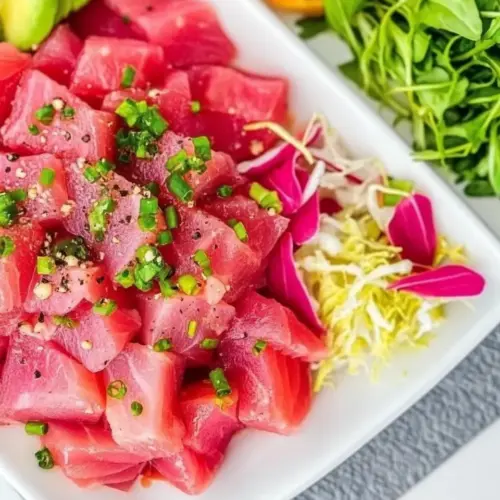
Tuna Carpaccio
Tuna Carpaccio is a silky, elegant starter featuring paper thin slices of ahi tuna steak dressed with olive oil, lime, and capers. Bright, fresh, and surprisingly quick, this easy summer dish makes an impressive appetizer or light main for an easy weeknight dinner. Try it when you want a low fuss, high impact plate that highlights pristine seafood and simple flavors.
Equipment
- Very sharp knife
- Cutting Board
- Plate
Ingredients
- 3/4 pounds ahi tuna steak raw Season lightly to enhance the natural flavor of the fish; use sparingly so as not to overpower delicate tuna. Dissolve into dressings or sprinkle over slices just before serving to brighten overall taste.
- 1/4 teaspoons salt Season sparingly to balance and uplift the dish; integrate with other seasonings for complexity. Add a pinch at a time and taste to avoid oversalting the carpaccio.
- 1/4 teaspoon pepper Season gently to add subtle heat and aromatic depth; distribute evenly across slices for a balanced bite. Combine with salt to create a classic simple seasoning that complements raw tuna.
- 1/4 small red onion finely diced Dice finely to provide crunchy, sharp bursts that cut through the richness of the fish; keep pieces small so they mingle with each bite. Rinse briefly if desired to temper pungency, then drain well and scatter over the carpaccio.
- 1/2 cup olive oil Dress generously to add richness and a smooth mouthfeel; use high-quality extra-virgin olive oil for best flavor. Drizzle over sliced tuna to carry other seasonings and create a glossy finish.
- 1 small lime cut into wedges Acidify lightly to introduce bright citrus notes and a touch of bitterness; squeeze over the carpaccio just before serving. Offer wedges at the table so diners can control acidity to their taste.
- 2 tablespoons capers Garnish boldly to introduce briny, tangy pops that contrast the fatty richness of tuna; chop or leave whole depending on presentation. Rinse if packed in salt or brine and distribute sparingly to avoid overpowering.
Instructions
- With a very sharp knife, slice tuna into paper-thin slices. Ensure your cuts are secure and complete the cut in one move, to prevent them from breaking or tearing.: You ll notice a clean, nearly silent glide as your knife meets the partially frozen ahi tuna steak , producing thin, translucent ribbons that shimmer. The sound is minimal and the surface of the tuna should remain smooth, not ragged or torn. This thinness matters because it creates a silky mouthfeel and allows the dressing to coat each slice evenly. A common mistake is using a dull blade, which tears the flesh and creates ragged edges that ruin the elegant presentation. If your knife drags, refreeze the fish briefly and sharpen or hone the blade before continuing. Keep the cuts long and single stroked to maintain each slice intact.
- Arrange the tuna slices onto the plate and season them with salt and pepper.: When you slice, you should feel a steady resistance followed by a smooth release, leaving a flawless slice. The texture is delicate and should not crumble. Completing each cut in one fluid motion prevents jagged edges and preserves moisture within the slice, which is crucial for the silky sensation in the mouth. Avoid a sawing motion, which stresses the fish fibers and results in inconsistent slices. If you find pieces flaking, chill the tuna a bit more and try again; patience yields cleaner, more attractive slices.
- Top the tuna with red onion, capers, and olive oil, and drizzle over some lemon juice. Serve the carpaccio with the rest of the lime wedges.: As you lay the slices out, notice the way they overlap into a delicate fan, creating an inviting visual. Lightly sprinkle the salt and pepper so each bite receives a whisper of seasoning, not a mouthful. Salt dissolves into the tuna surface and amplifies natural flavors, while pepper adds a warm background note. A frequent error is over seasoning; take a restrained approach and taste one slice before adding more. The plate should feel balanced and refined, not aggressively seasoned.
- Top the tuna with red onion, capers, and olive oil: The added textures and flavors should be distributed thoughtfully, with tiny clusters of red onion and capers placed to create contrasts in each bite, then a gentle drizzle of olive oil to glaze the fish. You ll see the oil bead and then settle, giving the tuna a glossy finish and an aromatic lift. The sensory payoff is immediate, with the aroma of the oil and the briny pop of capers complementing the fish. A common mishap is pouring too much oil which can drown the delicate tuna; pour in a slow, controlled stream and step back to evaluate the look and flavor.
- Drizzle over some lemon juice: Even though the recipe calls for lime, a quick splash of fresh citrus across the plate brightens complexity and balances the oil. You ll notice the juice s immediate sizzle and subtle scent, which cuts through richness and awakens flavors. This acidity also slightly firms the exterior of the tuna, adding a pleasant contrast in texture. A typical mistake is using bottled citrus, which lacks brightness and can flatten the profile; always use fresh wedges and adjust to taste to avoid overpowering the fish.
- Serve the carpaccio with the rest of the lime wedges: Present the plate with remaining lime wedges so diners can add extra tartness as they like, and watch how the fish responds to additional citrus. The aroma of squeezed lime is lively and refreshing, encouraging small adjustments that make each portion personal. Keep the dish chilled until the moment of serving to preserve texture and safety. One error people make is leaving the carpaccio at room temperature too long, which diminishes freshness; return it to the fridge if not served immediately and remove just before plating.
Notes
- Partially freeze first to firm the ahi tuna steak so you can slice paper thin pieces cleanly and safely. I freeze mine for one to two hours which makes for smoother cuts and a neater presentation.
- Sharpen your knife before slicing; a razor edge prevents tearing and preserves the glossy surface of the fish. A blunt blade chews through the flesh and ruins the elegant look you want.
- Use sushi grade tuna for safety and the best flavor profile, as lower grade tuna may not be suitable for raw preparations. Confirm sourcing and freshness with your fishmonger.
- Apply oil sparingly so the fish remains delicate and not overwhelmed, a light drizzle is enough to add silk and fragrance without masking the tuna s flavor.
- Rinse capers if too salty to control brininess, then pat them dry so they add bright pops without dominating the dish.