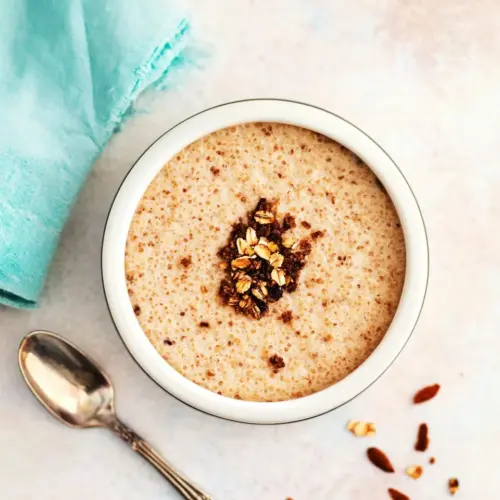
Trigo con Leche
Trigo con Leche is a creamy bulgur pudding scented with cinnamon, clove, and nutmeg, offering a comforting texture and warm spice profile. This easy, pantry friendly dish works as an indulgent breakfast or a chilled dessert, perfect for cozy mornings or relaxed gatherings. Make it when you want something both simple and soulful that still feels special.
Equipment
- Heavy-bottomed pot
- Wooden Spoon
- Measuring Cups
Ingredients
- 2 cup bulgur, (see notes) Provide a hearty, chewy base that soaks up cooking liquid and flavors; bulgur adds a nutty texture and whole-grain bite to the pudding. Helpfully reduces cooking time compared to whole wheat, and contributes fiber and a slightly toasted aroma when simmered.
- 7 cup water, (more may be needed) Supply the primary cooking medium to hydrate and soften the bulgur while extracting spice flavors; water controls consistency and prevents scorching. Allow for adjustments in quantity to achieve the desired porridge thickness as the grain absorbs liquid.
- 4 cinnamon sticks Impart warm, aromatic depth through slow infusion while boiling; cinnamon sticks release concentrated sweet-spicy notes that complement milk and sugar. Offer an elegant background spice that can be removed after simmering to leave a mellow fragrance.
- 4 cup evaporated milk Contribute rich creaminess and milky body that transforms cooked bulgur into a dessert-like pudding; evaporated milk provides concentrated dairy flavor without diluting sweetness. Enhance silkiness and mouthfeel while adding subtle caramelized milk undertones.
- 1 teaspoon clove powder Deliver warm, pungent complexity with a concentrated clove aroma; clove powder integrates easily into the mixture to season the pudding. Use sparingly to avoid overpowering other spices and to balance sweetness.
- 1/2 cup raisins Add bursts of chewy sweetness and fruity contrast that plump during cooking; raisins bring texture variety and natural sugars to the dish. Offer a pleasant counterpoint to the creamy, spiced base and can be soaked beforehand for extra juiciness.
- 1/2 teaspoons salt Provide subtle flavor enhancement and balance that brightens sweetness; salt accentuates other flavors and rounds out the profile when used sparingly. Help prevent the final dish from tasting flat by lifting the overall taste.
- pinch lime zest, or orange zest Introduce a bright citrus lift and aromatic complexity with a small pinch of zest; lime or orange zest cuts through richness and complements spices. Add zest near the end or as a garnish to preserve fresh essential oils and fragrance.
- 1 cup sugar (white, granulated), (or to taste) Supply the principal sweetening element that dissolves into the milk to create the dessert's characteristic sweetness; granulated white sugar offers clean, predictable sweetness and caramelization potential. Adjust quantity to taste for desired sugar level.
- 1/2 teaspoon nutmeg (freshly-grated) Contribute a warm, slightly sweet aromatic finish with freshly-grated nutmeg adding depth and nutty spice; nutmeg rounds out the spice blend and enhances the pudding's fragrance. Use freshly grated for the most vibrant flavor and aroma.
Instructions
- Mix bulgur and 6 cups of water. Let it rest for at least two hours (you can leave it overnight in the fridge).: Right away you will notice the water seeping into the grains, and they should begin to plump and soften to the touch. Gently stir so all the bulgur is moistened, then cover and let it rest, ideally for at least two hours. During this rest you can feel the mixture change as the grains absorb liquid and swell, which is essential for achieving a creamy final texture. If you skip or shorten this soak, the bulgur may remain chalky even after cooking, so resist rushing this step. A common mistake is using cold water straight from the fridge which slows hydration, so room temperature water yields more predictable results.
- Boil the bulgur: Place the bulgur, water from soaking, and cinnamon in a heavy pot and boil over medium heat for 5 minutes (add an extra cup of water if it looks like it might need it.): Place the bulgur, water from soaking, and cinnamon in a heavy pot and boil over medium heat for 5 minutes (add an extra cup of water if it looks like it might need it.) : As the pot comes to a simmer you will hear a steady, gentle bubbling and smell the warm barky scent of the cinnamon sticks . The initial boiling helps break down the grain structure and releases starches that begin to thicken the mixture. Use a heavy bottomed pot to ensure even heat distribution, which prevents scorching. Watch closely, because boiling can quickly foam and threaten to overflow; reduce heat if it rises too high. A frequent error here is cranking heat to high to hurry things along, which risks uneven cooking and burned bottoms.
- Add milk, clove powder, raisins, salt, lime peels. Cook over low heat until it acquires a pudding-like consistency (10 mins approx), stirring frequently to prevent it from burning. Add sugar to taste.: Cook over low heat until it acquires a pudding-like consistency (10 mins approx), stirring frequently to prevent it from burning. Add sugar to taste. : When the evaporated milk hits the pot, the aroma will deepen and the texture will turn silkier, almost glossy. Stirring frequently scrapes the pot base and keeps the mixture smooth while the raisins plump and infuse sweet pockets. Keep the heat low because high heat can separate or scorch the milk, creating an off flavor. If you find the mixture thickening too fast, remove from heat briefly and stir to cool slightly before returning. A common pitfall is under stirring, which lets the bottom cling and develop burnt bits that are hard to rescue.
- Serve warm if you are using it as a breakfast dish or serve in individual bowls and chill to serve as dessert. Sprinkle with nutmeg before serving.: : The final serving choice changes the experience: warm bowls feel soporific and comforting, while chilled servings become a dense, spoonable dessert with a firmer set. When you sprinkle the freshly grated nutmeg the aroma becomes the first thing people notice, and that small finishing flourish elevates the entire bowl. If chilling, let it cool at room temperature first to avoid condensation, then refrigerate in shallow containers for even cooling. A mistake to avoid is reheating at too high a temperature which can make the texture grainy instead of smooth; rewarm gently and stir to reincorporate any separated moisture.
Notes
- Soak thoroughly: Allowing the bulgur to rest in water for at least two hours, or overnight, ensures even hydration, which yields a silkier, less grainy pudding. If you are short on time, use warm water to speed absorption, but be mindful that very warm water can start the breakdown process prematurely.
- Use a heavy pot: A heavy bottomed pot distributes heat evenly, reducing the chance of burning the bottom while you simmer the milk. Thin pots can create hotspots that scorch the pudding quickly, so if your pot is light, stir more often and cook on a lower flame.
- Control your heat: Keep the simmer gentle once you add the evaporated milk, because high heat can cause separation or a caramelized burnt scent. Low and slow preserves creaminess, and a patient simmer will yield a better mouthfeel.
- Stir with intention: Frequent stirring prevents sticking and helps the grains release their starches evenly, creating a cohesive pudding. Use a wooden spoon to scrape the bottom, and don’t rush this step as it is the difference between smooth and lumpy textures.
- Adjust sugar at the end: Add the sugar after cooking to fine tune sweetness, especially if you plan to chill and serve as dessert. Sugar dissolves more predictably when the mixture is warm, so taste and tweak gradually to avoid over sweetening.