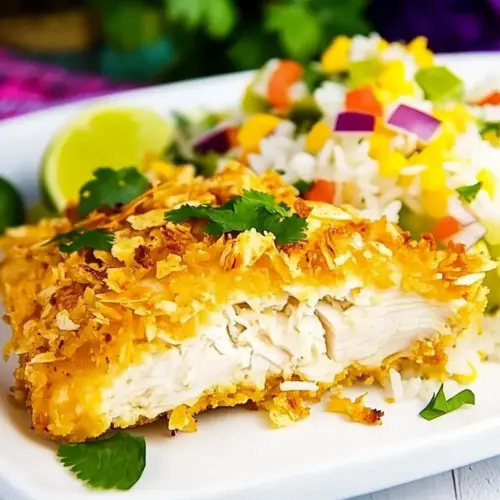
Tortilla Crusted Chicken with Coconut Rice
Tortilla Crusted Chicken with Coconut Rice is a crispy, creamy, and bright dish that combines a crunchy tortilla chip crusted chicken with fragrant coconut infused Jasmine rice. Its an easy weeknight dinner that delivers bold textures and a honey lime finish, perfect for family meals or casual entertaining. Try it for a simple, satisfying dinner that feels special.
Equipment
- Medium Saucepan
- Large Skillet
- Mixing Bowls
- Plates for dredging
Ingredients
- 1 can coconut milk, the thick kind Provide rich creamy liquid that forms the base of the coconut rice and imparts a silky, tropical flavor while adding fat for mouthfeel and helping the rice cook tenderly.
- 1/2 cup water Supply mild thinning liquid to adjust the cooking consistency of the rice and balance the coconut milk, helping ensure proper texture without diluting flavor excessively.
- 1 cup Jasmine rice Offer fragrant, slightly sticky starch that absorbs the coconut liquid to become fluffy coconut rice and provides a neutral backdrop for the beans and chicken flavors.
- 1 teaspoon salt Add savory seasoning to the rice and other components, enhancing overall taste and helping balance the natural sweetness of coconut milk and other ingredients.
- 1/2 teaspoon sugar Contribute a touch of sweetness that rounds out flavors in the rice and helps balance acidity and salt, ensuring the coconut rice tastes harmonious rather than cloying.
- 1 cup canned black beans, rinsed Bring creamy texture, protein, and earthy flavor to the dish while adding fiber and a nutritious component to pair with the rice and chicken.
- 1 cup corn Provide sweet, crisp kernels that add texture contrast and a pop of natural sweetness, complementing the beans and brightening each bite.
- 3 green onions, sliced Deliver a fresh, sharp allium note and a mild crunch when sprinkled over the final rice and bean mixture, adding color and a delicate onion flavor.
- 2 boneless, skinless chicken breasts cut in half horizontally or 4 chicken cutlets Serve lean protein as the main component of the dish, offering a tender base for the tortilla crust and absorbing marinades or seasonings while staying juicy when cooked correctly.
- 1/2 cup flour Act as a light coating agent that helps the egg adhere to the chicken, providing a neutral base flavor and contributing to a crisp, even crust when fried or baked.
- 1/2 teaspoon cumin Introduce warm, earthy aroma and subtle heat that complements the tortilla crust and the savory profile of the chicken without overpowering other seasonings.
- 1/2 teaspoon garlic powder Impart concentrated savory garlic flavor to the flour coating, enhancing the overall depth of the breading and pairing well with cumin and salt.
- 1/2 teaspoon salt Season the flour mixture to ensure the crust and chicken are properly salted, balancing other spices and bringing out natural flavors in the protein.
- 2 eggs Bind the crushed tortilla chips to the chicken and create a moist, cohesive coating layer while helping the crust adhere and brown during cooking.
- 2 cups finely crushed tortilla chips Form the crunchy outer layer that yields a crisp, flavorful crust on the chicken when fried or baked, adding texture and a toasted corn-chip flavor profile.
- 3 tablespoons vegetable oil Provide hot oil for frying the crusted chicken, enabling even browning and a crunchy exterior while also helping flavor transfer and texture development.
- 2 tablespoons honey Lend sweet viscosity to a glaze or dressing component, balancing acidity and heat while enhancing gloss and mouthfeel on the finished chicken or rice.
- 1 1/2 tablespoons lime juice Offer bright acidity that cuts through the richness of coconut and honey, enhancing overall flavor brightness and tying components together with citrusy notes.
- 1 tablespoon vegetable oil Supply a small amount of oil for sautéing or finishing, helping to crisp the chicken exterior and add a subtle richness without overwhelming the dish.
Instructions
- Combine rice, coconut milk, water, salt, and sugar in a medium saucepan. Bring to a simmer, place lid on top and cook for 20 minutes (or amount of time suggested on the rice container).: The moment the pot heats the kitchen fills with a gentle, sweet coconut perfume that tells you the rice is transforming. You should hear a soft simmer and see tiny bubbles forming around the edges before you reduce heat and cover, which indicates the liquid is actively steaming the grains. This technique allows the Jasmine rice to absorb the enriched liquid slowly, giving each kernel a glossy, tender finish. A common mistake is boiling too vigorously, which can evaporate liquid and leave unevenly cooked rice, so keep the flame low enough to maintain gentle steam.
- Remove from heat and stir in beans, corn, and green onions. Keep warm.: When the lid goes on you will notice a quick increase in steam escaping for a moment, then a quieter hiss as the pot settles. That brief hiss is your cue that the rice is trapping steam properly. The lid prevents losses and traps aromatics, making the grains fragrant and soft. Resist lifting the lid to check often, because letting steam escape will lengthen cooking time and can dry the rice. If you do peek and see liquid still pooling after the time is up, simply let it rest covered for a few minutes to finish steaming rather than turning up the heat.
- Place flour, cumin, garlic powder, and 1/2 teaspoon salt on a plate and tortilla chips on a second plate. Place eggs in a bowl. Mix the spices into the flour.: After you take the saucepan off heat, the warm air will carry a richer coconut scent. Stirring in the black beans , corn , and sliced green onions adds contrasting textures immediately, the beans lending creaminess and the corn bright pops, while the green onions add a fresh aroma. Mixing them in while the rice is hot lets residual warmth gently soften the vegetables and release their flavors. Avoid overmixing vigorously, which can mash the rice and beans; use a gentle folding motion to keep the grains distinct.
- Coat chicken in flour, dip in egg, and dredge in tortilla crumbs. Use your fingers to really press the crumbs into the chicken.: Leaving the rice covered keeps the steam trapped and the grains tender. When kept warm on the back of the stove, you will notice the aromas continue to mingle, and the rice remains moist and supple. A common issue is allowing the rice to sit uncovered, which forms a dryer top layer; keeping it covered preserves silkiness until plating.
- Heat 3 tablespoons vegetable oil in a large skillet over medium-high heat. Add chicken and cook 3-4 minutes each side, or until done.: Setting up stations makes the coating process smooth. The mixed seasoned flour should smell faintly of cumin and garlic powder , which seasons the chicken from the inside of the crust outward. On a separate plate, the crushed tortilla chips look dry and crumbly, ready to create a crunchy shell. Keep the plates close to your work surface to avoid dropping crumbs on the floor, and use finely crushed chips for an even crust rather than large shards that can slough off.
- In a small bowl, whisk together lime juice, honey, and oil.: Whisk the eggs until uniform and slightly frothy, their glossy surface indicating they will form a reliable adhesive between the seasoned flour and the crushed tortilla chips . A well beaten egg creates an even coat and helps the crumbs adhere snugly, producing a cohesive crust when fried. If you underbeat, pockets of dry white may prevent full adhesion, so ensure the mixture is smooth.
- Dish rice onto 4 plates, top with chicken and drizzle with honey-lime mixture.: Combining the cumin , garlic powder , and salt into the flour ensures that the seasoning is distributed across every inch of the exterior of the chicken . As you stir, inhale the warm spice notes; this step is why the crust tastes layered and seasoned rather than flat. Not mixing thoroughly can lead to uneven bites where some have spice and others do not.
- Coat chicken in flour, dip in egg, and dredge in tortilla crumbs: When you run a piece of chicken through this chain, you will notice a tactile transformation; the meat goes from slick to tacky to fully coated. Pressing the crumbs into the surface with your fingers ensures they adhere and will brown consistently in the skillet. This pressing step also compacts the crumb layer so it does not fall off while cooking. A common slip is skipping the pressing, which causes the crust to flake off during frying.
- Use your fingers to really press the crumbs into the chicken: The physical pressing creates a bond so the crumbs bake into a cohesive shell rather than sitting loosely. You should feel the crumbs compact and adhere as you press, and visually the coating appears denser and even. This step is crucial for serving intact cutlets that hold their crust when sliced; otherwise the crumbs may release and leave bare patches.
- Heat 3 tablespoons vegetable oil in a large skillet over medium-high heat: As the oil warms you will see it shimmer and maybe ripple slightly, which signals proper frying temperature. Medium high heat browns the coating quickly so it crisps without drying the interior. If the oil smokes, it s too hot and will impart a bitter flavor, so reduce heat slightly. Using the right temperature prevents greasy, underbrowned crusts or dry, overcooked meat.
- Add chicken and cook 3-4 minutes each side, or until done: Listen for a steady sizzle when the chicken hits the oil; that sound says the crust is searing and forming color. After a few minutes, the edges will turn golden brown and you may see slight bubbling at the crust. Flip gently to brown the other side evenly. The chicken should register 165 degrees Fahrenheit at the thickest point for safety. A common mistake is moving the pieces too soon, which tears the crust off and prevents even browning.
- In a small bowl, whisk together lime juice, honey, and oil: The aroma of bright citrus cuts through the fat as you whisk the lime juice with honey and vegetable oil . The mixture shines, and you can see it emulsify slightly, forming a glossy dressing that will cling to the crust and rice. This step balances the meal, and whisking well prevents the honey from pooling in one area when drizzled. If the honey is too thick, warm it briefly to make whisking easier.
- Dish rice onto 4 plates, top with chicken and drizzle with honey-lime mixture: Plating is when the components come together visually and aromatically. Spoon the warm, coconut scented rice into mounds, place the sizzling chicken on top, and watch the honey lime mixture bead and shine on the crust. The aroma of lime lifts the coconut and the browned tortilla crust, inviting you to dig in. Serve immediately so the crust stays crisp; letting it sit too long under the drizzle can soften the coating.
Notes
- Add a pinch of chili powder: Sprinkle a small amount into the seasoned flour to introduce warmth without changing the overall balance.
- Swap corn for roasted peppers: Fold in roasted sweet peppers to the warm rice for a smoky, colorful twist that still pairs with the honey lime drizzle.
- Make the coating extra crunchy: Mix a tablespoon of panko with the crushed tortilla chips to add an airy crispness to the crust.
- Double the lime for brightness: Increase the lime juice in the dressing if you prefer a sharper acidic finish that cuts richer bites.
- Use reduced salt chips: If you watch sodium, choose a low salt tortilla chips variety so the overall dish stays balanced.