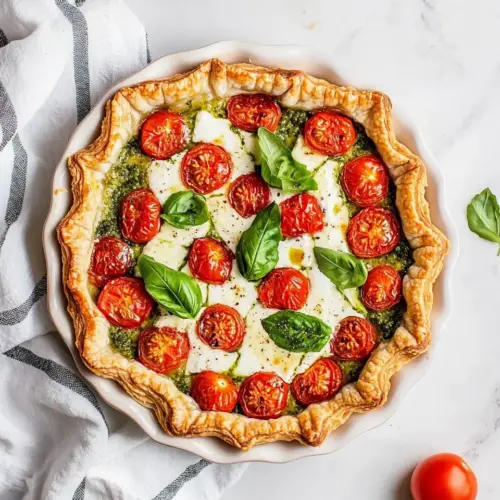
Tomato Tart
Tomato Tart is a flaky, savory summer recipe that pairs buttery puff pastry with bright cherry tomatoes, herbaceous pesto, and melty mozzarella. It is crispy, creamy, and easy enough for a weeknight yet elegant for guests, offering a balance of textures and vivid summer flavors you will want to serve again and again.
Equipment
- Oven
- Baking Sheet
- Mixing Bowl
- Knife
Ingredients
- 2 sheets puff pastry Provide a flaky, buttery base that lifts the tart; ensure sheets are thawed and rolled slightly to fit the pan. Blind-bake briefly to prevent sogginess and create a crisp foundation for toppings.
- 500 grams cherry tomatoes Add a burst of sweet, acidic flavor and vibrant color when halved or left whole; roast or blister to concentrate juices and deepen taste. Arrange evenly to provide moist pockets that balance the pastry and cheese.
- 100 grams pesto half cup Bring concentrated herb and garlic richness with a smooth, spreadable texture; use sparingly to build a savory flavor layer. Spread evenly over the pastry to infuse the tart with basil and umami notes without overpowering other elements.
- 100 grams mozzarella pearls Supply creamy, milky pockets of soft cheese that melt slightly under heat; distribute evenly to create gooey bites. Use pearls for even melting and a pleasant, tender contrast to the crisp pastry and juicy tomatoes.
- 2 tablespoons pine nuts Contribute a delicate, nutty crunch and toasty aroma when lightly toasted; sprinkle over the tart before or after baking. Provide textural contrast that enhances mouthfeel and adds subtle pine flavor.
- 2 tablespoons basil leaves finely sliced Offer fresh, aromatic herbiness with bright green color; slice finely to release oils and scatter over the finished tart. Add just before serving to preserve fragrance and deliver a fresh basil lift.
- 2 tablespoons olive oil Provide a glossy finish and help roast tomatoes while adding fruity, savory depth; drizzle lightly before baking. Use olive oil to enhance caramelization and enrich overall mouthfeel.
- salt Enhance and balance flavors by seasoning to taste; sprinkle lightly to bring out sweetness and acidity in other components. Taste as you go to avoid over-salting delicate elements like cheese and pesto.
- pepper Bring subtle heat and depth when freshly ground; season sparingly to complement rather than dominate. Use to add complexity and a gentle warmth that ties the ingredients together.
Instructions
- Preheat your oven to 200 degrees Celsius (400 F).: As the oven comes to temperature you will smell the warm, slightly metallic heat of the oven and feel a readiness in the kitchen, this high heat encourages the puff pastry to rise quickly creating tall, flaky layers. If the oven is not properly preheated the pastry may not puff evenly which can result in denser spots, so wait until the full temperature is reached. A common mistake is placing pastry in a slightly warm oven to save time, avoid this because it changes the rise and texture.
- Cut one of your pastry sheets in half. Cut the second sheet into thin strips (approximately 1 cm wide).: When you slice the sheets you will hear a clean, crisp edge and see layered, pale dough. Those thin strips will become the tart rim, offering a decorative and structural border that crisps up during baking. Keeping your knife sharp ensures neat edges and reduces tearing, while working quickly keeps the butter in the pastry cold so it can create steam pockets. If the pastry softens and becomes sticky chill it briefly before continuing.
- Brush the edges of your 2 pastry sheets with a little water. These will be the base of your tarts. Lie the pastry strips around the edges of the tart bases. You should now have two 'tart shells'.: The water acts like a glue, helping the strips adhere to the base while baking, and you'll notice a slightly glossy sheen where they meet. As the oven heat hits them the edges will brown and crisp, forming a welcoming cradle for the toppings. Press gently to seal but avoid compressing the layers too much or the rise will be compromised. A frequent error is over wetting which can cause sogginess, use only a light touch.
- Use a fork to prick the base of the tart shells. You want to do this multiple times, all over the base.: The fork pricks let steam escape from the center so the base does not become an overinflated dome, producing small, even holes that help the pastry stay flat. You will feel a slight resistance as the tines pass through the layers, and you should see tiny perforations across the surface. Avoid pricking the rim area where you want full rise, and do not overdo it to the point of creating large tears, as that can let filling leak through during baking.
- Bake the tart shells in the hot oven for 8-10 minutes, until they are puffed and golden brown. When your tart bases come out of the oven, if the centre has puffed up use a fork or spoon to push the base back down, it does not matter if the pastry flakes a bit when you do this.: As the shells bake you will hear a faint crackle and see the pastry dramatically expand then set into a crisp, golden surface. If the centre balloons, gently press it down to create an even bed for toppings, the slight flaking is normal because those fragile layers separate when cooled then reseal under toppings. Overbaking at this stage will make the pastry too brittle and prone to shattering when you add the toppings, so monitor closely and remove when evenly golden.
- While your tart bases are baking, prep your tomatoes by cutting some in half. Do this in a variety of ways i. e. through the middle and some lengthways and some leave whole. Place the tomato pieces in a bowl and toss with olive oil, salt and pepper. Tear up your mozzarella.: Handling the cherry tomatoes creates an immediate burst of fresh aroma, and tossing them with olive oil , salt , and pepper highlights their natural sweetness while preventing them from drying out. Tearing the mozzarella by hand yields uneven pieces that melt into attractive pockets rather than a uniform layer, which adds to the rustic appeal. A common slip here is overseasoning the tomatoes , which can mask their natural flavor, so taste a piece before committing to heavy salt.
- Top the tart bases with the pesto, the tomatoes and the mozzarella. Return the tarts to the oven and bake for 12-15 minutes until the pastry is browned and tomatoes softened.: As the tart returns to the oven the kitchen fills with an herbaceous, roasted scent, and the edges of the pastry deepen to an even brown. The pesto infuses the base with savory basil notes while the mozzarella melts into creamy pockets, and the cherry tomatoes will soften, their skins collapsing slightly and releasing sweet juices that mingle with the pesto . Watch for bubbling cheese and a golden rim to know it is done; underbaking leaves the pastry chewy while overbaking can dry out the filling.
- Scatter the top of the tarts with pine nuts and finely sliced basil leaves.: The final scattering adds an aromatic finish and crunchy texture, with the warmed pine nuts delivering a toasty nuttiness against the cool brightness of fresh basil leaves . The contrast in temperature and texture enhances each bite, and the visual pop of green herbs makes the tart look freshly plated. Avoid adding the basil before baking or it will darken and lose fragrance, and do not leave the nuts to overtoast as they can quickly turn bitter.
Notes
- Swap the cheese: Use any mild melting cheese if you prefer a different flavor profile, but keep the texture creamy to complement the cherry tomatoes.
- Make individual tartlets: Use the same ingredient ratios but cut the pastry into smaller rounds for party friendly portions that brown faster and are perfect for sharing.
- Try different nuts: If pine nuts are unavailable use roasted pepitas or sunflower seeds for crunch, adjusting to personal taste and texture preferences.
- Use gluten free pastry: A high quality gluten free puff pastry can be substituted to accommodate dietary needs while preserving the flaky layers.
- Serve room temperature: The tart holds up well at room temperature making it a great option for picnics or buffet style meals where reheating is not convenient.