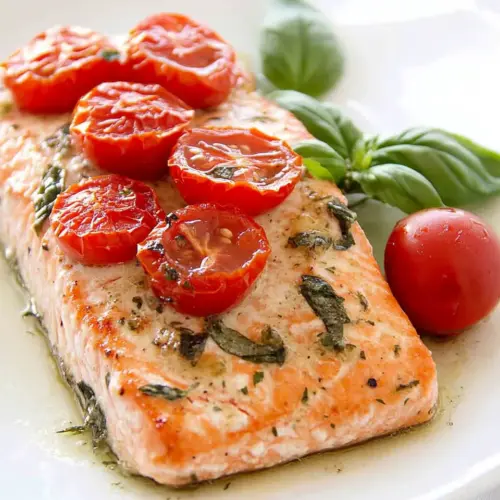
Tomato Basil Salmon
Tomato Basil Salmon is a bright, easy weeknight dinner featuring flaky salmon topped with roasted tomato and bubbly Parmesan. The dish combines savory, tangy, and crisp textures for a satisfying meal that feels special but is simple to prepare. Perfect for summer nights and last minute guests, it is an inviting, quick recipe worth making again and again.
Equipment
- Oven
- Baking Sheet
- Paper towel
- Knife
Ingredients
- 4 fresh salmon filets Provide rich, flaky protein and a moist texture that serves as the main component of the dish; cooks quickly under high heat and pairs well with bright, acidic toppings. Use skin-on or skinless filets depending on preferred presentation and crispiness, and monitor internal temperature to avoid overcooking.
- 1 lemon Add bright acidity and citrusy aroma to balance the richness of the salmon; juice and zest can be used to enhance flavor and tenderize the fish slightly. Slice or squeeze as needed just before serving to maintain freshness and prevent bitterness from prolonged exposure to heat.
- salt and pepper Season to taste, contributing essential savory balance and enhancing the natural flavors of the salmon and tomatoes; adjust salt for personal preference and dietary needs. Grind fresh pepper for a brighter, sharper heat that complements other seasonings without overpowering.
- garlic powder Impart a subtle savory, slightly roasted garlic flavor without adding moisture; use sparingly to avoid overwhelming the delicate fish. Sprinkle evenly before cooking to build a gentle background note that supports fresh ingredients.
- dried basil, (to taste) Provide herbaceous, anise-like notes to echo the basil topping and complement tomatoes; use dried basil to add concentrated flavor when fresh herbs are not available. Add to seasoning blends or sprinkle over tomatoes to reinforce the classic tomato-basil pairing.
- 1/2 cups shredded Parmesan cheese Contribute creamy, nutty umami and a lightly salty crust when melted or broiled on top of the salmon; helps bind toppings and adds mouthfeel contrast. Grate finely and distribute evenly for consistent melting and a golden finish.
- 2 medium vine ripe tomatoes, sliced Offer juicy acidity and sweetness that pairs with basil and Parmesan, adding fresh texture when sliced and arranged atop the salmon. Remove excess seeds or juice if desired to prevent a watery topping and slice uniformly for even coverage.
- olive oil Facilitate cooking and flavor development by preventing sticking and promoting browning; use a light drizzle to coat the pan or fish before searing or baking. Choose extra-virgin olive oil for fruity notes or a milder olive oil for higher-heat applications.
Instructions
- Preheat oven to 375 degrees.: Warmth in the oven changes the way the salmon cooks, creating a gentle, even heat that cooks the flesh through while preventing the exterior from overbrowning. As the oven reaches temperature you may notice a faint warm smell in the kitchen that signals it is ready. A common mistake is not allowing the oven to fully preheat, which can lead to uneven cooking, so wait until the indicator says it is up to temperature. Using a reliable oven thermometer helps when your oven runs cool or hot.
- Pat salmon filets dry with a paper towel. Squeeze fresh lemon juice on top of fish. Sprinkle with salt and pepper. Sprinkle lightly with garlic powder, then with basil.: The moment you pat the salmon dry, you will feel the difference in texture, and the surface will accept seasoning better, helping to form a pleasant exterior as it bakes. The citrus aroma from fresh lemon brightens the fish, and the spices sit on the flesh rather than sliding off. If you skip drying, the fish will steam instead of roast, producing a softer, less appealing finish. Avoid over-salting at this stage because the cheese added later will contribute saltiness.
- Top each filet with about 2 tablespoons shredded Parmesan cheese and add about 2 sliced tomatoes on top. Drizzle olive oil on top of tomatoes and cheese. Season tomatoes with a dash of salt, then add about 2 more tablespoons of Parmesan cheese on top of tomatoes.: The layering is important for texture contrast. When you place the Parmesan against the fish then add the tomato , the cheese acts as a barrier that browns and crisps while the tomato releases juices that mingle with the juices of the fish. The aroma of warm Parmesan will become more pronounced as it starts to melt. Be mindful of the tomato placement, as overcrowding can trap moisture and prevent browning; space the slices so air circulates. Too much oil can pool and make the final crust soggy, so use it sparingly.
- Bake for 10-12 minutes on the middle rack until the salmon flakes with a fork depending on the thickness of the fish. Move to top rack and broil for approximately 1-2 minutes or until cheese is bubbly and tomatoes have golden edges. Serve immediately.: During the bake you will notice the fish turn from translucent to opaque and the edges begin to firm up. A gentle press with a fork should reveal flakes separating along the muscle lines, which indicates doneness. The aroma of roasted tomato will deepen, and the kitchen will smell savory and bright. Overbaking dries the fish, so check at the earlier time for thinner filets. If you undercook, the fish will be too soft and not flake; use visual cues not just time.
- Move to top rack and broil for approximately 1 to 2 minutes or until cheese is bubbly and tomatoes have golden edges.: Broiling quickly adds color and a crisp finish, producing sizzling notes and a toasty scent as the Parmesan bubbles and browns. Watch closely, because the transition from golden to burnt happens fast under direct heat. The visual cue is bubbling cheese and lightly caramelized tomato edges; once you see that, remove immediately. A common error is leaving it unattended, which can lead to scorching within seconds, so stand by the oven while broiling.
- Serve immediately.: Serving right away preserves the contrast between the warm, flaky salmon and the crisped cheese topping, and you will notice the steam carrying fragrant herb and citrus notes to the table. The texture is best when the dish is hot, and the flavors are most pronounced. If you let it sit too long, the crispness softens and the tomatoes cool, which changes the dining experience. Plate carefully so each portion gets juicy tomato and crusty cheese on top of the fish.
Notes
- Bring fish to room temperature: Allow the salmon to sit out for 10 to 15 minutes before cooking, which helps it cook evenly so the center is not cold while the exterior firms.
- Dry thoroughly: Use paper towels to remove surface moisture, this improves browning and helps the seasonings adhere rather than sliding off during baking.
- Layer intentionally: Place a small amount of Parmesan directly on the salmon before adding tomato slices, then finish with more cheese to achieve both a savory base and a browned top.
- Monitor broil closely: The broiler finishes the dish in seconds, so watch for bubbling and golden edges and remove immediately to avoid burning.
- Use ripe but firm tomatoes: Vine ripe tomato brings sweet acidity without collapsing; underripe or overly soft tomatoes will not roast properly.
- Control salt carefully: Since Parmesan is salty, season the fish lightly at first and adjust at the end if necessary to avoid over salting.