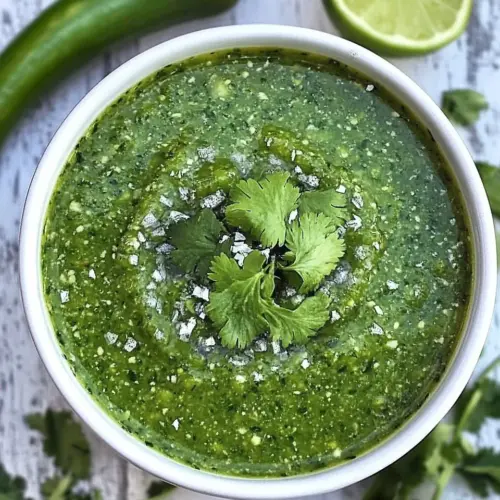
Tomatillo Salsa
Tomatillo Salsa is a bright, tangy, and slightly smoky condiment that is creamy in mouthfeel yet delightfully chunky. This easy, fresh salsa comes together quickly with roasted tomatillos, jalapeño peppers, and cilantro, making it ideal for an easy weeknight dinner or party snack. Make it for chips, tacos, or as a lively topper, because it adds instant flavor and freshness.
Equipment
- Baking Sheet
- Food Processor
Ingredients
- 1 pound fresh tomatillos husked and rinsed Provide tart, citrusy body and a bright green base when husked and rinsed; roast or boil to soften and deepen flavor for salsa consistency. Offer a juicy texture that helps balance heat and acidity while blending smoothly with other fresh components.
- 2 jalapeño peppers stemmed and seeded (adjust to taste for heat) Add spicy heat and a sharp, vegetal bite when stemmed and seeded; adjust quantity to control overall heat level and preserve flavor balance. Can be charred or used raw to introduce varying smokiness and crispness to the salsa.
- 1/2 cup chopped white onion Contribute pungent, aromatic sharpness and slight crunch when chopped; helps build the savory backdrop and enhances the overall flavor complexity. Releases natural sugars when sautéed or blended, rounding out bright, acidic notes.
- 1/4 cup fresh cilantro leaves Introduce fresh, citrusy-herb aroma and bright green color when roughly chopped; enhances freshness and balances heat and acidity. Leaves should be added near the end or blended gently to preserve delicate flavor and prevent bitterness.
- 2 tablespoons lime juice Provide bright acidity and tang that lifts and balances the salsa; freshly squeezed juice ensures vibrant citrus notes and avoids bottled aftertaste. Helps to slightly thin the mixture and preserve color while accentuating other flavors.
- 1/2 teaspoons salt Deliver essential seasoning to enhance and unify all flavors; measured amount prevents over-salting while bringing out natural sweetness and acidity. Dissolves easily into blended salsa and can be adjusted to taste at the end.
Instructions
- Preheat your broiler. Arrange tomatillos and jalapeños on a baking sheet and broil until charred, about 14 minutes, tossing halfway through the cooking time.: The moment the broiler heats the oven, you will notice a dry, intense heat that makes charring fast and efficient. As the metal warms, the air inside the oven shifts and you can almost smell the faint metallic warmth, which primes the tomatillos for caramelization. This step matters because broiling concentrates flavor quickly, creating those desirable scorched notes. A common mistake is placing the sheet too far from the broiler, which leads to uneven charring, so position the rack about 4 to 6 inches from the element for best results.
- Remove from oven and let cool. Remove the seeds from the jalapeños (optional for less heat).: When the tomatillos and jalapeño peppers hit the hot tray, you will hear a light sizzle as surface moisture evaporates. Visually, look for blistered skins and patches of deep brown, which signal developed sweetness and smoky notes. Tossing halfway ensures even color and prevents one side from burning. This technique deepens complexity, because the slight char adds a toasty dimension that balances the salsa's acidity. Avoid leaving them unmonitored, since broilers can go from perfect to burnt in minutes.
- In a food processor, combine the roasted tomatillos, jalapeños, onion, cilantro, lime juice, and salt. Pulse until the mixture is well combined but still has a chunky texture.: Cooling the roasted ingredients calms the heat and makes handling safe, while residual warmth continues gentle steam that releases aroma. You will notice a fragrant, roasted scent that is more nuanced than raw produce, and cooling helps preserve the bright interior texture. This pause also prevents the jalapeño peppers from adding excessive heat if blended while too hot. A frequent slip is rushing this step and burning your fingers when removing seeds, so allow a comfortable cooling interval.
- Taste and adjust seasoning, adding more salt or lime juice if needed. Serve immediately or refrigerate in an airtight container for up to 5 days.: When you work on the jalapeño peppers , the seeds and white membranes hold much of the heat, and removing them noticeably softens the spice. As you scrape them out, the pepper's flesh becomes more approachable, and you can modulate the salsa's bite. This matters because it gives you control over who can enjoy the dish, from kids to heat lovers. Avoid cross contamination by washing your hands and tools thoroughly after handling the seeds.
- In a food processor, combine the roasted tomatillos, jalapeños, onion, cilantro, lime juice, and salt: When you add everything into the processor, the bowl will fill with bright, herbaceous fragrance. The mix of textures, from tender tomatillos to crisp onion , primes the machine to create lively contrast. This assembly is crucial because it allows flavors to integrate quickly while keeping some structure. One common oversight is overcrowding the processor, which yields uneven blending; work in batches if necessary to maintain control.
- Pulse until the mixture is well combined but still has a chunky texture: Pulsing preserves texture and prevents the salsa from becoming too smooth, keeping little bursts of tomatillo and flecks of cilantro . Listen for even, rhythmic pulses rather than a long continuous blend, which helps you stop at the ideal consistency. The right texture gives the salsa a satisfying mouthfeel and lets it cling to chips or food. A tricky error is overprocessing, which can turn the salsa into a thin sauce rather than a chunky condiment, so pulse in short bursts and check frequently.
- Taste and adjust seasoning: After pulsing, sample the salsa with a chip or spoon to evaluate balance. You will sense the interplay of acidity, heat, and salt, and small adjustments of lime juice or salt can brighten the whole mixture. This step matters because raw ingredients vary, and personal preference dictates the final profile. Avoid adding too much at once, and instead incrementally season to reach harmony.
- Serve immediately or refrigerate in an airtight container for up to 5 days: Freshly made salsa has a vivid temperature and aroma, but chilling allows flavors to meld further, often improving depth. When refrigerated, the texture firms slightly and the heat disperses, which some people prefer. Store in a sealed container to prevent oxidation and keep it tasting bright. A common pitfall is leaving it uncovered in the fridge, which can dull the flavors and allow other aromas to invade.
Notes
- Make it milder by removing the seeds and membranes from the jalapeño peppers and tasting as you go to avoid over spicing.
- Make it smokier by charring the tomatillos and jalapeño peppers on a grill rather than under the broiler for a deeper, wood fired flavor.
- Smoother texture by pulsing more in the food processor to reach a velvety consistency, which works well as a sauce for proteins.
- Herb forward by adding extra cilantro at the end and pulsing briefly to keep the color bright and fresh tasting.
- Brighten it up by squeezing a bit more fresh lime juice just before serving to sharpen the overall profile.
- Serve chilled if you prefer a firmer texture and more blended flavor, refrigerating the salsa for a few hours to let the ingredients meld.