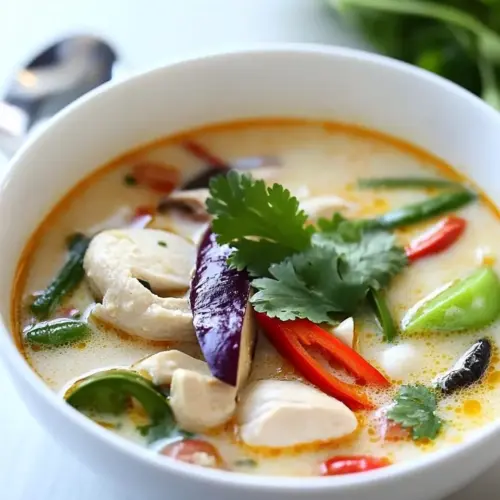
Tom Kha Soup
Tom Kha Soup combines creamy coconut milk, aromatic galangal, and bright lime juice for a fragrant, creamy, easy weeknight dinner. Tender chicken and straw mushrooms soak up the broth, creating a balanced bowl that is both soothing and lively. Make it when you want fast comfort that feels refined and satisfying.
Equipment
- Pot
- Knife
- Cutting Board
Ingredients
- 8 oz (230 g) boneless and skinless chicken, breast or thighs, cut into strips or thin pieces Provide tender lean protein and body to the soup, offering a savory, satisfying texture when simmered; slices absorb the aromatic broth while remaining juicy if cooked briefly.
- 20 canned straw mushrooms Add mild, slightly earthy mushroom texture and authenticity to the soup; canned version contributes convenience and subtle umami without overpowering the balance.
- 1 1/2 cups coconut milk Contribute rich, creamy coconut flavor and silky mouthfeel that forms the soup’s savory-sweet base; helps mellow heat and carry aromatic oils of herbs and spices.
- 1 cup water Dilute and balance the coconut milk, creating the proper broth consistency while allowing other aromatics to shine; helps control richness for a lighter soup.
- 1 stalk lemongrass, cut into 3-inch (7 cm) lengths and pounded Impart bright, citrusy, and lemongrass fragrance infused into the broth when bruised and simmered; chunky pieces allow extraction of flavor without shredding.
- 6 kaffir lime leaves, lightly bruised to release the flavor Release intense citrusy, floral aroma and a fragrant backbone to the broth when bruised; whole leaves steeped and removed add depth without fibrous texture.
- 6 slices galangal Provide sharp, peppery, and slightly piney ginger-like heat that defines the soup’s signature flavor; sliced galangal steeps to infuse warm aromatic tones.
- 8 bird’s eye chilies, lightly pounded Introduce vibrant heat and fresh chili aroma that livens the broth; lightly pounding releases capsaicin and essential oils for balanced spiciness.
- 3 tablespoons fish sauce Deliver savory salty umami complexity and authentic Southeast Asian seasoning; liquid fish sauce brightens flavors and deepens the broth’s profile.
- 2 1/2 tablespoons lime juice, or to taste Impart bright, tangy acidity to balance richness and saltiness; freshly squeezed lime juice elevates flavors and adds refreshing citrus lift to taste.
- 1 tablespoon cilantro, chopped Finish with fresh herbal aroma and mild citrusy green flavor; chopped cilantro sprinkled at the end adds brightness and visual contrast to the soup.
Instructions
- Add water, lemongrass, galangal, chilies, and kaffir lime leaves to a pot and bring to a boil. Add the straw mushrooms and chicken, then boil on medium heat for a few minutes, or until the chicken is cooked through.: The moment the pot warms you will notice a rising citrus perfume, a clean floral top note from the lemongrass and kaffir lime leaves , and a faint sharpness from the galangal . As it approaches a boil you will hear small rolling bubbles and see the surface shimmer, which is the cue that essential oils are infusing into the liquid. This infusion creates the soup's aromatic foundation and extracts volatile flavors without needing long simmering. A common mistake is leaving the heat too high and aggressively boiling, which can make the aromatics taste harsh; instead aim for a steady boil to encourage gentle extraction while preserving the delicate citrus notes.
- Add coconut milk and boil for a couple more minutes. Turn off the heat and stir in lime juice and fish sauce to taste. Garnish with chopped cilantro before serving.: As you add the canned straw mushrooms and strips of chicken , the pot’s mood changes; the broth will take on a slightly opaque sheen and you may hear a softer, fuller simmer. The chicken will firm up and the mushrooms will begin to swell slightly as they absorb flavor. This step ensures the proteins cook quickly and the mushrooms pick up the broth’s aromatics. Watch the chicken for color change from translucent to opaque, and peek at the center to confirm doneness. Avoid overcooking, which will make the chicken dry and stringy; remove from heat as soon as the meat is cooked through.
- Add coconut milk and boil for a couple more minutes: When you pour in the coconut milk you will notice the broth turning silkier and its aroma smoothing out, the sharp edges softened by fat. The surface may produce a gentle bubbling and a faint coconut scent that rounds the earlier citrus top notes. Briefly boiling helps integrate the coconut with the infused water without causing the milk to separate. If you let it boil vigorously, the coconut can split and the texture will suffer, so keep the simmer moderated and stir gently to combine the liquids into an even, glossy broth.
- Turn off the heat and stir in lime juice and fish sauce to taste: Once the pot is off the stove, the aromas feel more layered and distinct. Adding lime juice now produces a bright lift that wakes up the richness, while the fish sauce introduces umami depth. Stir gently so the acid and salt disperse evenly, and taste repeatedly, adjusting to your preference. The sequence matters because adding the acid on high heat can mute its brightness. A typical misstep is oversalting with fish sauce ; add slowly, tasting as you go, because its savory power concentrates quickly.
- Garnish with chopped cilantro before serving: The final act is simple but transformative. Scattering chopped cilantro adds an herbaceous freshness that contrasts the warm broth. You will notice a crisp, green perfume and a cool flavor that balances the acidic and spicy notes. Serve immediately while the soup is warm and the aroma is at its peak. A mistake to avoid is adding the cilantro too early, which causes it to wilt and lose brightness; add it at the end for the best sensory contrast.
Notes
- Swap chicken cuts thoughtfully Use boneless skinless chicken thighs for a richer mouthfeel, or breast for a leaner bowl, cutting thin strips so meat cooks quickly and remains tender.
- Control the heat Adjust the number of bird’s eye chilies to taste, pounding lightly for more aroma with moderated heat, or removing seeds for a milder result that still offers complexity.
- Balance richness and lightness Alter the coconut to water ratio, adding a bit more water if you prefer a lighter, broth like finish, or using the full 1 1/2 cups of coconut milk for a creamier texture.
- Make it herb forward Increase the chopped cilantro at the end for a fresh, green lift that complements the citrus and offsets the coconut’s sweetness.
- Infuse more aromatics Let the pot simmer a touch longer with the lemongrass and kaffir lime leaves if you want a more pronounced citrus perfume, but avoid boiling hard to prevent bitterness.
- Adjust acidity precisely Add lime juice gradually off the heat, tasting frequently to hit the sweet spot between creamy and bright without overpowering the broth.