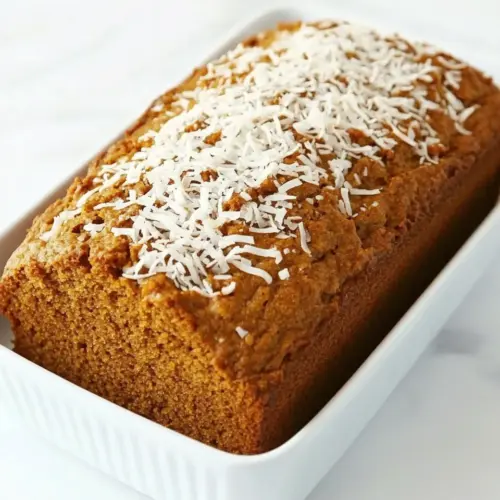
Toasted Coconut Pumpkin Bread
Toasted Coconut Pumpkin Bread is a moist, spiced loaf with a toasty crunchy top and cozy autumn flavors. This easy, comforting bread uses pantry staples like pumpkin, canned, honey, and coconut flakes to deliver a tender crumb and warm spice notes, perfect for breakfast or a holiday brunch, making it a compelling reason to bake now.
Equipment
- Oven
- 9×5-inch loaf pan
- Mixing Bowls
- Whisk
- Spatula
- Wire Rack
Ingredients
- 1/3 cup coconut oil Melted and fragrant, provides a rich, subtle tropical fat that tenderizes the loaf and helps distribute moistness evenly throughout the crumb while contributing a light coconut aroma.
- 1/2 cup honey Liquid sweetener and natural humectant, balances pumpkin's earthy flavor and helps retain moisture for a softer, longer-lasting bread texture while enhancing browning of the crust.
- 2 large egg Beaten to bind and leaven, adds structure and stability to the batter while contributing richness and helping emulsify liquids and fats for a cohesive crumb.
- 1/4 cup water Diluting and loosening agent, adjusts batter consistency for proper mixing and hydration of dry ingredients while aiding in steam-based lift during baking.
- 1 teaspoon vanilla extract Aromatic extract, imparts warm, sweet vanilla notes that deepen overall flavor complexity and complements the pumpkin and spices for a rounded loaf profile.
- 1 cup pumpkin, canned Pureed vegetable component, supplies moisture, body, and natural sweetness while contributing color, tenderizing fibers, and adding nutrients and dense texture to the bread.
- 1/2 teaspoon salt Flavor enhancer and dough regulator, balances sweetness and enhances other spice notes while slightly strengthening gluten formation for proper loaf structure.
- 1/2 teaspoon cinnamon Warm spice that adds sweetness and depth, complements pumpkin’s natural flavor and works with other spices to create a classic pumpkin-bread spice profile.
- 1/2 teaspoon ginger, ground Pungent spice that provides bright, slightly peppery warmth, cutting through sweetness and adding complexity to the spice blend for a well-rounded taste.
- 1/4 teaspoon nutmeg Sweet, warming spice that offers nutty, woody undertones and reinforces the pumpkin-pie spice character for a familiar autumnal flavor.
- 1/4 teaspoon cloves, ground Intense aromatic spice that contributes clove’s warm, slightly bitter bite in small amounts to round out the spice mixture and enhance overall depth.
- 1 cup flour, whole wheat Whole-grain flour that delivers hearty flavor, extra fiber, and a denser texture; balances lighter flour for a wholesome crumb while contributing nuttiness.
- 3/4 cup flour, all-purpose Refined flour that lends lightness and tenderness, moderates the whole wheat’s density to ensure a softer, more cake-like texture and smooth crumb.
- 1/4 teaspoon baking powder Leavening modifier used in small measure, provides a mild lift and helps balance acidity for predictable rise when combined with baking soda and other leaveners.
- 1 teaspoon baking soda Primary chemical leavening agent that reacts with acidic components to produce carbon dioxide, promoting rise and creating a light, airy crumb structure during baking.
- 4 tablespoon coconut flakes Toasted garnish offering crisp texture and concentrated coconut flavor, sprinkled on top or folded in to provide pleasant contrast and enhance coconut aroma.
Instructions
- Preheat oven to 325° F and grease a 9×5 inch loaf pan.: You will smell the warm oven begin to work even before you place the loaf inside, which sets the stage for an even bake. Make sure the oven actually reaches 325° F by using an oven thermometer, because many ovens run hot or cool. Greasing the 9×5 inch loaf pan ensures the loaf releases cleanly, and it helps the edges brown evenly. Common mistakes include skipping greasing or not checking oven accuracy, which can lead to sticking or uneven baking. If the oven racks are cluttered, remove extra pans so heat circulates freely and the top browns properly.
- Warm coconut oil just until melted; be careful not to overheat!: You will notice the coconut oil turn from solid to clear liquid, and a faint coconut aroma will rise. Warm it gently in short bursts if using a microwave, or on very low heat on the stove, to avoid burning. Overheating can break down the oil and produce off flavors, so stop heating as soon as it liquefies. A common error is overheating which makes the oil too hot, and that can cook the egg s when combined; let it cool slightly if it becomes too warm.
- In a large bowl, mix together melted oil, honey, eggs, 1/4 cup hot water, and vanilla. Stir in pumpkin puree.: The batter will look glossy and smooth, and the honey should dissolve into the warm water and oil , forming a cohesive base. Whisk gently to combine so you do not add excess air which can cause large holes in the crumb. The mixture should be uniform in color, with ribbons of pumpkin ready to be folded in. A common slip is overwhisking, which alters texture, so stir until just blended. You want a silky, homogeneous wet mixture to support even distribution of the dry ingredients.
- In another bowl whisk together salt, cinnamon, ginger, nutmeg, cloves, flours, baking powder, and baking soda.: As you fold in the pumpkin, canned , you will see the batter thicken and take on a deep orange hue, and an earthy pumpkin scent will become obvious. Use a spatula to scrape the bowl, ensuring no streaks of wet mixture remain at the bottom. The addition of pumpkin changes viscosity, and you should end up with a thick, scoopable batter. Avoid vigorous stirring which can make the loaf tough; a few gentle folds are enough. If the pumpkin is cold, bring it to room temperature first to help maintain batter consistency.
- Add dry ingredients to the wet ingredients and stir just until mixed.: You will notice the spices combine into a fragrant, dusty mix, and the flours soften the aroma as they blend. Whisking ensures even distribution so each bite has balanced spice and lift. Sifting is optional but helps remove lumps from the whole wheat flour and aerates the mixture slightly. A common problem is uneven spice pockets, so take the time to whisk thoroughly. If your spices are old and flat, the loaf will taste muted, so fresh spices matter here.
- Pour batter into the prepared loaf pan, and sprinkle with coconut.: At this stage the batter will become homogenous and take on a thicker texture; you will see no obvious streaks of flour. Start with a few folds, then gently incorporate the rest, watching the batter for a uniform consistency. The reason for minimal mixing is to avoid developing gluten, which keeps the crumb tender. Overmixing is the most common mistake and can result in a dense, chewy loaf instead of a soft one. Stop mixing as soon as there are no visible dry pockets.
- Bake for 60-65 minutes until a toothpick inserted into the center comes out clean.: As you pour, listen for the soft thump as batter fills the pan, then smooth the top with a spatula so the loaf bakes evenly. Sprinkle the coconut flakes so they sit on the surface and toast while the loaf bakes, creating a crunchy top. Make sure the batter is level to avoid uneven doming. A typical misstep is pressing the coconut into the batter, which buries it and prevents proper toasting; simply scatter it on top for the best result.
- Let the bread cool in the loaf pan for 5 minutes, then transfer to a wire rack to finish cooling before serving.: During baking the kitchen will fill with a warm, spiced aroma that signals progress. Look for a golden brown top and edges that have pulled slightly away from the pan. The internal temperature should be set and a toothpick in the center emerges with a few moist crumbs but not wet batter. Avoid opening the oven repeatedly early on, which can cause the loaf to sink. If the top browns too quickly, tent lightly with foil to prevent overbrowning while the center finishes baking.
- Let the bread cool in the loaf pan for 5 minutes, then transfer to a wire rack to finish cooling before serving.: After pulling the loaf from the oven you will hear a faint settling sound, and the aroma will intensify as it rests. Cooling briefly in the pan allows the structure to firm enough for easy removal; transferring too soon can break the loaf. Place it on a wire rack so air circulates and the bottom does not become soggy. A common error is slicing while too hot, which leads to a gummy center, so be patient and wait until it has cooled to room temperature for the best texture.
Notes
- Switch the sweetener: Try replacing part of the honey with equal parts maple syrup for a deeper, woodsy sweetness that complements the spices.
- Adjust coconut aroma: Use unrefined coconut oil for a pronounced coconut flavor, or refined for a subtler profile if you prefer the pumpkin to dominate.
- Make it nuttier: Fold in a small handful of chopped nuts on top of the batter for extra crunch, but be mindful this will change baking time slightly.
- Spice it up: Increase the cinnamon by a quarter teaspoon for a warmer profile, keeping other spices the same to maintain balance.
- Play with flours: Swap up to a quarter cup of flour, all-purpose for more flour, whole wheat for a heartier texture, watching that the loaf may bake a bit longer.
- Make mini loaves: Use a muffin tin or mini loaf pans and adjust baking time downward, checking for doneness earlier to avoid dryness.