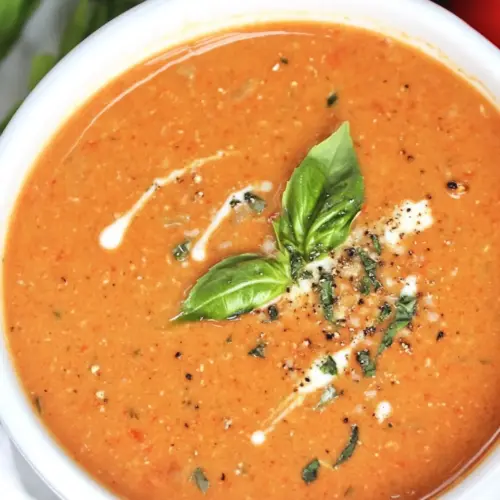
TikTok Tomato Soup
TikTok Tomato Soup is a creamy, smoky, and slightly sweet tomato soup that blends fire roasted tomatoes, roasted red peppers, and a splash of heavy whipping cream for a silky finish. This easy weeknight dinner comes together quickly with pantry staples, offering layered flavor and comforting texture, perfect when you want a fast but cozy meal.
Equipment
- Immersion Blender
- Large Stockpot
Ingredients
- 4 tbsp butter Melted and creamy, provides the rich fat base that helps sauté aromatics and builds a silky mouthfeel in the soup. Balances acidity from tomatoes and enriches the final texture for a luxurious finish.
- 1/2 cup white onion diced Finely diced to release natural sweetness and savory depth when softened, contributing aromatic complexity during the sauté stage. Adds subtle vegetal body that supports the tomato flavor without overpowering it.
- 1/2 cup carrots diced Small diced to offer natural sweetness and subtle earthiness after simmering, helping round out the soup’s flavor profile. Softened carrots also contribute body and a touch of natural sugar to balance acidity.
- 2 tbsp minced garlic Minced to deliver bright, pungent aromatic notes that deepen savory layers when cooked briefly in butter. Infuses the base with garlicky warmth without leaving harsh raw flavors.
- 3 sprigs fresh thyme Fresh sprigs used to infuse a delicate herbal aroma and a slightly lemony, woodsy note during simmering. Removed before serving to leave a subtle background herbaceousness without texture.
- 1/3 cup roasted red peppers chopped Roasted and chopped to introduce smoky, sweet pepper notes that complement the tomatoes and add a roasted complexity. Provides tender texture pockets and a slightly charred flavor dimension.
- 2 tbsp sundried tomatoes chopped Chopped to bring concentrated sweet-tart tomato flavor with chewy texture and intensified umami from drying and oil preservation. Enhances depth and a sun-dried sweetness that boosts overall tomato character.
- 2 1/2 tbsp tomato paste canned Tomato paste spooned in to amplify concentrated tomato richness and help deepen color and flavor through caramelization. Adds thickening power and a more robust, savory tomato backbone.
- 30 oz fire roasted diced tomatoes canned Fire roasted and canned to supply the primary tomato body with smoky, slightly charred flavor and balanced acidity. Provides bulk, bright tomato flavor, and a cooked texture ideal for a smooth soup base.
- 2 1/2 cups chicken broth Liquid stock used to thin the purée while contributing savory depth and a subtle meaty undertone that supports the tomatoes. Adjusts final consistency and carries flavors throughout the soup.
- 1 1/2 tbsp granulated white sugar Granulated sugar added to counteract tomato acidity and harmonize bright flavors, creating a balanced overall taste. Dissolves into the broth to soften sharp tangs for a pleasant sweetness.
- 1 cup heavy whipping cream Heavy cream incorporated for a velvety, rich finish that softens acidity and rounds mouthfeel. Adds creaminess and a luxurious texture that elevates the soup to a comforting, indulgent dish.
- 1/4 cup grated parmesan cheese Grated to lend a nutty, salty umami boost that enriches the soup’s savory profile and contributes slight thickening. Integrates smoothly into the cream for a cohesive, cheesy undertone.
- shredded parmesan cheese optional for topping, to taste Shredded for optional topping to add a melty, salty accent and an extra layer of savory richness when served. Sprinkled to taste for personalized cheesiness and attractive presentation.
- 3/4 tsp paprika Paprika sprinkled to contribute mild sweetness, color, and a gentle, smoky warmth that complements roasted tomatoes. Enhances visual appeal and adds a subtle depth without heat.
- 1 tsp dried oregano Dried oregano added to infuse Mediterranean herbaceousness and a slightly bitter, aromatic backdrop that complements tomato dishes. Releases flavor during simmering to meld with other seasonings.
- 1 tsp table salt kosher salt for more flavor Salt used to season and elevate all components, enhancing brightness and balancing savory and sweet elements throughout the soup. Adjusted to taste to ensure flavors are well-defined and harmonious.
- 1/2 tsp onion powder Onion powder included to reinforce onion flavor with a concentrated, savory note that blends seamlessly into the soup. Adds consistent background aromatics without extra texture.
- 1/2 tsp garlic powder Garlic powder added to boost garlic presence uniformly, providing gentle savory warmth that integrates fully into the broth. Supports fresh garlic for a rounded, persistent garlicky undertone.
- 1/4 tsp cayenne pepper Cayenne pepper used sparingly to introduce a focused heat that wakes the palate and contrasts sweet and creamy elements. Provides subtle warmth without dominating the soup’s flavor.
- 1/4 tsp ground black pepper Ground black pepper ground to add sharp, aromatic spice that brightens flavors and adds a mild bite. Sprinkled during cooking to distribute peppery notes throughout the soup.
Instructions
- In a large stockpot, melt butter over medium heat. Add onions and carrots; sauté until onions are tender and translucent (about 5 minutes).: The smell of butter warming should be the first cue, with a gentle hiss as the diced onion and carrots hit the pot. You will notice the onion becoming glossy and soft, losing its raw bite, while the carrots begin to sweeten and release faint fragrant starchiness. This step builds the aromatic foundation, so resist the urge to rush the heat higher; too hot and the vegetables will brown instead of sweating. If you see browning, reduce the temperature and gently stir, scraping any fond from the pan to incorporate flavor rather than letting it burn.
- Add garlic and thyme; continue to cook for 2 minutes.: A brief burst of minced garlic and the herbal scent of fresh thyme should perfume the pot within seconds. The garlic should soften and yield its aroma without taking on a bitter note; that delicate roasted garlic scent signals readiness. Use a wooden spoon to nudge the herbs among the vegetables so their oils bloom. Watch closely, because garlic can go from fragrant to scorched quickly; if the aroma turns acrid, add a splash of the chicken broth to cool the pan.
- Stir in roasted red peppers, sundried tomatoes, tomato paste, fire-roasted tomatoes, chicken broth, all the seasonings, and sugar. Mix thoroughly.: As you add the roasted red peppers and sundried tomatoes , you'll see color deepen and texture diversify, with the tomato paste beginning to cling to the vegetables and toast slightly. The canned fire roasted diced tomatoes bring juices that sizzle and mingle, and the broth loosens everything into a cohesive base. Stirring is crucial here to dissolve the paste fully and disperse the seasonings evenly; pockets of concentrated paste will create sharp spots. If the mixture feels too acidic, the granulated sugar will begin to round that edge as it dissolves into the liquid.
- Cover and simmer over medium-low heat for 15 minutes.: During the simmer, aromas should evolve from bright tomato tang to a deeper, richer tomato character with underlying roasted notes. Gentle bubbling at the edge of the pot indicates the right temperature, which allows flavors to marry without aggressive evaporation. This resting period also softens any remaining vegetable texture so the blend is seamless. A common mistake is boiling too hard, which can break down the gentle sweetness; lower the heat if you see rapid rolling bubbles and adjust the lid to maintain a slow simmer.
- Carefully blend the soup using an immersion blender until creamy and smooth.: When you begin blending, expect a satisfying whirl and thickening of texture as chunks dissolve into a unified velvety body. The sound will shift from bubbling to a steady blending hum, and visually you will see the soup go from chunky to glossy and smooth. Keep the blender tip submerged to prevent splatter, and pause to scrape the sides if necessary so everything emulsifies evenly. If you have large unmixed pieces, pulse the blender instead of running continuously to avoid hot splashes. Overblending can incorporate too much air, making the soup foam; blend just until smooth.
- Mix in heavy whipping cream and grated parmesan cheese; heat for an additional 3 minutes or until hot.: As the heavy whipping cream swirls into the hot base, the soup will visibly lighten and take on a luxurious sheen. The grated parmesan cheese should melt into a silky mouthfeel, adding savory umami and a slight nuttiness. Keep the heat gentle to coax the cheese into the soup without causing it to clump. If the soup separates or looks curdled, lower the heat and whisk vigorously; this usually smooths it back together. Avoid prolonged boiling after adding dairy to preserve creaminess.
- Serve hot, topped with shredded parmesan cheese if you like.: The final presentation should steam gently, and the aroma of cheese and tomato should be inviting. Spoon the soup into bowls and finish with a sprinkle of shredded parmesan cheese for texture contrast and a salty lift. Listen for soft spoons clinking and notice the soup’s body on the tongue; it should be silky, slightly sweet, and warmly spiced. A mistake to avoid is letting the soup sit uncovered too long, which cools and thickens it; keep it ladled and covered until ready to serve.
Notes
- Start with quality canned tomatoes — choose the best fire roasted diced tomatoes you can find, since they are the backbone of the soup and determine the primary flavor.
- Prep your vegetables uniformly — even dicing of the onion and carrots ensures consistent cooking so you do not end up with raw or overly soft pieces.
- Bloom the tomato paste — give the paste a minute in the pot to develop sweetness and lose any raw tinny edge before adding liquids.
- Control the heat during simmer — maintain a gentle medium low simmer so flavors meld without boiling away bright notes.
- Blend carefully — use short pulses with the immersion blender if you want a slightly textured soup, or blend continuously for a silky finish.
- Keep dairy gentle — add the heavy whipping cream off direct high heat and finish warming on low to protect the texture.