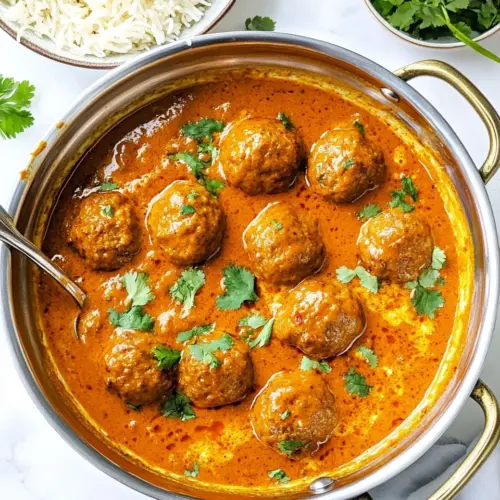
Tikka Masala Meatballs
Tikka Masala Meatballs are tender, savory meatballs simmered in a creamy, spiced tomato sauce with aromatic garam masala, turmeric, and ginger. This easy weeknight dinner brightens your table with bold flavor and comforting texture, perfect for serving over Rice or with warm Naan bread. Make it for a quick, satisfying meal that feels special and feeds the whole family.
Equipment
- Oven
- Baking Sheet
- Parchment Paper
- Large Bowl
- Large Skillet
- Dutch Oven
- Cookie Scoop
- Instant read thermometer
Ingredients
- 1 lb ground chicken or ground turkey Provide lean, versatile protein that forms the base of the meatballs; binds well with breadcrumbs and egg to create a tender interior when cooked through. Season lightly and handle gently to avoid tough, dense meatballs while ensuring safe internal temperature.
- 1/2 cup breadcrumbs Add bulk and texture to the meatball mixture while absorbing moisture and helping bind ingredients; contributes to a consistent, tender crumb. Use plain or panko breadcrumbs depending on desired density and soak slightly if mixture seems dry.
- 1 large egg Bind the meatball mixture and add richness, promoting cohesion so meatballs hold shape during cooking; also contributes to a slightly softer texture. Beat before mixing for even distribution throughout the meat and breadcrumbs.
- 1 tablespoon olive oil Sauté or finish meatballs with a light coating and provide a subtle fruity fat note; helps soften aromatics when starting the sauce. Use moderate heat to avoid burning and to preserve olive oil's flavor.
- 1 garlic clove, minced Impart pungent, savory flavor and aroma to the meatballs; mince finely so it disperses evenly and integrates with spices. Lightly cook garlic in oil to mellow sharpness before combining with other ingredients for meatball or sauce.
- 1/2 teaspoon garam marsala Introduce warm, floral Indian spice character; use sparingly in the meatball mix to complement other spices without overpowering. Ensure even distribution by sprinkling over the mixture and mixing thoroughly.
- 1/2 teaspoon chili powder Provide mild heat and smoky undertones to the meatball seasoning; blends well with other Indian spices for balanced warmth. Adjust amount to taste if preferring more or less spiciness.
- 1/2 teaspoon turmeric Contribute earthy, slightly bitter warmth and vibrant color to the meatball seasoning; pairs well with turmeric in the sauce for cohesive flavor. Use measured amounts to avoid overpowering the delicate poultry base.
- 1/2 teaspoon paprika Offer mild sweet smokiness and color to the meatballs; helps round out the spice profile when combined with chili and garam masala. Choose sweet or smoked paprika according to desired flavor intensity.
- 1/2 teaspoon kosher salt Season the meatballs for balanced savory flavor and to enhance other spices; kosher salt helps proteins bind and brings out natural tastes. Sprinkle evenly and taste the sauce later to adjust overall seasoning.
- 1/4 teaspoon black pepper Add subtle heat and aromatic bite to the meatball seasoning; black pepper brightens other spices and adds complexity. Grind fresh for the most vibrant flavor and distribute evenly in the mixture.
- 1 tablespoon butter, can use olive oil Provide rich, creamy fat for sautéing aromatics and finishing the sauce; can be substituted with olive oil for dairy-free option. Melt gently to brown onions and toast spices without burning.
- 1/2 yellow onion, diced Soften and sweeten the sauce base while building savory depth; diced onion forms the aromatic foundation when cooked until translucent. Sauté until golden to release sugars and enhance overall sauce flavor.
- 1 tablespoon tomato paste Concentrate tomato flavor and add umami depth to the sauce; tomato paste thickens and intensifies the crushed tomatoes for a richer tikka masala. Cook briefly in fat to caramelize and reduce raw acidity.
- 1 teaspoon freshly grated ginger Contribute bright, zesty warmth and fresh pungency to the sauce; freshly grated ginger provides essential aromatic lift typical of Indian dishes. Add early to the pan to bloom its flavor and mellow sharpness.
- 2 cloves garlic, minced Provide aromatic pungency and savory depth when minced and sautéed with onions and spices; forms a key component of the sauce's flavor profile. Cook gently to avoid bitterness and to infuse oil with garlicky aroma.
- 1 teaspoon garam masala Introduce warm, complex spice notes central to tikka masala; a full teaspoon deepens the sauce's characteristic flavor profile. Toast briefly with other spices to unlock oils and intensify aroma.
- 1 teaspoon ground turmeric Add earthy, slightly bitter warmth and vibrant golden color to the sauce; ground turmeric supports both flavor and appearance. Use measured amount to avoid overpowering the sauce's balance.
- 1 teaspoon chili powder Bring rounded heat and depth to the sauce with chili powder; helps unify other spices and contribute warmth. Adjust quantity for desired spiciness and stir in early to bloom flavors in the fat.
- 1/2 teaspoon paprika Provide mild sweetness and smoky color to the sauce while complementing other spices; paprika helps balance heat and enrich the visual appeal. Use sweet paprika for color or smoked for additional smoky notes.
- 1/2 teaspoon cumin Add warm, nutty-earthy undertones to the sauce while supporting other spices; cumin rounds out the masala blend and enhances savory depth. Toast lightly before adding to release full aromatic oils.
- 1/8 teaspoon cayenne pepper Deliver concentrated heat to the sauce for an extra spicy kick; use sparingly to control overall heat level. A small amount goes a long way—adjust according to tolerance and taste preferences.
- 15 oz can crushed tomatoes Create a rich, tangy tomato foundation for the sauce with silky texture; crushed tomatoes provide body and natural acidity to balance cream and spices. Simmer to meld flavors and reduce excess liquid to desired consistency.
- 1/4 cup chicken broth Add savory depth and adjust sauce consistency while building background flavor; chicken broth helps deglaze the pan and lengthen the sauce without overpowering. Use low-sodium if controlling salt and simmer to concentrate flavor.
- 1/2 cup coconut milk or heavy cream Lend creaminess and mellow sweetness that softens the tomato acidity and spices; coconut milk or heavy cream creates the signature silky mouthfeel of tikka masala. Stir in near the end of cooking and heat gently to prevent separation.
- 1 teaspoon fresh lemon juice Brighten and balance the sauce with fresh acidity, enhancing overall complexity and elevating flavors; lemon juice finishes the dish and cuts through richness. Add a teaspoon to taste at the end of cooking for a fresh lift.
- Rice Serve as a neutral, absorbent starch to soak up sauce and provide a satisfying base for the dish; rice complements the spicy, saucy meatballs. Prepare to your preferred style—fluffy basmati often pairs best with tikka masala.
- Naan bread Provide soft, leavened bread for scooping sauce and meatballs, adding a comforting, chewy accompaniment; naan soaks up flavorful gravy and enhances presentation. Warm or toast briefly before serving to refresh texture.
- Fresh cilantro, for garnish Garnish with bright, herbal freshness that adds color and a citrusy, slightly peppery finish; chopped cilantro complements Indian spice profiles. Sprinkle over the finished dish just before serving to retain aroma and vibrancy.
Instructions
- Preheat oven to 425 degrees F. Line a large baking sheet with parchment paper and set aside.: You will notice the kitchen start to warm as the oven comes up to temperature, which is important to ensure the meatballs bake evenly and develop a light crust. A properly preheated oven gives consistent browning and prevents the meatballs from taking on a steamed texture. One common mistake is placing cold meatballs into an underheated oven, which can lead to uneven cooking, so wait until the oven reaches the full temperature before sliding the tray in.
- In a large bowl, combine the ground chicken (or turkey), breadcrumbs, egg, oil, garlic, garam marsala, chili powder, turmeric, paprika, salt, and pepper. Using your clean hands, work the mixture until evenly combined.: As you mix these ingredients, pay attention to the texture; the mixture should feel cohesive but not paste like. The scent of raw garlic and warm spices should be present but not overpowering, indicating even distribution. Use gentle motions to avoid compacting the meat, because overworking can make the final meatballs tough. A trouble to avoid is adding too much liquid at this stage, which will make shaping difficult and may cause them to fall apart during cooking.
- Using a cookie scoop, scoop about 1 1/2 tablespoons of the mixture into your palms and roll it into a ball. Place the ball on the prepared baking sheet. Repeat with the rest of the mixture, spacing the meatballs out onto the baking sheet, about 2 inches apart.: The meatball should feel slightly springy when you roll it, with no loose crumbs falling away. Rolling by hand warms the mixture slightly, which helps the meatbinders activate, and you should see a smooth surface form. If the balls feel too loose, chill the mixture for 10 minutes, because a firmer mix shapes better. Avoid packing the meatball too tightly, as that will create a dense interior rather than a tender one.
- Bake the meatballs for 18 to 22 minutes, flipping halfway through, or until cooked through.: Lining the tray with parchment prevents sticking and makes cleanup easy, while spacing ensures hot air circulates around each meatball, promoting even browning. You might hear a faint sizzle once they hit the hot tray as the fat warms, which is a good sign. Crowding the tray is a common error that leads to steaming rather than baking, so keep that 2 inch gap to maintain crisp edges.
- While the meatballs are baking, make the sauce. In a large skillet or Dutch oven, melt the butter over medium heat. Add the onion and cook until tender, about 3 to 5 minutes.: During baking you should see the meatballs firm up and take on light golden shoulders where heat kisses their surface. Flipping halfway ensures both sides develop color and prevents one side from overbrowning. Use an instant read thermometer for certainty, aiming for 165 degrees F in the center if using poultry. A frequent misstep is removing them too early; undercooked meatballs will be soft and unsafe, while overbaking dries them out, so watch the time closely.
- Stir in the tomato paste, ginger, garlic, garam masala, turmeric, chili powder, paprika, cumin, and cayenne pepper and cook until well combined, 1 to 2 minutes.: As the butter melts, it should go glossy and fragrant, and the diced yellow onion will begin to soften and release sweetness. You want the onion to become translucent and slightly tender, which takes about a few minutes and builds the foundation for the sauce. Stir frequently to prevent the onion from sticking or browning too much, because burned onion will introduce bitterness instead of sweetness.
- Stir in the tomatoes and chicken broth. Bring to a boil; reduce the heat and simmer, stirring occasionally, until sauce is slightly thickened, about 10 minutes.: At this stage the aroma will shift as the spices bloom in the fat, releasing oils that heighten flavor. The paste should darken slightly and cling to the pan, which indicates it is caramelizing and deepening in taste. Cook just long enough for the raw edge from the spices to mellow; overcooking can make them taste flat or burned, so keep the heat moderate and stir constantly to distribute the flavors.
- Stir in the cream and lemon juice. Add the meatballs to the pan and cook until heated through, about 3 to 5 minutes.: Once the crushed tomatoes hit the pan you will see a bubbling stage, and reducing to a simmer mellows the acidity and concentrates the sauce. Stir occasionally so the bottom does not scorch, and watch for a texture that coats a spoon, signaling it has reduced enough. A common error is rushing this step; insufficient simmering yields a watery sauce, while too long can dry it out, so aim for a gentle, steady reduction.
- Serve the meatballs and sauce with rice and naan, if desired.: Adding the coconut milk or heavy cream will immediately soften the sauce, turning it creamier and silkier, while the splash of lemon juice cuts through that richness with a bright note. The sauce should shimmer and thicken slightly after these additions, and tasting now lets you adjust salt or acidity. Avoid boiling vigorously after adding cream, because high heat can cause separation; keep it at a low simmer for a silky finish.
- Add the meatballs to the pan and cook until heated through: As the meatballs nestle into the sauce, you should hear a soft bubbling and see the sauce cling to their sides. This final gentle simmer lets the flavors meld and ensures the interiors are fully warmed. Stir carefully to coat each meatball without breaking them up, and simmer just a few minutes so they remain tender. A common problem is simmering too long, which will leach moisture from the meatballs and make them dry, so aim to warm them through rather than cook them further.
- Serve the meatballs and sauce with rice and naan, if desired: When plated, the sauce should spoon over the Rice and the Naan bread should be warm and soft, perfect for scooping. Garnish with the Fresh cilantro, for garnish and perhaps an extra squeeze of lemon for brightness. If the sauce seems too thin, let it simmer briefly to thicken; if too thick, stir in a splash of chicken broth to loosen it gently before serving.
Notes
- Swap protein carefully Use ground chicken or ground turkey interchangeably depending on taste and availability, noting that turkey can be a bit leaner so monitor moisture and consider adding a touch more olive oil if the mix feels dry.
- Adjust the creaminess Choose coconut milk for a slightly sweet, tropical note, or heavy cream for a richer, more decadent sauce that clings beautifully to the meatballs.
- Control the heat Modify the amount of cayenne pepper and chili powder to suit your spice tolerance, starting with less and adding small increments while tasting the sauce as it simmers.
- Make it ahead Prepare meatballs and sauce separately, refrigerate, and gently reheat together before serving for convenient weeknight dinners; allow extra gentle simmer time if refrigerated so they warm through evenly.
- Boost the herb finish Use a generous handful of Fresh cilantro, for garnish right before serving to add brightness and contrast to the creamy, spiced sauce.