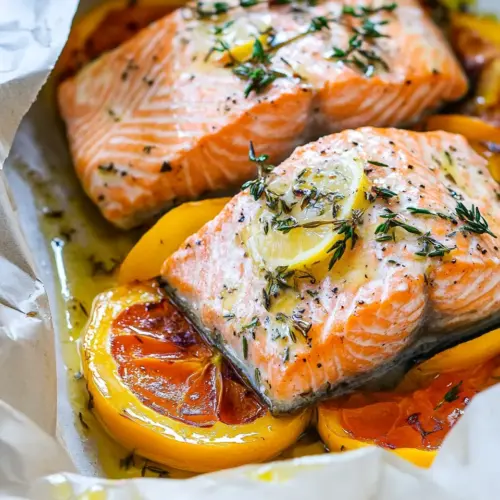
Thyme Butter Salmon Parcels
Thyme Butter Salmon Parcels are an easy weeknight dinner that yields tender, flaky salmon infused with bright lemon and aromatic thyme. The parcel method steams the fish with colorful vegetables, producing a buttery, flavorful bite with minimal cleanup, perfect for quick spring dinners and casual entertaining.
Equipment
- Oven
- Baking Tray
- Parchment Paper
- Small Bowl
- Knife
Ingredients
- 3 tablespoons butter, softened Soften to create a spreadable base that melts over the salmon, adding richness and helping carry herbs and seasonings throughout the parcel. Work into a compound butter if desired, ensuring even distribution and a glossy finish when baked.
- 1/2 tablespoon lemon zest Zest to release bright citrus oils that cut through the butter's richness and elevate the fish’s flavor with fresh, aromatic notes. Sprinkle evenly into the butter mixture to provide a consistent lemony lift in every bite.
- 1 teaspoon fresh thyme leaves Chop or strip leaves to infuse a fragrant, earthy herbal aroma that complements the salmon and vegetables. Fold into the softened butter so thyme’s subtle piney and minty tones mingle with the other seasonings during cooking.
- 25 oz salmon fillets, skin on Portion as fillets, leaving skin on to protect the flesh during baking and to render extra flavor and moisture into the parcel. Place on prepared vegetables and top with butter-herb mixture so the salmon cooks gently and stays tender.
- 1/4 teaspoon ground black pepper, to taste Grind or sprinkle sparingly to introduce a mild heat and aromatic bite that balances the butter and lemon. Season to taste over both fish and vegetables to enhance overall savory complexity.
- 1/3 teaspoon garlic salt, to taste Shake lightly to provide a savory, garlicky seasoning with a hint of saltiness that simplifies seasoning. Use judiciously on the butter and vegetables to ensure balanced flavor without overpowering the salmon.
- 1 zucchini, thinly sliced Slice thinly to cook quickly and add tender, slightly sweet texture to the parcel, soaking up juices and butter. Layer under or around the salmon so zucchini becomes soft yet retains some bite alongside the fillets.
- 1 red onion, thinly sliced Slice thinly to contribute sweet, caramelizing notes and a tender-crisp texture that complements the fish and other vegetables. Scatter among the vegetables to create a flavorful bed that releases aromatics as it roasts.
- 1/2 bunch asparagus, trim the steam and cut in halves Trim and halve to provide crisp-tender stalks with a bright, slightly grassy flavor that pairs well with lemon and thyme. Arrange with other vegetables so asparagus cooks through evenly and adds a pleasant textural contrast.
- 2 red peppers, sliced Slice to introduce sweet, slightly smoky flavor and vibrant color that roasts well with butter and herbs. Distribute among the vegetables to create balanced sweetness and additional layers of flavor in each parcel.
- 1 lemon, cut into wedges for serving Cut into wedges to serve alongside the cooked parcels, offering fresh acidity and an optional squeeze to brighten flavors. Present on the side so diners can add lemon juice to taste, enhancing the fish and vegetables.
Instructions
- Preheat the oven to 400°F (205°C). In a small bowl, combine softened butter, lemon zest, and thyme leaves. Add the salmon to the mixture and season with ground black pepper and garlic salt. Set aside.: As you mix the softened butter with the lemon zest and crushed thyme leaves, you should smell a fresh citrus and herb perfume that hints at the bright finish to come. The butter should hold those aromatics and feel spreadable, not greasy, when you press it between your fingers. I like to taste a tiny bit of the butter on the tip of a spoon to ensure the balance is right, mindful that the salt level will also come from the garlic salt . Keep the bowl nearby while you prep the vegetables so the compound butter is ready to smear over the salmon . A common misstep here is using butter straight from the fridge, which will clump and not coat the fish evenly. If your butter is cold, let it rest for a few minutes until it softens, but do not allow it to melt.
- Cut the parchment paper into two 12"x 18" (30 x 47 cm) rectangles. Divide the vegetables into two equal parts and evenly distribute them on the parchment paper. Then, add the salmon fillet and pour the remaining butter mixture on top. Place the red pepper slices over the salmon.: When you lay out the vegetables on the parchment, arrange them in a single layer so each piece gets a touch of heat and steam, creating a mixture of textures from tender to slightly crisp. The color contrast of the zucchini , red onion , and red peppers should look lively and inviting before the oven. Place the salmon skin side down on the vegetables, then spread the compound butter across the top so it melts and trickles into the crevices. The sizzling aroma will be faint before baking, but once in the oven you will notice the butter releasing scents of lemon and thyme. Avoid piling vegetables directly on top of the fillet, which can prevent the parcel from sealing properly and may slow down cooking.
- Fold the sides to the center and wrap the edges to seal. Transfer the parcels to a baking tray and bake for 20 to 25 minutes, or until the fish is cooked. Serve immediately with lemon wedges.: As you fold the parchment, press the edges together tightly so the parcel forms an enclosed pouch. You want enough space inside for steam to circulate around the salmon and vegetables, but not so much that juices will slosh. Place parcels spaced apart on the tray so heat surrounds them evenly. In the oven, listen for a soft whisper of steam, and look for the parchment to puff slightly, signaling internal steam has built up. When you open the parcel, the aroma should be bright and herbaceous, and the salmon should flake easily with a fork, showing opaque flesh throughout. A common error is overbaking, which dries the fish out. If your fillet is thicker than average, check earlier and use the flake test to avoid a chalky texture.
Notes
- Softened butter matters: Make sure your butter is soft enough to spread. This allows the lemon zest and thyme to incorporate evenly, ensuring consistent flavor across the fillet. If the butter is too cold, it will form lumps and not meld with the aromatics, leading to uneven basting during baking.
- Even vegetable slicing: Cut your zucchini, red onion, and red peppers into uniform thickness. This prevents undercooked pieces and helps everything finish at the same time as the salmon. Inconsistent sizes often lead to a mix of soft and raw textures in the same parcel.
- Trim asparagus properly: Snap or trim the woody ends from the asparagus and halve the spears so they nestle neatly under the salmon. Tough ends can be fibrous and unpleasant to eat, while trimmed spears cook with a tender crispness.
- Watch the parcel puff: A slight puff in the parchment signals steam is building and the cooking is progressing. When you see that gentle inflation, it is a good cue that internal juices are circulating. Avoid aggressive oven openings which can release heat and lengthen cooking time.
- Season with restraint: The garlic salt in the recipe seasons both fish and vegetables. Taste the compound butter on a spoon before spreading, keeping in mind that it will concentrate during cooking. You can always add more at the table with extra lemon wedges.