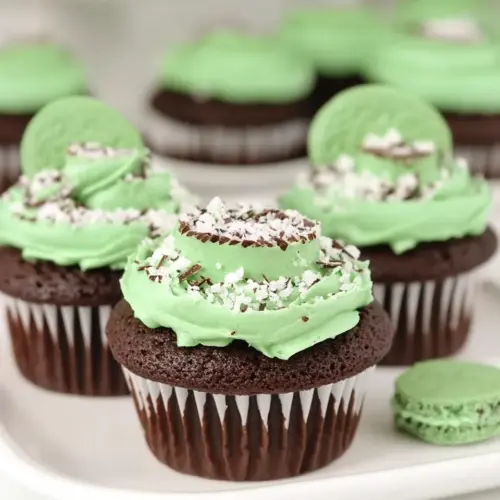
Thin Mint Cupcakes
Thin Mint Cupcakes are a creamy chocolate cupcake with a glossy chocolate ganache and mint buttercream, offering a crispy cookie finish and a cool mint lift. These easy, crowd pleasing cupcakes balance tender crumb and silky frosting for an irresistible treat, perfect for parties or an easy weeknight bake. Make them to impress family and friends with minimal fuss.
Equipment
- Mixing Bowls
- Whisk
- Spatula
- Cupcake Pan
- cupcake liners
- Microwave proof bowl
- Electric Mixer
- Measuring Cups
Ingredients
- 2 eggs Whisk vigorously to provide structure and help the batter rise and set while contributing moisture and richness to the cupcakes.
- 1/2 cup granulated sugar Sweeten evenly and assist in caramelization during baking, helping to balance flavors and contribute tenderness to the crumb.
- 1/2 cup brown sugar Impart deep, molasses-like sweetness and added moisture while enhancing the cake's chewiness and complexity of flavor.
- 1/3 cup vegetable oil Add fat that tenderizes the crumb, increases moistness, and carries flavor throughout the batter for a soft cupcake texture.
- 2 teaspoons vanilla extract Provide aromatic depth and enhance other flavors; stir into wet ingredients to distribute a pleasant, rounded vanilla note.
- 3/4 cup flour Give bulk and structure to the cupcakes, forming the gluten network that traps gases and supports the cake as it bakes.
- 1/2 cup unsweetened cocoa powder Deliver chocolate flavor and a slight dryness that intensifies cocoa notes while contributing a tender, velvety crumb.
- 1/2 teaspoon baking soda Act as a leavening agent component that reacts with acids to produce carbon dioxide, helping the cupcakes rise and lighten.
- 3/4 teaspoon baking powder Provide additional leavening power to create lift and a finer crumb, balancing rise with the baking soda for optimal texture.
- 1/4 teaspoons salt Enhance overall flavor balance by elevating sweetness and suppressing bitterness, while slightly strengthening gluten for structure.
- 1/2 cup buttermilk or milk Moisturize the batter and react with leavening agents when using buttermilk; add creaminess and help dissolve sugars for even texture.
- 2/3 cup chocolate chips Melt during baking to create pockets of concentrated chocolate flavor and add bursts of gooey richness within the cupcakes.
- 3 tablespoons heavy whipping cream Enrich the frosting or ganache by adding body, creaminess, and a glossy texture while helping stabilize the final consistency.
- 3/4 cup butter softened Provide fat and structure in frostings, allowing aeration when whipped and lending a smooth, rich mouthfeel to the topping.
- 1 teaspoon vanilla extract Enhance and support vanilla flavor when added to icings or batters, contributing subtle sweetness and aromatic complexity.
- 1 -1/2 teaspoons mint or peppermint extract add this gradually to taste as the intensity of mint extract varies from brand to brand Contribute a bright, cooling mint character that defines the Thin Mint profile; add gradually to control intensity and avoid overpowering.
- 2 -3 cups powdered sugar Sweeten and thicken frostings, providing stability and structure while dissolving to create a smooth, spreadable consistency.
- green food dye Tint frostings or batter to achieve the signature green color associated with Thin Mint treats, used sparingly for desired shade.
Instructions
- Preheat oven to 350°F and line pans with cupcake liners.: You will notice a warm, dry scent as the oven comes up to temperature, which primes the air for even baking and predictable rise. Properly lined pans prevent sticking and make removal simple, and an oven thermometer helps confirm the true heat. A frequent error is skipping liners or using cold pans, which can lead to uneven bottoms or cupcakes that stick, so line tins and let the oven fully preheat before baking.
- In a large bowl, whisk eggs, sugar, brown sugar, oil and vanilla extract together.: As you whisk, the mixture will become lighter in color and slightly thicker, with the sugars dissolving into the oil and eggs creating a glossy emulsion. This step builds structure, trapping air that supports a tender crumb. Watch for overbeating, which can create a tough texture, so whisk until everything is homogenous and slightly aerated.
- In a separate bowl, combine flour, cocoa powder, baking soda, baking powder and salt. Pour in half of these dry ingredients into the oil mixture and stir.: Dry ingredients will look even and lump free after whisking, and sifting them together helps distribute leaveners and cocoa evenly so pockets of baking powder do not create tunnels. I prefer to whisk until the mixture is uniformly colored. A common mistake is not mixing dry ingredients well, which can cause uneven rise or bitter pockets of cocoa.
- Add milk and gently stir again and then add the rest of the dry ingredients. Be careful not to over mix.: When you fold in the first half of the dry mix the batter will gain body, and you will hear a thicker, wetter sound as the spatula moves through. This staging reduces the chance of over mixing, because adding all at once often requires more stirring. Avoid vigorous stirring here, which develops gluten and leads to a denser cupcake.
- Fill cupcake liners half full and bake for 15-20 minutes or until an inserted knife comes out clean. Let cool.: The batter becomes silkier once the milk is incorporated, and you should stop stirring as soon as the flour disappears to keep the crumb light. The visual cue is a smooth batter without streaks of flour but still slightly lumpy. Resist the urge to perfect it, because over mixing is the quickest way to dry, chewy cupcakes.
- Place chocolate chips and whipping cream in a small microwave-proof bowl and microwave for 40 seconds. Remove and stir and continue to microwave until smooth.: While baking you will smell warm chocolate and notice the tops set and spring back when touched. Bake time produces a tender center, and the knife test ensures doneness without over baking. A common problem is overbaking for a few extra minutes, which dries the cake, so start checking at the early end of the range and remove when just done.
- Dip cooled cupcakes into the ganache and turn right side up to let set.: Heating creates a glossy ganache that smells rich and chocolate forward, and stirring helps the chips melt evenly into the cream for a silky texture. Allowing the mixture to sit briefly after heating ensures the residual heat finishes melting any remaining pieces. Avoid boiling the cream or overheating, which can scorch the chocolate and ruin the glossy finish.
- Beat butter until smooth.: Dipping gives a thin, shiny chocolate shell that cools into a smooth coating, adding a textural contrast to the soft cake. When the ganache sets, it will lose sheen slightly and form a tactile layer. A common error is dipping warm cupcakes, which can make the ganache slide off, so be sure the cakes are cooled completely before dipping.
- Add vanilla and mint extract and beat again.: Whipped butter should become pale and silky in texture, with a faint sweet dairy aroma. This is the base of your frosting, and achieving a smooth consistency ensures the powdered sugar will incorporate seamlessly. If the butter is too soft, the frosting will be runny; if too firm, it will be lumpy, so aim for room temperature.
- Slowly add in powdered sugar until you reach your desired consistency (add milk if it becomes too thick).: Once extracts are added, smell the mixture to gauge balance, because these aromatics shape the frosting profile. Mixing them in allows the flavors to disperse evenly; I often pause here and taste a tiny bit of butter to check the mint intensity. Be mindful that adding too much mint can overpower the chocolate, so add gradually.
- Add as much green food dye as desired.: As powdered sugar is incorporated the frosting thickens and sweetens, producing a pipeable texture. If the frosting becomes too dense, a splash of milk loosens it, but add sparingly to avoid a runny finish. Over sweetening can mask the mint, so aim for balance and stop once the buttercream holds peaks for piping.
- Pipe on over ganache and top cupcakes with Thin Mints! I crushed a few cookies and used them as "sprinkles".: Adding dye transforms the visual appeal, and gel color gives vibrant results without adding liquid, which would loosen the frosting. Mix until the color is uniform and adjust in tiny amounts to avoid overshooting the shade. A mistake is using liquid dye that thins the frosting, so prefer gels for control.
- Pipe on over ganache and top cupcakes with Thin Mints I crushed a few cookies and used them as "sprinkles": Piping creates a neat, elevated look and a pleasing creamy contrast to the ganache, and the crushed cookies add crunch and a direct tie to the Thin Mint inspiration. Press lightly when piping to keep the frosting texture intact, and sprinkle crumbs immediately so they adhere. Avoid piling too many crumbs on one cupcake, which can overwhelm the delicate frosting structure.
Notes
- Double Chocolate: Fold extra chocolate chips into the batter for pockets of molten chocolate, but be careful not to add so many that the cupcakes sink during baking.
- Subtle Mint: Start with half the recommended mint extract and add more to the buttercream only after tasting, keeping the mint as an accent rather than the lead flavor.
- Stronger Ganache: Increase the ratio of chocolate chips to heavy whipping cream to create a firmer ganache coating, which will set more solidly on the cupcakes.
- Vegan Friendly: Replace eggs with a flax egg and use a plant based butter and dairy free chocolate, noting that texture will be slightly different and may require a touch more liquid.
- Cookie Crumb Topping: Reserve a few Thin Mints and crush them to sprinkle on top right after piping so they stick to the buttercream for a decorative, crunchy finish.