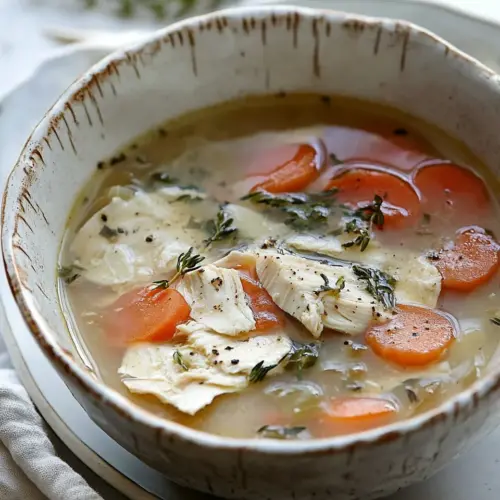
The Secret to the Best Chicken Soup
The Secret to the Best Chicken Soup is a clear, nourishing bowl with tender chicken and bright aromatics. This easy weeknight dinner delivers a silky, savory broth and tender meat, perfect for cold evenings or anyone needing comfort. With simple ingredients and careful simmering, it makes an elegant, restorative meal you will want to make again and again.
Equipment
- Stock Pot
- Slotted Spoon
- Large platter or bowl
Ingredients
- 1 3 lb whole hen - remove pieces packed internally Remove pieces packed internally and simmer whole to yield a rich, gelatinous broth with balanced fat. Break down during cooking to impart deep chicken flavor and natural collagen for body. Strain solids after cooking if a clear soup is desired.
- 1 whole onion cut into 4 pieces - leave skin on Quarter and leave the skin on to contribute sweetness and a golden color while simmering for extended time. Provide aromatic depth and natural sugars that caramelize slightly during initial browning or long simmer. Remove skins if a cleaner, less oily stock is preferred.
- 1 whole head of garlic - cut in half Cut in half to release mellow garlic aroma and gentle sweetness that permeates the broth as it simmers. Soften and mellow significantly with long cooking, adding complexity without sharpness. Press or mash cloves later for a more pronounced garlicky note if desired.
- 4 whole large carrots - cut into 4 pieces Cut into pieces to add natural sweetness, vegetal body, and a pleasant texture when cooked until tender. Contribute beta-carotene and color to the broth while balancing savory notes from the hen. Reserve some cooked pieces as garnish for heartier servings.
- 4 stalk celery - cut into 4 pieces Cut into segments to provide savory, herbal undertones and subtle aromatic bitterness that enhances broth complexity. Add crunchy texture if briefly cooked, or melt into the soup with long simmering for a smoother mouthfeel. Use leaves for extra aroma if available.
- 2 teaspoon kosher salt Season early to help draw flavors from proteins and vegetables and to balance the final soup taste. Dissolve into the simmering liquid so it distributes evenly throughout the cooking process. Adjust final seasoning after reducing to taste.
Instructions
- In a large stock pot (about 6 quart size) place the whole hen and cover with good water by 1 inch.: Warm, clean water first gives a gentle cradle for the whole hen , and as the pot begins to heat you will smell a faint, raw poultry note that slowly shifts into a savory promise. The visual cue I watch for is when the water moves from still to a few tiny pearls of steam rising, and that is the moment to be vigilant. If the water is cloudy at the outset, check for any packaging fluids and rinse if needed. One mistake to avoid is starting with too vigorous heat, which can jostle the bird and create emulsified fat and cloudiness.
- Add all of the other ingredients to the stock pot.: When you drop in the quartered onion , halved head of garlic , pieces of carrots , and celery , the pot will begin to fill with layered aromatics that float to the surface. You may notice little bursts of vegetal fragrance as each piece hits the hot water. Stirring is unnecessary, and I avoid it because agitation can disturb the bird and make the broth cloudy. A common error here is overfilling the pot, so ensure there is space to simmer without spilling.
- Cook over medium heat and watch carefully. AS SOON AS the water begins to simmer, cut the heat to low. If this does not keep a simmer, then apply the lid. You can increase the heat until a small simmer is maintained.: The moment the water shows small bubbles is critical, because a hard boil will bruise the meat and cloud the stock. You want a gentle, barely moving surface, a pattern like hairline ripples more than rolling action. The sound is soft, a quiet whisper of movement rather than a noisy roar. If you fail to reduce heat, the texture of the chicken will turn chewy, and the broth will lose clarity.
- Cook until the bird is cooked through and beginning to fall apart.: Using the lid strategically traps a little heat so you can maintain that delicate simmer without cranking the flame. You may see occasional wisps of steam escape from the lid edge, which is fine, but avoid sealing so tightly that pressure builds. One pitfall is forgetting to check under the lid, which can let the pot slip into a boil; I lift the lid briefly to monitor and then replace it.
- Carefully remove the hen and all of the veggies from the stock pot using a large slotted spoon.: A cooked hen will release a softer texture around the joints and the meat will pull from the bone with little resistance. The aroma becomes deeper and rounder, and the broth takes on a fuller mouthfeel as collagen dissolves. If you undercook, the meat will cling stubbornly to the bone and taste underdeveloped; overcook at a rolling boil and the meat becomes stringy. Aim for tender yet cohesive meat.
- Set the hen and carrots aside to cool.: Lifting the solids gently prevents splashing and preserves the clearer surface of the broth. The visual will change as the pot grows emptier, and you may notice floating fat or tiny particles on top that will need skimming later. A common mistake is plunging a ladle and stirring vigorously, which stirs up suspended bits and clouds the soup.
- Once cooled, pick the meat from the bird and cut the carrots into slices and then quarter those.: Cooling the bird and carrots on a platter or bowl lets you handle them comfortably and keeps the pot manageable for skimming. The meat will firm slightly as it cools, making it easier to pick from the bones. Resist the temptation to rush this step with cold water, because shocking the meat can leach flavor and change texture.
- As the liquid in the stock pot cools, skim the fat from the top.: The tactile moment of shredding meat is satisfying, and you will notice how tender pieces flake apart without effort. Slicing the carrots into rounds and then quartering them gives bite size pieces that complement each spoonful. Avoid leaving large clumps of meat that can cool unevenly in the broth; aim for uniform pieces for even reheating.
- Replace the meat and carrots in the pot and heat over medium heat until all is heated through.: When the pot cools slightly, fat rises and forms a visible layer you can lift away with a spoon. Removing this yields a cleaner mouthfeel and a clearer presentation. The broth will look brighter once skimmed, which is a small step that makes a big difference. One trap is skimming too early while the fat is emulsified and creamy; wait until it collects on the surface.
- Serve with green garnish such as parsley or chives.: Returning the meat and carrot pieces at the end warms them gently and allows flavors to rejoin the broth without breaking the texture. Heat until steam rises and you see a soft ripple, then reduce if necessary to maintain tenderness. If you overheat at this stage you risk drying the meat, so warm just until comfortable for serving.
- Serve with green garnish such as parsley or chives: A finishing touch of chopped parsley or chives adds color, freshness, and a bright herbal note that lifts the bowl. The contrast of vivid green against the warm broth is visually appealing and introduces a fresh aroma right before serving. Avoid adding garnish too early, since herbs lose vibrancy when cooked for long periods.
Notes
- Control the Heat: Gently reduce heat at the first signs of simmer to preserve broth clarity and tender meat.
- Skimming Matters: Skim fat after the pot cools slightly so the broth looks clean and tastes less greasy.
- Use Good Water: The quality of your water affects the broth flavor, so avoid chlorinated or off tasting tap water.
- Patience Pays: Let the bird simmer gently until it begins to fall apart for the best texture and flavor extraction.
- Garnish Last: Add parsley or chives just before serving to keep their color and fresh aroma.