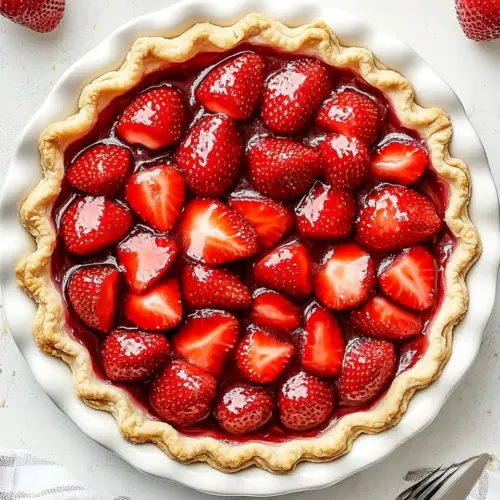
The Easiest Fresh Strawberry Pie
The Easiest Fresh Strawberry Pie is a creamy glossy, easy to make dessert that highlights ripe strawberries with a crisp pie crust and a shiny, set glaze. Perfect for summer gatherings and easy weeknight hosting, this bright pie delivers fresh fruit flavor and effortless presentation. Make it ahead and refrigerate so slices come out perfect for sharing.
Equipment
- Oven
- Saucepan
- Whisk
- Refrigerator
Ingredients
- 1 9 inch pie crust Provides a buttery, flaky base to hold filling and strawberries; prebaked or store-bought crust saves time and ensures structure. Complements the sweet, gelatinous filling while adding textural contrast for each bite.
- 2 tbsp cornstarch Thickens the water and gelatin mixture into a glossy filling; whisked with cold water to prevent lumps and cooked briefly to activate its setting properties. Helps the filling cling to sliced strawberries for an even, sliceable pie.
- 3/4 cups sugar Sweetens the gelatin mixture and balances the tartness of the strawberries; dissolved into the water before cooking to ensure uniform sweetness. Can be adjusted slightly for riper or tarter berry flavor without affecting set.
- 1 cup water Serves as the liquid base to dissolve cornstarch, sugar, and gelatin; heated to activate thickening and fully dissolve dry ingredients. Controls consistency of the filling—more water yields a looser set, less yields firmer texture.
- 1 3 ounce package strawberry jello Adds concentrated strawberry flavor and color while helping the filling gel; dissolved into the hot liquid and combined with cornstarch for stability. Enhances shelf life of the set filling and intensifies fruitiness without altering texture.
- 4 cups fresh strawberries sliced Provides fresh, juicy fruit that is the star of the pie; sliced evenly for consistent coverage and attractive presentation. Contributes natural sweetness, texture, and moisture that pair with the glossy gelatin to create a classic strawberry pie.
- Fresh whipping cream. Adds a light, airy finish and creamy contrast when whipped and served on slices; sweeten to taste and pipe or dollop over each serving. Balances the tartness and adds a rich mouthfeel to the dessert.
Instructions
- Bake the crust according to package directions. To help the crust stay in place while baking, line the crust with aluminum foil and bake for 8 minutes, remove foil, and bake for an additional 5.: When you slide the crust into the oven, you should hear a faint warmth shift in the kitchen and smell a buttery aroma as it begins to brown, signaling that the layers are crisping. The foil step is practical, it prevents the center from slumping while the edges firm up, which yields an even base for the filling. Watch for subtle golden edges and a firm surface before removing it, because underbaked crust can become soggy under the glaze. A common mistake is skipping the initial foil lined bake which can lead to bubbling and uneven rise, so tent the foil snugly and press any air pockets flat before the first bake.
- In a small saucepan, combine cornstarch, sugar and water and whisk until smooth. Bring it to a boil and whisk for 2 minutes until it starts to thicken. Remove from the heat and stir in the strawberry jello until dissolved. Let the mixture cool for about 15 minutes.: As the mixture warms, you will see it go from translucent to slightly opalescent, and the whisking creates a silky surface that thickens as starch granules bloom. The bubbling boil concentrates the flavors and activates the thickener so the glaze will cling to the fruit rather than pool. Once off the heat, stirring in the strawberry jello deepens the color and amplifies the strawberry note while the residual heat melts it smoothly. If you pour it in too hot, it will make the berries soggy, so cooling for the recommended time is essential. Avoid under whisking which causes lumps, and if lumps appear, strain through a fine sieve for a smooth finish.
- Place the strawberries into the crust and pour the cooled mixture over the strawberries. Refrigerate 3 hours or overnight until set. Serve with fresh whipping cream.: When you arrange the strawberries in the baked crust, the surface becomes a mosaic of red slices that catch the light. Pouring the glaze slowly lets it seep between pieces and coat each slice evenly, creating that glossy look. Once refrigerated, the mixture firms to a delicate gel that holds the fruit in place and allows clean slicing. You should notice the filling become slightly resilient to the touch when fully set. A typical pitfall is pouring the glaze while it is still too hot, which softens the berries and makes the crust soggy; aim for a warm, not hot, glaze for the best texture.
- Serve with fresh whipping cream.: The final flourish of a spoonful of cold, softly whipped fresh whipping cream brightens each slice with cool, creamy contrast. The cream adds a light mouthfeel that complements the bright, slightly firm filling and flaky crust. When you dollop it, the whipped cream should hold a gentle peak and melt slowly against the warm flavors on the plate, offering a luxurious finish. Don’t overwhip the cream or it will become dense and lose that inviting cloud like texture; stop when it still moves pleasingly on the spoon.
Notes
- Make it with mixed berries: Swap half the strawberries for blueberries or raspberries to add color contrast and a slightly tangy dimension while keeping the same glaze, but maintain even slice sizes for a tidy presentation.
- Adjust sweetness: Tweak the 3/4 cups sugar up or down based on berry ripeness, tasting the glaze warm to ensure it balances the fruit without becoming cloying.
- Use a pre blind baked crust: Follow package directions closely and use foil and weights if available to keep the crust flat for a crisp bottom that resists sogginess from the glaze.
- Chill for easier slicing: Refrigerate overnight so the filling firms completely, which yields clean, photogenic slices for gatherings.
- Serve cream on the side: Keep whipped fresh whipping cream in a chilled bowl and let guests add their own amount, which helps those watching sugar intake control portions.