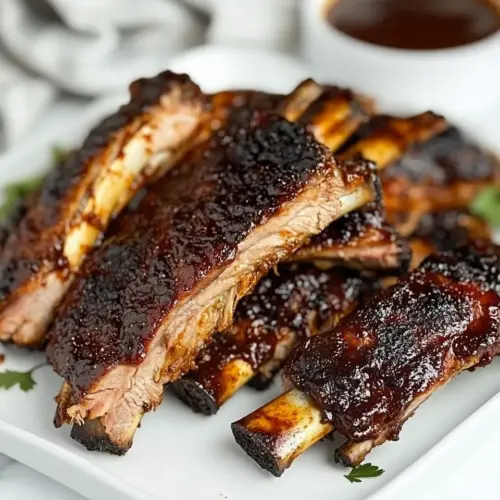
The Easiest BBQ Air Fryer Ribs
The Easiest BBQ Air Fryer Ribs deliver sweet, smoky, and slightly spicy flavor with minimal fuss. Tender baby back ribs get a caramelized crust from a simple spice rub and glossy barbecue sauce, making this an easy weeknight dinner or casual weekend showstopper. Quick to prepare and full of barbecue character, they are a must make when you want big taste without long cook times.
Equipment
- Air Fryer
- Small Bowl
- Tongs
Ingredients
- 1/2 tablespoon chili powder Season generously as a warm, earthy spice that adds mild heat and depth to the rub; helps balance sweetness and smoky elements when combined with other spices. Use evenly distributed across the ribs to ensure consistent flavor penetration during air frying.
- 1/2 tablespoon smoked paprika Impart deeply smoky, slightly sweet flavor and vibrant color to the rib rub; complements the barbecue sauce and mimics grilled smokiness from the air fryer. Sprinkle with the other spices to create a well-rounded smoky backbone without overpowering the meat.
- 1 tablespoon brown sugar Add caramelized sweetness and slight moisture retention when mixed into the dry rub; helps create a sticky glaze when the barbecue sauce is applied and heated. Break up any clumps before combining so sugar disperses evenly over the ribs.
- 1 teaspoon black pepper Provide sharp, bright heat and subtle bite that cuts through the richness of the meat; helps enhance other seasonings and rounds out the overall profile. Grind or measure carefully to avoid overpowering the rub’s balance.
- 1 1/2 teaspoons kosher salt Season for flavor and enhance the natural pork taste while aiding in tenderization by drawing out excess moisture during resting; provides essential savory balance. Dissolve evenly into the spice mix to prevent salty pockets on the ribs.
- 1/2 teaspoon dry mustard Introduce a tangy, slightly pungent note that lifts the rub and adds complexity similar to mustard without added moisture. Use sparingly so its sharpness supports rather than dominates the other flavors.
- 1/4 teaspoon cayenne pepper Contribute a concentrated kick of heat and bright spice that livens the overall rub; small amounts add noticeable warmth without masking other seasonings. Combine with the rub ingredients thoroughly to ensure even distribution.
- 1 teaspoon garlic powder Deliver aromatic savoriness and a mellow garlic flavor that enhances meaty richness; helps create a classic barbecue profile when paired with onion and smoked paprika. Use powdered form for quick dispersion and consistent seasoning coverage.
- 1 teaspoon onion powder Provide sweet, savory, and slightly pungent notes that complement garlic and balance the rub; adds depth to the overall flavor profile of the ribs. Powdered onion blends smoothly into the spice mix for uniform seasoning.
- 3 pounds baby back ribs Serve as the meaty centerpiece that benefits from the prepared rub and sauce; choice of baby back ribs ensures tender, lean cuts that cook relatively quickly in an air fryer. Trim excess membrane if desired and apply the rub evenly before cooking.
- 1/2 cup barbecue sauce Coat and glaze the ribs with sweet, tangy, and savory finishes that caramelize during air frying; boosts moisture and adds familiar barbecue flavor. Brush on during the final cooking stage for a sticky, glossy finish without burning.
Instructions
- In a small bowl, mix the chili powder, smoked paprika, brown sugar, black pepper, kosher salt, dry mustard, cayenne pepper, garlic powder and onion powder.: The spice mingle will smell aromatic and slightly sweet, with the smoked paprika announcing a warm smokiness. As you whisk, you will notice the brown sugar softening the sharp edges of the powdered spices, which helps the rub adhere to the meat. This step is vital because even distribution ensures balanced flavor on every bite. If you skip thorough mixing, some bites might be saltier or spicier than others, so take a moment to blend until uniform.
- Remove the membrane from the back of the ribs. Cut the rib rack in half so they can fit in the air fryer.: The membrane is a thin, silvery layer that, when removed, lets seasoning penetrate and yields more tender results. Removing it is tactile work, a slight tug that reveals pink meat beneath, and makes the ribs feel more approachable to eat. Cutting the rack helps the ribs lay flat in the air fryer , promoting even circulation of hot air that crisps edges. A common misstep is leaving the membrane on which causes tougher texture, so use a paper towel to grip and pull it off cleanly.
- Sprinkle the seasoning mixture over the ribs. Place the ribs in the air fryer meat side down and cook for 20 minutes on 380 degrees. Once the ribs are done, use tongs or a fork to flip them, and cook for 10 additional minutes on 380 degrees.: As you dust the spice blend, the aroma should lift and suggest the profile you will get after cooking. Pat the rub into the surface so it forms an even coat, which encourages a flavorful crust rather than a loose dusting. This contact also helps the kosher salt start drawing flavors into the meat, beginning a subtle brining effect. Avoid piling too much in one area, which can create pockets of intense flavor.
- Spread the barbecue sauce over the ribs and cook for 5 more minutes on 380 degrees.: The first cook will set the crust and begin breaking down connective tissues. You should hear a gentle sizzle and see the edges darken as sugars start to caramelize. This stage is about building structure and rendering fat without overcooking. If the ribs are crowded, air cannot circulate properly and results will be uneven, so arrange them so hot air can flow freely.
- Once the ribs are done, use tongs or a fork to flip them, and cook for 10 additional minutes on 380 degrees: Flipping helps brown the other side and ensure an even texture. At this point the meat will be pulling back slightly from the bones and the surface will smell sweet and toasted. The additional time finishes the internal breakdown of connective tissues so the ribs are tender when bitten. Be careful when flipping, as the ribs will be hot and juices may splatter, which can cause burns or extra cleanup if you rush the maneuver.
- Spread the barbecue sauce over the ribs and cook for 5 more minutes on 380 degrees: The final saucing step creates a glossy, sticky exterior as the sugars in the barbecue sauce caramelize. You will notice a bright, tangy scent mixing with the smoke and sugar, and the sauce will thicken into a lacquered finish. This short final heat seal keeps the interior moist while giving a restaurant style glaze. Watch closely during this step, because sugars can go from beautifully caramelized to burned quickly if left unattended.
Notes
- Boost the smoke, increase the smoked paprika slightly for a deeper smoked note without a smoker.
- Play with heat, add an extra pinch of cayenne pepper if you enjoy more kick, but add gradually so the balance remains pleasant.
- Sweeten the glaze, stir a touch more brown sugar into the barbecue sauce before glazing for a shinier, sweeter finish.
- Make it milder, reduce or omit the cayenne pepper to keep the flavor friendly for all eaters.
- Double the rub, reserve half the seasoning to sprinkle midcook for an intensified crust and layered flavor.