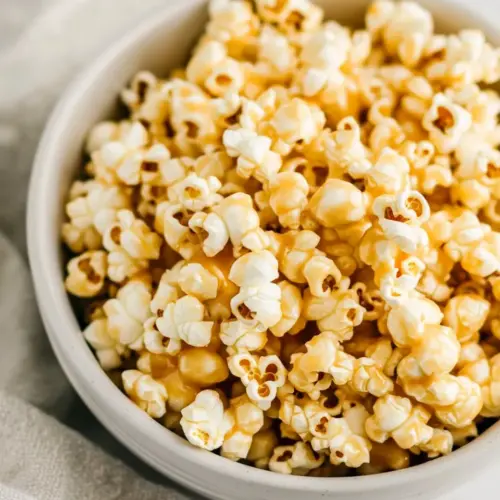
The BEST EVER Homemade Caramel Popcorn
The BEST EVER Homemade Caramel Popcorn is crispy, glossy, and irresistibly sweet with a buttery, milky caramel that clings to each airy kernel. This easy snack delivers crunchy texture and deep caramel flavor, perfect for movie nights or gifting. Make it when you want a fast, crowd pleasing treat that stores well and tastes far more luxurious than the effort required.
Equipment
- Air popper machine
- Medium Saucepan
- Wooden Spoon
- Large Bowl
- Parchment Paper
Ingredients
- 1/2 cup uncooked popcorn kernels (yields about 13 cups popped) Provide the light, starchy kernels that pop into fluffy popcorn when heated; act as the base and main vehicle for the caramel coating, yielding about 13 cups popped. Offer a neutral, crunchy foundation and determine final batch size and texture, so even popping and minimal unpopped kernels are important. Pair well with a dry, well-seasoned surface to allow caramel adhesion and maintain crispness after cooling.
- 1 cup brown sugar Add rich, deep sweetness and a molasses-like flavor that builds the caramel’s complexity; brown sugar dissolves into the syrup to create a sticky, flavorful coating that browns beautifully. Contribute moisture and color while balancing sweetness and preventing an overly cloying finish when cooked to the correct stage. Help achieve the characteristic chew and sheen of classic caramel popcorn when combined with butter and syrup.
- 1/4 cup butter Provide creamy fat that melts into the caramel, lending smoothness, richness, and mouthfeel; butter helps emulsify the sugar and syrup for a cohesive coating. Add a toasty, savory note that balances sweetness and promotes browning during cooking. Also aid in crisping and setting the caramel once cooled, producing a glossy finish and preventing excessive hardness.
- 1/2 cup light karo syrup Supply clear, viscous sweetness and prevent crystallization by keeping the caramel syrup smooth; light Karo corn syrup helps control texture and allows the caramel to coat popcorn uniformly. Stabilize the mixture so it remains pliable and glossy rather than grainy, assisting in reaching the desired candy stage without recrystallization. Contribute neutral sweetness that enhances other flavors without adding additional color.
- 1/2 cup sweetened condensed milk Contribute concentrated milk sugar and fat to intensify creaminess, add body, and promote chewy caramel texture; sweetened condensed milk brings lactose and milk solids that enrich flavor. Help produce a softer, more tender caramel that resists becoming rock-hard, while adding a subtle milky note that complements brown sugar and butter. Assist in achieving a balanced, rich caramel that binds well to each popcorn kernel.
- 1/2 teaspoon baking soda Introduce a small amount of leavening that, when mixed into the hot caramel, reacts and creates tiny air bubbles to lighten the texture and aid in spreading the coating. Neutralize acidity slightly and help produce a more tender, crisp bite by creating microscopic aeration within the candy layer. Ensure only the specified small quantity is used to avoid altering flavor or causing excessive expansion.
Instructions
- Pop your popcorn kernels in an air popper machine and pop into a large bowl. Set aside.: The room fills with a warm, toasty aroma as the first kernels burst open, and you'll hear an energetic cascade of pops as the batch finishes. I like to use a large, dry bowl that allows the popcorn to tumble freely, preventing crushed pieces. The visual cue that you want is a full bowl of bright white, fluffy kernels with only a few unpopped bits. A common mistake is overcrowding the popper, which leads to incomplete popping and chewy bits, so pop in the recommended batch size for your machine. Also, sift out any hard unpopped kernels before coating to avoid surprises when biting in.
- On medium-high heat in a medium saucepan, cook the brown sugar, butter, and Karo syrup. Allow coming to a boil. Add sweetened condensed milk.: The pan will first smell like warm molasses as the brown sugar dissolves into the melting butter , and the mixture will glide into a thick, syrupy gloss when the light karo syrup is incorporated. Watch the color closely; it should deepen to a rich amber but not scorch. When it begins to bubble steadily you know it is approaching the correct stage, and that is when I add the sweetened condensed milk to enrich the sauce and slightly temper the boil. A frequent error here is using too high heat, which can make the sugar seize or burn, giving a bitter taste. Stir constantly to keep the mixture homogeneous and avoid hot spots on the pan.
- Allow to softly boil for about 3-4 minutes until it gets to the softball stage. Be careful to not cook too long and allow it to burn.: During this gentle boil you'll see glossy bubbling across the surface and smell a nutty, toasted sugar scent that signals the development of caramel notes. The texture should feel syrupy when stirred, and small consistent bubbles will rise rather than vigorous splashes. Timing is important because the cooking stage determines the final chewiness, so test carefully if you have a candy thermometer or rely on the visual bubbling and aroma. The most common misstep is overshooting the time which yields a hard, brittle coating instead of a tender chew, so err on the side of slightly less time if you are unsure.
- Remove from heat and carefully stir in baking soda.: As soon as you take the pan off the flame, the surface becomes calmer and the glossy caramel thickens slightly, releasing a warm, rich scent. Adding the baking soda now creates tiny air pockets that lighten the caramel and produce a delicate crackle on the cooled surface. You'll notice the mixture foam up a little, which is expected, so stir gently until the foam subsides and the texture looks lighter and satin smooth. A mistake people often make is adding the baking soda while still on high heat, which can overfoam and make the mixture difficult to manage, causing hot caramel to splatter. Handle with care and use a long spoon to keep a safe distance.
- Pour the caramel over the popped popcorn. Mix with a wooden spoon to make sure that it can all be coated evenly. Enjoy!: When you pour the warm caramel over the bowl of airy popcorn , you'll hear a soft sizzle as steam escapes and the sauce settles over the kernels. Work quickly but gently with a sturdy wooden spoon, folding from the bottom so each piece gets an even sheen without crushing the popcorn . Look for an even glaze, with every kernel showing a thin, amber coat; this visual cue means the texture will be crisp yet tender once cooled. Avoid overmixing which can break the light structure of the popped kernels and produce smaller fragments. Let the coated popcorn rest on parchment until cool to the touch before serving, or it may still be tacky. Once cooled it should snap lightly and resist clumping too much.
Notes
- Preheat and dry your bowl so any residual moisture does not soften the caramel coating and reduce crispness.
- Monitor the boil closely because a few extra seconds on high heat can change the texture from chewy to hard.
- Use a wooden spoon for mixing the coated popcorn to avoid scratching bowls and to gently fold without crushing the kernels.
- Spread on parchment to cool the caramel quickly and prevent it sticking to surfaces or forming large clumps.
- Store in an airtight container once cool to preserve crunch, and avoid refrigeration which can introduce moisture.