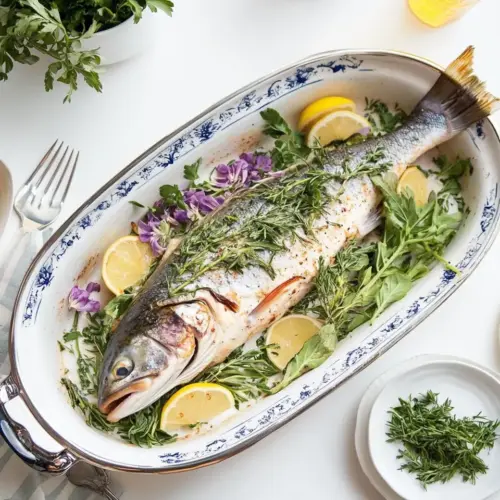
The best baked whole trout with herbs lemon
The best baked whole trout with herbs lemon celebrates fresh, flaky fish roasted with aromatic dill and parsley and bright lemon for an easy weeknight dinner or casual dinner party. The tender flesh and blistered skin pair beautifully with a creamy potato fennel salad dressed in mayonnaise and crème fraiche, creating a balanced plate worth making again.
Equipment
- Oven
- Baking Sheet
- Baking paper
- Saucepan
- Whisk
- Mandolin or sharp knife
Ingredients
- 1 fresh whole trout Clean and pat dry the trout before cooking to ensure crispy skin and even roasting; season cavity and exterior to enhance natural flavor. Stuff with herbs and lemon to infuse moisture and aromatic notes while baking; handle gently to keep flesh intact for serving.
- A few sprigs of dill and parsley Provide bright, anise-like aromatics that complement the fish when stuffed or placed on top; use whole sprigs to release fragrance without overpowering. Chop some if desired to sprinkle over finished fish for a fresh herbal finish and visual contrast.
- A few slices of lemon and a few wedges to serve Add acidic brightness and aromatic oils when sliced and placed inside the fish or around it; use extra slices to roast with the trout for gentle caramelization. Reserve wedges for serving to allow diners to squeeze fresh citrus over the cooked fish for a lively finish.
- Extra virgin olive oil Drizzle over the fish and vegetables to promote even browning and prevent drying; choose extra virgin for its fruity flavor and higher smoke point relative to delicate oils. Use sparingly to carry salt and herbs, and to help crisp skin when roasting at high heat.
- Salt & pepper Season generously to bring out the trout’s natural flavors and balance richness; apply to both inside the cavity and the exterior for full penetration. Grind pepper freshly for aromatic heat and texture contrast against the tender fish.
- 700 g ms new potatoes Boil or roast the new potatoes until tender to serve alongside the trout as a hearty, neutral side; their creamy texture complements flaky fish. Toss with a little oil, salt, and chopped herbs to echo flavors used in the main dish and provide balance.
- 1 small fennel bulb finely sliced or shaved on a mandolin Provide a crunchy, anise-tinged contrast when thinly sliced or shaved, brightening the plate with subtle licorice notes. Layer with potatoes or salad to add texture and a mild savory-sweet element that pairs well with lemon and fish.
- 6 –8 radishes Contribute crisp, peppery bite and color when halved or thinly sliced; use raw for freshness in a salad or as a crunchy garnish. Their mild spiciness cuts through richness and adds visual appeal to the dish.
- 3 spring onions finely sliced Offer a mild oniony flavor and tender crunch when finely sliced; sprinkle over warm potatoes or the fish for gentle pungency. Use both white and green parts to add color and fresh vegetal notes that lift the overall dish.
- 2 tbsp baby capers or regular capers chopped Add pops of tangy, salty flavor and briny complexity when stirred into salads or the sauce; rinse if using large capers to moderate saltiness. Chop finer for even distribution and to complement the fish’s delicate taste without overwhelming it.
- Small handful dill parsley & chives finely chopped (reserve a little sprinkle for serving) Provide a fresh, herbaceous finishing touch when finely chopped into dressings or sprinkled over the plated fish; reserve a small amount for garnish to maintain brightness. Combine dill, parsley, and chives to echo the stuffed herbs and unify the plate’s flavors.
- 1/4 cup good quality mayonnaise such as Hellman’s Bring creamy richness and a slight tang to the sauce or dressing, helping to bind herbs and capers together; choose good quality mayonnaise for smoother texture. Blend with crème fraiche and seasonings to create a balanced condiment for the fish and potatoes.
- 1/4 cup crème fraiche Contribute a light, tangy creaminess and slight acidity when combined with mayonnaise for the sauce; helps lighten the dressing and adds a subtle cultured flavor. Use chilled to contrast warm components and lend a silky mouthfeel to the plate.
- 2 tsp caper brine Provide briny acidity to the sauce, enhancing caper flavor and adding depth; use measured amounts to adjust saltiness and brightness. Stir into mayonnaise and crème fraiche slowly, tasting to achieve the right balance for the fish accompaniment.
- 1 tbsp fresh lemon juice Brighten the sauce and lift the overall dish with fresh citrus acidity; use freshly squeezed juice for best flavor. Add gradually to avoid over-acidifying, and balance with mayonnaise and crème fraiche to create a harmonious dressing.
- Zest of half a lemon Impart concentrated citrus oils and aromatic lift when grated over the sauce or finished fish; zest adds fragrant complexity without extra acidity. Use sparingly to avoid bitterness and to complement lemon slices used inside the trout.
- Salt and pepper Season the sauce and final dish to personal taste, balancing salt to enhance all components and pepper for mild heat; season layers separately to ensure even flavor. Re-taste before serving and adjust sparingly to preserve delicate fish flavors.
Instructions
- Preheat the oven to 180 C/350 F and line a baking sheet with baking paper.: When the oven reaches temperature you will notice a gentle warmth and a hint of dry heat in the air, which creates an even environment for roasting. Preheating ensures the fish begins cooking immediately, sealing juices and encouraging that lightly blistered skin. A common mistake is putting the fish into a cool oven, which leads to longer cook times and a less crisp exterior. Make sure the baking paper lies flat and does not touch the heating element to avoid smoking.
- Season the inside of the trout with salt & pepper and then stuff with a few sprigs of dill and parsley. Add a few slices of lemon in a single layer. Add a few extra slices of lemon to roast alongside the fish for serving. Drizzle olive oil all over the fish to evenly coat. Season well with salt and pepper.: You should smell the bright herbal aroma as you open the cavity, this infusion steams from within and subtly perfumes the flesh. Adding a single layer of lemon slices inside gives gentle citrus notes that penetrate the meat. Avoid overstuffing, which can prevent even heat circulation and lead to uneven cooking. Pat the skin dry before seasoning so that the oil and salt adhere.
- Roast uncovered for 22 – 28 minutes depending on the size of the fish. I roasted mine for exactly 22 minutes and it was 900 gms. This will depend on oven temperature as they will differ.: The lemon slices will sizzle and soften, releasing bright aromatic steam, while the olive oil aids in browning the skin and carrying pan juices. As the fish roasts you will see the oil sheen deepen and the lemon edges take on a faint golden hue. Be careful not to drown the pan in oil which can cause smoking and an overly greasy finish. Use just enough to coat and gloss the surface.
- Place on a serving platter and butterfly the fish carefully removing the central spine bone (there might still be a few small bones so watch out). Drizzle with olive oil and any pan juices. Add the cooked lemon slices, season the fish and scatter over a few dill leaves or parsley.: As it roasts you should hear a quiet sizzle and detect a nutty aroma from the olive oil and lemon. The skin will go from glossy to slightly blistered and taut, and the flesh near the backbone will flake when tested with a fork. Timing varies with fish weight and oven variance, so check visually at the earlier end, pulling it when the flesh is opaque and flakes easily. A common error is overcooking which yields dry texture, so err on the side of checking early and allowing carryover heat to finish gently.
- Boil the new potatoes until knife tender, drain and set aside to cool. Once cool slice in half.: The first sensory cue is the tender steam rising as you open the cavity, followed by the glistening flakes of cooked flesh. Carefully remove the central spine to make eating effortless for guests, and watch for small pin bones that may remain. This technique makes the fish approachable and attractive on the plate. Rushing this step risks tearing the fillets, so take your time and use a thin spatula or fish slice for control.
- Make the dressing by whisking all the ingredients together and adjusting the seasoning as desired. You can use some of the herbs in the dressing and some can be added directly to the salad. You can add a drizzle of olive oil too. Adjust any of the ingredients to your taste.: The pan juices carry condensed flavor, and a finishing drizzle intensifies the glossy look and taste, while the roasted lemon adds a mellowed sweetness. Fresh herbs added at the end revive the aroma and present a bright contrast to the warm fish. Over-seasoning at this point can mask the delicate trout taste, so taste a small amount before final seasoning.
- Toss the sliced potatoes with the fennel, radishes, spring onion, capers, herbs, and dressing. Serve with the baked trout along with blanched fresh asparagus.: When boiling the new potatoes , you will hear the soft rolling simmer and see tiny bubbles at the surface indicating a gentle boil. Properly cooked potatoes yield a slightly firm but tender center when probed with a knife, which helps them hold shape in the salad. Cooling them slightly allows them to absorb dressing without becoming watery. Overboiling will break them down, so test early and often once the timer nears completion.
- Make the dressing by whisking all the ingredients together and adjusting the seasoning as desired: As you whisk the mayonnaise , crème fraiche , caper brine , lemon juice , and zest, you will notice the emulsion come together, smoothing into a glossy coating. Tasting during the process allows you to calibrate salt and acid so the dressing complements but does not overpower the salad or fish. A mistake here is adding too much acid at once; go gradually and taste between additions.
- You can use some of the herbs in the dressing and some can be added directly to the salad You can add a drizzle of olive oil too Adjust any of the ingredients to your taste: Incorporating herbs into the dressing blends their aroma into every bite while sprinkling some directly into the salad preserves fresh herb bursts. A light drizzle of olive oil can round the dressing and add sheen. Keep in mind personal preference and the saltiness of the capers when adjusting seasoning, too much salt can hide subtle herb notes.
- Toss the sliced potatoes with the fennel radishes spring onion capers herbs and dressing: The final toss should sound crisp as the radishes and fennel mix with the potatoes, releasing delicate herb scents and dressing aroma. The salad should look glossy but not drenched, with each component visible and textured. Overmixing can bruise delicate slices and make the salad limp, so fold gently until everything is evenly coated.
- Serve with the baked trout along with blanched fresh asparagus: Present the warm, butter colored flakes of trout beside the dressed potato salad and bright green asparagus that retains a snap. The plate should offer visual contrast and a range of temperatures from warm fish to cool salad. A common serving mistake is letting everything sit too long, which results in cooled fish and wilted salad, so aim to serve promptly for the best sensory experience.
Notes
- Swap herbs for seasonal greens Try mixing in more parsley if dill is scarce, or add a small amount of chopped chives for oniony brightness. This adjusts the aromatic profile while maintaining the herbaceous backbone that defines the dish.
- Adjust lemon use for intensity If you prefer a softer citrus tone, reduce the number of roasted lemon slices and rely on fresh wedges for finishing. Roasted lemon provides caramelized depth, while fresh lemon gives immediate acidity.
- Make the salad lighter Replace half the mayonnaise with extra crème fraiche for a tangier, lighter dressing that still clings to the potatoes and vegetables.
- Try different potato sizes If you have small new potatoes, leave them whole for a chunkier salad, or use slightly larger ones halved for balanced bites. Uniformity in size ensures even cooking and a pleasing texture.
- Capitalize on caper intensity Chop the capers very finely if you want subtle pops of brine, or leave them slightly larger for distinct bursts. The finer chop distributes flavor evenly, while larger pieces create surprise tangs.
- Finish with fresh herb scatter Reserve a small handful of herbs to sprinkle at the end for a bright aroma and a fresh color contrast against the roasted fish and salad.