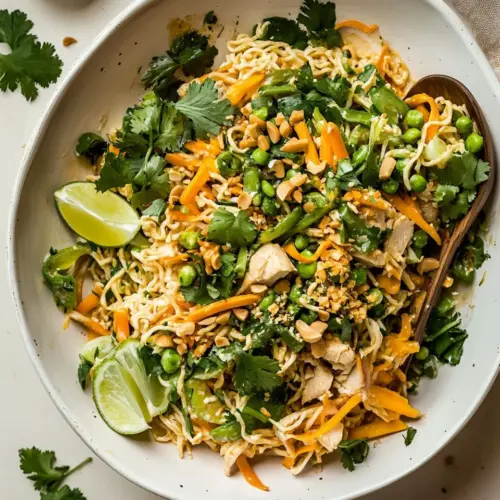
Thai Peanut Chicken Ramen Noodle Salad
Thai Peanut Chicken Ramen Noodle Salad blends creamy peanut sauce, chewy brown rice ramen noodles, and crunchy vegetables for an easy weeknight dinner. Bright mango, fresh herbs, and zesty lime create a lively, balanced salad that is both satisfying and refreshing. Make it for summer gatherings or meal prep, and enjoy a crowd pleasing bowl full of texture and bold flavors.
Equipment
- Large salad bowl
- Sauce jar or measuring cup
- Colander
Ingredients
- 2 packages brown rice ramen noodles, seasoning packet discarded Provide a chewy, gluten-free noodle base and absorb the dressing for a hearty salad; discard seasoning packet to avoid excess sodium and unwanted flavors. Break apart once cooked to distribute throughout the salad and add substantial texture contrast to the crisp vegetables.
- 3 heads romaine lettuce, shredded Offer a crisp, leafy foundation with a mild, slightly bitter crunch that balances sweet and creamy elements; shred finely to make the salad easy to toss and eat. Keep chilled until serving to maintain freshness and prevent wilting when mixed with dressing.
- 4 carrots, shredded Add natural sweetness, bright color, and a tender crunch when shredded; carrots contribute moisture and an earthy note that pairs well with spicy and peanut flavors. Use a coarse shred to provide texture without overpowering the other components.
- 3 green onions, chopped Deliver a sharp, oniony bite with fresh green color when chopped; green onions brighten the salad and complement herbs and dressing. Scatter thinly to distribute flavor evenly without overwhelming milder ingredients.
- 2 Persian cucumbers, thinly sliced Supply a cool, crisp texture and subtle cucumber freshness when thinly sliced; Persian cucumbers add delicate flavor and hydrate the salad. Keep slices uniform to ensure balanced mouthfeel in every bite.
- 1 mango, diced Introduce tropical sweetness, juiciness, and vibrant color when diced; mango pairs beautifully with savory and spicy dressing to create a balanced flavor profile. Add at the end to prevent mashing and retain shape and flavor.
- 1/2 cup each fresh cilantro and basil, roughly chopped Bring bright, herbaceous notes and aromatic freshness when roughly chopped; cilantro and basil lift the overall flavor with citrusy and sweet herbal tones. Toss gently to combine without bruising leaves and release essential oils.
- 1 cup cooked shredded chicken Provide savory protein and a satisfying, meaty texture when cooked and shredded; chicken helps make the salad more filling and balances carbohydrates and fats. Use seasoned cooked chicken if desired, and distribute evenly for protein in each portion.
- 1 avocado, sliced Add creamy richness and a buttery texture when sliced; avocado contributes healthy fats that mellow spicy elements and enhance mouthfeel. Slice just before serving to avoid browning and arrange attractively on top.
- 1/3 cup roasted peanuts, chopped Contribute crunchy, nutty flavor and a toasty finish when chopped; roasted peanuts reinforce the peanut theme and add textural contrast. Sprinkle over the salad last to preserve crunch and visual appeal.
- 1/4 cup sesame oil Deliver a rich, fragrant oil base with deep, toasted flavor; sesame oil enhances the dressing's nuttiness and complements peanut butter. Use measured amount to prevent overpowering and whisk into other liquids for a smooth emulsion.
- 1/4 cup rice vinegar Provide bright acidity and a clean tang to balance fats and sweetness; rice vinegar helps cut through richness and lift flavors. Add gradually to achieve desired acidity and prevent overly sharp taste.
- 1/4 cup creamy peanut butter Create the creamy, nutty backbone of the dressing with smooth texture and intense peanut flavor; creamy peanut butter binds ingredients and contributes protein. Warm slightly before mixing if needed to incorporate smoothly into liquids.
- 3 tablespoons low sodium soy sauce Introduce savory umami and saltiness with a mellow soy depth; low sodium soy sauce controls salt level while enhancing overall flavor. Stir into the dressing to dissolve and meld with sweet and spicy components.
- 2 tablespoons honey (use maple syrup if vegan) Add a natural sweetener to balance heat and acidity; honey (or maple syrup) provides viscosity and rounds flavors without overpowering. Adjust quantity to taste, keeping in mind dietary substitutions if vegan.
- 2 tablespoons Thai red curry paste Bring concentrated Thai spice, complexity, and a fragrant chili-curry kick when incorporated into the dressing; red curry paste adds heat and aromatic depth. Use sparingly and taste as you go to control spice level.
- juice of 1 lime Deliver bright citrus acidity and freshness when juiced; lime juice brightens the dressing and ties flavors together with a zesty lift. Squeeze freshly for best flavor and remove seeds before mixing.
- 1 Jalapeño, chopped, and seeded, if desired Provide a sharp, spicy heat and fresh green pepper flavor when chopped and seeded if desired; jalapeño adds controlled warmth and complexity. Add according to heat tolerance and mince finely to distribute evenly.
Instructions
- Cook the rice noodles according to package directions. Drain. In a large salad bowl, combine the lettuce, carrots, green onions, cucumbers, mangos, cilantro, and basil. Add the chicken and noodles. To make the peanut sauce, combine all ingredients in a glass jar or measuring cup and shake (or whisk) until completely smooth. If needed, thin the sauce with a couple tablespoons water or coconut milk. Just before serving, pour the sauce over the salad, tossing to combine. Top the salad with avocado and peanuts. Serve and enjoy!: The kitchen will fill with a faint, toasty aroma as the water returns to a simmer, and the noodles will soften and swell. Drain them thoroughly to avoid a watery salad, and rinse briefly under cold water if the package recommends it to stop cooking. This step ensures the noodles hold their springy chew rather than becoming gluey. A common mistake is overcooking, which makes them limp and prone to breaking apart when tossed. If they stick together, toss with a teaspoon of sesame oil to separate before adding to the salad bowl.
- Drain: You will feel the weight change as most of the cooking water leaves the noodles, and the texture will firm up slightly. Let them sit in the colander for a minute to remove excess water because residual moisture can dilute the dressing. For extra precaution, spread them on a rimmed tray to cool and stop carryover cooking. Avoid leaving them unattended in hot water as they will continue to soften and may turn mushy.
- In a large salad bowl, combine the lettuce, carrots, green onions, cucumbers, mangos, cilantro, and basil: Mixing these elements releases vivid aromas, especially from the herbs, and you will notice the bright citrus scent from the mangoes shortly after they meet the greens. Toss gently so delicate leaves do not bruise, and layer textures intentionally so each forkful gets variety. A frequent error is overmixing too early, which bruises herbs and wilts lettuce; wait to add the noodles and dressing until just before serving to preserve freshness.
- Add the chicken and noodles: The warm, tender chicken and slightly warm noodles contrast with the cool vegetables, creating a pleasing temperature mix that enhances flavor release. Scatter the shredded chicken evenly so protein is distributed, and fold the noodles in with a light hand to maintain the integrity of the shredded vegetables. If the protein is extremely hot, allow it to cool slightly to avoid wilting the greens. One pitfall is dumping everything in and stirring too roughly, which can break noodles and bruise herbs.
- To make the peanut sauce, combine all ingredients in a glass jar or measuring cup and shake (or whisk) until completely smooth: As you whisk or shake, the sauce will transform into a glossy, velvety emulsion with a rich, nutty aroma. The sesame oil perfumes the mixture, while the lime and rice vinegar add a bright counterpoint. If the sauce seems thick, a couple tablespoons of water or coconut milk will loosen it to a pourable consistency. A mistake people make is adding too much liquid at once, which can water down flavor, so add water slowly and taste as you go.
- If needed, thin the sauce with a couple tablespoons water or coconut milk: A thin film of coconut milk or water will change the mouthfeel and allow the dressing to coat noodles and leaves more evenly, creating an even sheen. Coconut milk adds a subtle creaminess and rounds heat from the red curry paste, while water keeps the flavor pure. Add small amounts and stir, then test by drizzling a spoonful over a small portion of the salad. Over thinning will result in a weak tasting dressing that fails to cling to ingredients, so proceed cautiously.
- Just before serving, pour the sauce over the salad, tossing to combine: The moment you pour the sauce the whole bowl will take on a glossy warmth and the aroma will spike. Toss thoroughly but gently so the dressing reaches every piece, especially the noodles which soak it up beautifully. The why here is simple, dressing at the last minute preserves crispness of the lettuce and herbs while allowing noodles to absorb flavor without becoming soggy. A common error is dressing too early which leaves the salad limp and less vibrant.
- Top the salad with avocado and peanuts: The sliced avocado adds a creamy counterpoint while the chopped roasted peanuts give a toasty crunch, and adding them last preserves their texture and appearance. Place the avocado on top so it remains intact and arrange peanuts for visual contrast. If you stir them in too early, the avocado may brown and the peanuts can soften, losing their appeal.
- Serve and enjoy: Serve immediately so the textures are at their best and the flavors feel fresh and bright. You will notice the complex interplay of savory, sweet, tangy, and spicy notes in each bite, and the combination of textures will keep the salad engaging. The common mistake to avoid here is letting the dressed salad sit for too long, which causes the lettuce to wilt and the noodles to become overly saturated.
Notes
- Switch the protein Replace the shredded chicken with tofu for a plant based option, ensuring it is well pressed and cubed so it absorbs the peanut dressing and adds a firm texture.
- Adjust the heat Control spice by adding the jalapeño gradually, keeping seeds out if you want a milder profile, or swap in more for a bolder kick.
- Use different noodles If you cannot find brown rice ramen noodles, try thin rice vermicelli or soba for a different bite that still soaks up the dressing nicely.
- Make it vegan Swap honey for maple syrup and use a plant based chicken alternative or extra tofu, ensuring the dressing remains creamy and balanced.
- Boost the crunch Add extra roasted peanuts or sunflower seeds for more texture, sprinkling them on right before serving so they stay crisp.
- Brighten with citrus Increase the lime juice for a tangier dressing, which can help cut through the richness of the cream peanut butter and sesame oil.
- Herb variations Try swapping some of the basil for mint for a fresher note, but keep at least one of the original herbs to preserve the intended flavor profile.