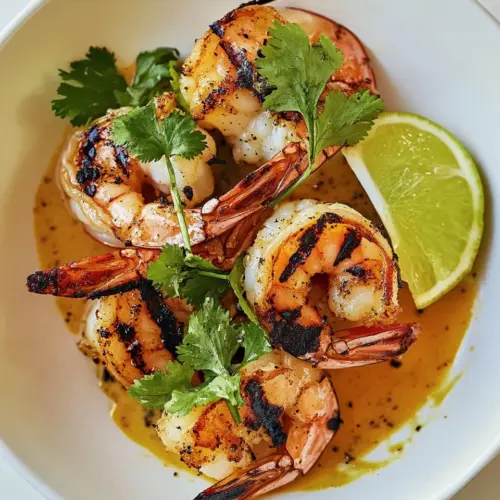
Thai Grilled Shrimp with Black Pepper Sauce
Thai Grilled Shrimp with Black Pepper Sauce is a creamy, peppery, and easy weeknight dinner that combines smoky grilled shrimp with a bold black pepper and coconut milk sauce. Bright pickled cucumber and tangy lime lift every bite, making it perfect for summer cookouts or quick family meals. Make the sauce ahead for even deeper flavor and faster assembly.
Equipment
- Grill or Grill Pan
- Large saucepan
- Whisk
- Bowls
- Skewers
Ingredients
- 2 tablespoons very hot water Dissolve into sauces or dressings to help bloom dried spices and slightly loosen thick mixtures; adds a faint warmth that enhances overall flavor.
- 1/2 teaspoons ea or kosher salt Season sparingly to bring out natural flavors and balance sweetness or acidity; contributes essential saltiness that amplifies savory notes in marinades and dips.
- 1 tablespoon sugar Sweeten mixtures to balance acidic or spicy components; helps glaze proteins and create caramelization when grilled or sautéed.
- 1/2 cup rice vinegar Provide bright acidity and mild sweetness to dressings or dipping sauces; helps cut richness and preserve crispness in vegetables.
- 1 hothouse cucumber, seeded, sliced Add crisp, cooling texture and mild vegetal flavor to salads and pickles; provides contrast to spicy or rich components in the dish.
- 2 tablespoons neutral cooking oil (like canola) Carry and distribute aromatic compounds in sautés and marinades; helps prevent sticking and promotes even browning on proteins and vegetables.
- 1 tablespoon minced garlic Impart pungent, savory depth and aromatic sharpness when cooked or raw; enhances umami and pairs well with citrus and heat in Thai preparations.
- 1 tablespoon peeled, minced fresh ginger Offer warm, slightly spicy, and citrusy notes that brighten sauces and marinades; tenderizes proteins slightly and complements garlic and lemongrass.
- 1 tablespoon minced shallot Contribute delicate onion-like sweetness and aromatic complexity when sautéed or mixed into dressings; mellows when cooked and adds savory depth.
- 1 tablespoon minced lemongrass Provide fragrant citrusy, lemongrass aroma and bright herbal notes to marinades and sauces; tenderizes and infuses proteins with fresh, aromatic character.
- 2 tablespoons coarsely ground black pepper Deliver assertive heat and bold, woody flavor when coarsely ground into sauces; creates a signature spicy kick and textured mouthfeel in the black pepper sauce.
- 2 cups unsweetened coconut milk Lend creamy richness and subtle sweetness to balance spicy, salty, and acidic elements; creates a luscious mouthfeel and helps emulsify sauces.
- 1 cup hoisin sauce Add a sweet-savory, tangy depth and thick body to dipping sauces or glazes; balances heat and acidity while contributing color and texture.
- 1/4 cup rice vinegar Introduce bright acidity and crispness to rebalance rich or sweet components; helps preserve fresh flavors and lift the overall sauce profile.
- 2 tablespoons fish sauce Bring savory, briny umami that deepens complexity in dressings and sauces; enhances meatiness and balances sweetness and acidity.
- juice of 1 lime Provide fresh, tangy brightness to finish sauces, marinades, and dressings; adds a clean citrus note that complements seafood and herbs.
- 1 pound large or jumbo shrimp, on skewers Provide the main protein with sweet, briny flavor and tender texture; takes on smoky char and seasoning well when grilled on skewers.
- 1 tablespoon neutral cooking oil Help prevent sticking and promote even searing when grilling or pan-frying; carries flavors and aids in achieving a crisp exterior.
- salt and pepper Adjust seasoning to taste to ensure balance between salty, sweet, sour, and spicy elements; used at the end to perfect the dish's flavor.
Instructions
- In a bowl, whisk together the hot water, salt and sugar until dissolved. Stir in the rice vinegar. Toss with the sliced cucumber. Refrigerate while preparing the rest of the recipe or up to overnight.: The moment you whisk the very hot water with the salt and sugar , you will notice a faint steam and the solution becoming glossy as the grains dissolve. This is important because undissolved salt or sugar will give uneven seasoning to the pickled cucumber . Use a small whisk or fork and watch for clarity in the liquid as the crystals disappear. If you skip dissolving, you risk gritty pockets that distract from the clean, bright flavor. A common mistake is using water that is not hot enough, which slows dissolution and can leave a grainy texture. Stir patiently until smooth so the acid and seasoning marry well with the sliced cucumber .
- Heat the oil in a large saucepan over medium heat. When the oil is shimmering, add the garlic, ginger, shallot, and lemongrass and cook, stirring until the vegetables are softened but not browned, about 2 minutes.: When you add the rice vinegar , the mixture will brighten and become slightly aromatic with a gentle sour note. This acid is the backbone of the quick pickle, helping the cucumber retain crunch while absorbing flavor. Stir until the liquid looks homogeneous, then taste for balance, adjusting if you want a touch more tang. If you overdo the vinegar, the pickle can become overly sharp, so correct with a pinch of sugar if needed. Be mindful that vinegar temperature will change the pickling speed; a warm solution accelerates flavor absorption.
- Add the pepper and cook, stirring, until fragrant, about 2 minutes.: As you fold the sliced hothouse cucumber into the pickle liquid, notice how the slices glisten and soften slightly. The thin, seeded slices will release a little water, mellowing the brine; this is normal and helps the flavors penetrate. Toss gently so the cucumber maintains its crisp edges. A common pitfall is slicing too thickly, which slows flavor uptake, or too thinly, which makes pieces limp. Aim for even slices so each bite has a satisfying crunch and balanced seasoning.
- Pour in the coconut milk, hoisin, vinegar and fish sauce. Stir, bring to a boil and then lower the heat and simmer for 15 minutes to develop the flavor. Stir in the lime juice. The sauce can be refrigerated in an airtight container for up to 3 days.: Chilling the pickled cucumber lets the flavors settle and keeps it refreshingly cool next to the warm shrimp and sauce. You will notice the brine become slightly clouded as the cucumber juices mingle, which signals good infusion. If you refrigerate overnight, the cucumber will taste more integrated, but avoid leaving it more than a day or it will soften excessively. A typical error is leaving the cucumber at room temperature which can lead to rapid texture breakdown; keep it chilled for optimal crunch.
- Heat a grill to high. Brush shrimp with the cooking oil, season with salt and pepper. Grill shrimp 2 minutes, flip and grill an additional minute or two until cooked through.: As the neutral oil warms, it will shimmer and thin out, a visual cue that it is ready to receive aromatics. Warming the oil gently prevents burning and allows the garlic , ginger , shallot , and lemongrass to release fragrant oils slowly. If the oil smokes, it is too hot and can cause bitter notes, so lower the heat. Use a heavy saucepan for even heat distribution; an inconsistent pan can create hot spots that brown aromatics unevenly. Watching the oil closely at this stage sets the foundation for a clean, fragrant sauce.
- Serve with black pepper sauce, pickled cucumber and rice.: You should hear a gentle sizzle and smell a wave of fresh aromatics almost immediately. Softened aromatics will look translucent and will release a mellow, sweet edge without developing color. Browning at this point would introduce caramelized notes that change the intended bright profile, so stir continuously and use medium heat. A frequent mistake is letting the pan run too hot which leads to burnt bits and bitterness. Keep the motion steady and watch for softened, glossy vegetables.
- Add the pepper and cook, stirring, until fragrant, about 2 minutes: Adding the coarsely ground black pepper at this stage awakens its essential oils, releasing a warm, toasty aroma that quickly fills the kitchen. You will smell a distinct peppery perfume, which indicates the spice has been toasted just enough to bloom. Stir so the pepper warms evenly and avoid extended cooking which can dry out the sauce base. If the pepper becomes acrid, the pan was too hot. This toasting step amplifies the pepper's complexity and is crucial for the characteristic flavor of the dish.
- Pour in the coconut milk, hoisin, vinegar and fish sauce: When the creamy coconut milk hits the pan it will hiss softly and transform the mixture into a glossy, opaque liquid. Adding hoisin sauce , rice vinegar , and fish sauce layers sweetness, acid, and umami, creating a rounded base. Stir thoroughly until the sauce looks cohesive and the color deepens. A common problem is adding these ingredients cold to a pan that is too hot, which can cause separation; moderate the heat so everything integrates smoothly.
- Stir, bring to a boil and then lower the heat and simmer for 15 minutes to develop the flavor: As the sauce comes to a gentle boil you will see small bubbles and sense the aroma intensify. Reducing to a simmer gives time for the flavors to concentrate and the sauce to thicken slightly, developing a harmonious depth. Stir occasionally to prevent sticking and watch the consistency; it should coat the back of a spoon. Skipping this simmer shortchanges flavor integration, while over reducing can make the sauce overly viscous. Aim for a glossy, saucy texture that clings to the shrimp .
- Stir in the lime juice: The final addition of fresh lime juice brightens the sauce instantly, cutting through the richness and lifting all the flavors. You will notice a cleaner, sharper note that balances the hoisin sweetness and the peppery warmth. Mix thoroughly and taste for balance, adding a pinch more salt if needed. Avoid using bottled lime juice which can taste flat; fresh juice makes a noticeable difference.
- The sauce can be refrigerated in an airtight container for up to 3 days: Once cooled, sealing the sauce preserves its flavor and makes it convenient for quick reheating. Stored properly it retains brightness for several days, though the pepper textures may soften. Reheat gently over low heat to avoid separation, stirring until it returns to a silky consistency. A common oversight is reheating too aggressively which can break the coconut emulsion, so keep the heat low and steady.
- Heat a grill to high: A high, properly heated grill gives the shrimp the best opportunity to develop char quickly while sealing in juices. You should hear a pronounced sizzle the moment the skewers hit the grates and see defined grill marks within moments. If the grill is not hot enough, the shrimp will cook slowly and become rubbery; too hot and the exterior can scorch before the interior cooks. Preheat thoroughly and clean the grates to prevent sticking.
- Brush shrimp with the cooking oil, season with salt and pepper: Brushing a light coat of neutral oil helps the shrimp color evenly and prevents sticking, while a modest seasoning enhances their natural flavor. You will observe the surface gleam slightly and the seasoning adhere nicely. Over-oiling can cause flare ups on a hot grill, so use a thin brush coat. If you underseason, the shrimp will taste flat against the bold sauce, so apply seasoning confidently but sparingly.
- Grill shrimp 2 minutes, flip and grill an additional minute or two until cooked through: Properly cooked large shrimp will turn opaque and firm with a gentle spring; visually they will take on rosy hues and slight charring. The brief cooking time preserves juiciness; you should hear a steady sizzle and see the edges tighten as proteins set. Overcooking produces a chewy texture, so err on the side of checking early. A common mistake is leaving skewers unattended which can lead to dryness; watch closely and remove when the shrimp are just opaque.
- Serve with black pepper sauce, pickled cucumber and rice: Present the skewers with a generous spoonful of the warm black pepper sauce and a side of the chilled pickled cucumber . The contrast of hot and cold, creamy and crisp, makes each forkful exciting. If serving with rice , it soaks up the sauce and rounds the meal. Avoid pouring sauce too far in advance on the shrimp if you want to preserve the contrast in textures; add just before serving.
Notes
- Grill alternative If you do not have access to an outdoor grill, use a cast iron grill pan on the stovetop over high heat to achieve similar char and those signature grill marks.
- Protein swaps This sauce pairs well with scallops or firm white fish if you want to change from shrimp, adjusting cook time so the seafood remains tender and not overdone.
- Make it spicier Add a pinch of crushed red pepper to the sauce while simmering for extra heat that complements the peppery backbone without masking other flavors.
- Lighter sauce For a thinner sauce to spoon over rice, extend with a splash of water or additional rice vinegar, simmering briefly to marry the flavors.
- Advance prep Make the black pepper sauce up to three days ahead and refrigerate in an airtight container, reheating gently when ready to serve.
- Presentation tip Thread the shrimp on alternating skewers with thin lime slices for a pretty, aromatic garnish that also adds extra citrus when grilled.