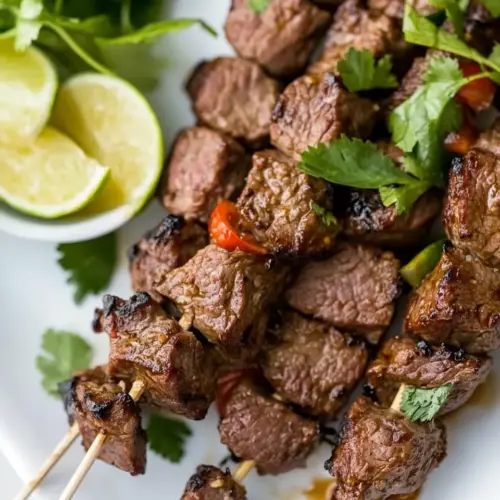
Thai Beef Skewers with Hot Sour Dressing
Thai Beef Skewers with Hot Sour Dressing deliver tangy lime, savory fish sauce, and caramelized beef in a crisp grilled package. This easy weeknight dinner is full of bright, spicy, and sweet contrasts, perfect for summer gatherings and casual entertaining. Bite sized, flavorful, and impressive, it is a quick way to bring bold Thai inspired flavors to your table.
Equipment
- Grill
- Food Processor
- Bamboo skewers
Ingredients
- 2 tablespoons oy sauce Provide a salty, umami backbone for marinades and dipping sauces; commonly used to deepen savory flavors in Thai grilling preparations. Measure carefully as its concentrated taste can quickly dominate milder ingredients. Pair with citrus and sugar to balance its intensity for a well-rounded skewered beef.
- 2 tablespoon fish sauce Add a complex, briny depth and essential Southeast Asian character to marinades and dressings; used for its pungent, savory aroma. Integrate with acid and sweet elements to create a balanced seasoning profile for the beef skewers. Opt for high-quality fish sauce to enhance authentic Thai flavor without needing extra salt.
- 1 inch piece fresh ginger Offer a bright, peppery warmth with citrusy notes that freshens marinades and balances richness; grate or finely mince to maximize release of volatile oils. Use sparingly to avoid overpowering the other aromatics, and pair with garlic and lime for classic Thai flavor harmony. Fresh ginger also aids digestion, complementing a heavier protein like steak.
- 4 garlic cloves - minced Deliver a sharp, aromatic base that boosts savory and spicy components; mince to disperse flavor uniformly through the marinade and dressing. Combine with ginger and fish sauce to create a robust, fragrant profile for the meat. Garlic browns quickly when cooked, contributing both aroma and depth to the grilled skewers.
- 3 tablespoon lime juice Provide bright acidity to cut through the richness of the beef and balance sweet and salty elements in both marinade and dressing. Use freshly squeezed juice for the cleanest flavor and avoid bottled substitutes to maintain brightness. Lime juice also helps tenderize the meat slightly and enhances the overall Thai character.
- 3 tablespoon brown sugar Contribute molasses-like sweetness and caramel notes that balance salty and acidic components; dissolve well into warm liquids for a smooth glaze or dressing. Adjust quantity to achieve the desired harmony with fish sauce and lime without making the dish cloying. Brown sugar also promotes caramelization on the grilled steak surfaces.
- 1 teaspoons ririacha Introduce concentrated chili heat and a touch of sweetness, adding a smoky, vinegary kick typical of modern Thai fusion condiments. Stir into the marinade or dressing to raise the spiciness level and provide a familiar, crowd-pleasing flavor. Use measured amounts to keep heat balanced with lime and sugar.
- 1 tablespoon coconut oil Supply a subtle tropical richness and high smoke point useful for searing and grilling; melt before mixing into marinades to distribute evenly. Coconut oil imparts a mild coconut aroma that complements Southeast Asian spices and helps carry fat-soluble flavors. Use just enough to coat the meat and prevent sticking on the grill.
- 1 1/2 lbs kirt steak/flank steak Bring meaty, hearty substance to the dish; slice thinly across the grain for maximum tenderness and quick, even cooking on skewers. Skirt or flank steak benefit from short marination and high-heat grilling to develop a savory crust while remaining juicy. Trim excess fat and cut into uniform pieces to ensure consistent doneness.
- 18 each bamboo skewers - soaked in water for 30 minutes Prevent skewers from burning on the grill and help stabilize small pieces of meat while cooking; soak thoroughly in water to avoid scorching. Use bamboo skewers to thread cubed steak securely, spacing pieces for even heat circulation. Handle soaked skewers carefully to retain their water content until placed on the heat.
- 3 limes - juiced Provide additional fresh acidity for the hot-sour dressing and to finish the skewers with a zesty squeeze; juice just before serving for maximum brightness. Lime juice balances salty fish sauce and sugary elements while enhancing herbal and chili notes. Include extra for guests who prefer an extra pop of citrus.
- 1/4 cup fish sauce Contribute a savory, briny element concentrated for the hot-sour dressing; use measured amounts to achieve the correct salt-acid-sweet balance. Combine with lime juice and sugar to form a classic Thai dipping sauce profile that complements grilled beef. Adjust volumes cautiously, as duplicated fish sauce in the recipe intensifies umami.
- 1/4 cup sugar Add neutral sweetness to the hot-sour dressing and help dissolve salt and spice components evenly; heat briefly if needed to incorporate fully. White or granulated sugar smooths sharp flavors and rounds out the tang from lime and fish sauce. Modify quantity to suit personal preference for sweetness in the dressing.
- 1/2 cup water Provide dilution and help dissolve sugar and salt components while adjusting dressing viscosity; warm slightly to speed dissolution if desired. Water also helps moderate the intensity of concentrated ingredients, ensuring a balanced, drinkable dressing consistency. Use filtered water for the cleanest taste.
- 3 cloves garlic - crushed Deliver a pungent, savory kick in the dressing when crushed, contributing depth and aromatic sharpness; bruise or crush to release oils and maximize flavor infusion. Garlic pairs with lime and fish sauce to create a savory backbone that complements grilled beef. Adjust quantity to control the pungency of the final sauce.
- 3 finely chopped thai bird chilies - add more or less to taste Offer intense, fruity heat and fragrant herbal character unique to Thai cuisine; finely chop to evenly distribute heat and aroma throughout the dressing. Thai bird chilies provide a bright, immediate spiciness that contrasts with the sweet and sour elements, and can be scaled to individual tolerance. Use gloves when handling to avoid skin or eye irritation.
Instructions
- Place the marinade ingredients in the food processor and whizz until you have a chunky paste.: The aroma should be immediate, a hit of garlic and ginger with salty undernotes from fish sauce and soy sauce . You will hear the blades hum and see a coarse, slightly glossy paste form, studded with tiny flecks of chili and ginger. This texture helps the marinade cling to the meat, creating pockets of flavor rather than a uniform slurry. If you over-blend into a smooth paste you lose those textural bursts, so pulse deliberately. A common mistake is adding too much liquid, which prevents the marinade from adhering properly, so measure the liquids and scrape the bowl down once or twice during processing.
- Cut the steak into 1 inch strips.: Expect a clean, slightly resistant feel as your knife slices through the beef , and you should see muscle grain that will determine how you slice it for tenderness. Cutting against the grain into even 1 inch strips shortens the muscle fibers, producing a more tender bite when chewed. I use a very sharp knife for clean cuts rather than tearing the meat, because ragged edges will cook unevenly. Avoid cutting pieces that vary wildly in thickness, as thin strips will overcook while thicker ones remain underdone.
- Mix the steak and the marinade together and place in the fridge for 4 hours.: When you combine the meat and marinade, you will notice the paste clinging and the surface becoming glossy and slightly tacky. Refrigeration lets the flavors penetrate the surface, and the acids and enzymes begin to tenderize the outer layer of the beef . Four hours gives a nice balance of flavor infusion without breaking down the texture too much. A common error is marinating overnight for delicate cuts, which can result in a mushy exterior, so stick to the time advised and reserve longer marination for tougher cuts if needed.
- When you are ready to cook get the grill super hot and whilst it is heating up thread a strip of beef onto each bamboo skewers.: You should hear the sizzle as meat hits a blazing grate, with instant browning forming where the surface meets heat. Threading ensures even spacing so hot air flows around each strip and you get consistent char. Make sure the skewers are soaked and not snapping when you press them, and leave a little space between pieces to encourage airflow. One mistake is clumping strips too tightly, which traps steam and prevents crisp edges, so give each piece room.
- Grill the beef skewers over a high heat for 1 minute on each side. Serve with the dipping sauce.: The instant contact with the grill will produce a sharp sizzling sound and rapid browning, giving you a thin caramelized crust while keeping the center tender. After the first side cooks, flip and repeat, watching for those deep mahogany char marks and smelling the savory smoke mingling with ginger and garlic. High heat is essential here to avoid drying the meat, but be ready to move skewers to indirect heat if flare ups occur. Avoid leaving them longer than instructed because the strips are thin and will quickly transition from perfectly charred to overcooked and tough.
- Mix all the ingredients together until the sugar has dissolved.: The contrast between hot, grilled edges and the cool tang of the sauce is immediate on the tongue, with lime brightness cutting through the caramelized sugars. Pour or spoon the sauce over warm skewers or serve it on the side for dipping, and watch how the flavors integrate in the mouth. A frequent misstep is serving the sauce at room temperature after long sitting, which mutes the lime and chili brightness, so prepare it shortly before serving or keep it refrigerated until needed.
- Mix all the ingredients together until the sugar has dissolved: When you combine the sauce elements, you should see the sugar crystals vanish and the liquid take on a glossy sheen. Whisking until fully dissolved prevents gritty texture and ensures an even flavor across every spoonful. Taste as you go, because the acid and salt balance can vary with citrus size and fish sauce concentration. One common mistake is skipping dissolution, leaving a grainy sauce that does not coat the skewers smoothly, so stir patiently until the mixture is uniform.
Notes
- Adjust the heat by varying the amount of Thai bird chilies or sriracha, adding them gradually and tasting the dipping sauce so the spice level matches your guests.
- Choose your cut wisely skirt or flank steak both work, but if you prefer richer flavor select skirt steak and slice thinly against the grain for tenderness.
- Prep ahead marinate the beef up to four hours, but avoid much longer to prevent the meat from becoming mushy from the acidic lime juice.
- Keep skewers safe soak bamboo skewers for at least thirty minutes and dry them slightly before threading to reduce slipping and burning.
- Make extra sauce the dipping sauce stores well refrigerated for a day, and adding fresh lime juice before serving refreshes it.
- Control flare ups by trimming excess fat and moving skewers to a cooler zone if flames rise, preserving the caramelized crust without burning.