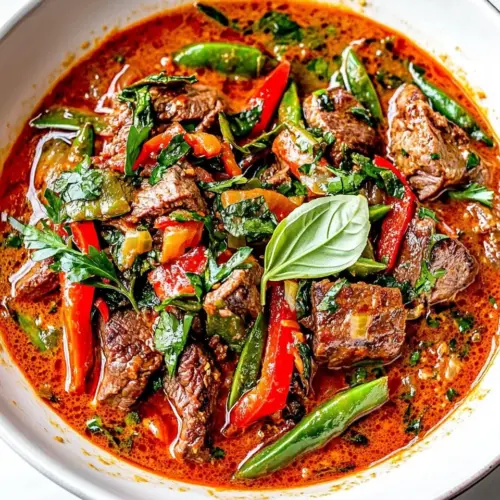
Thai Beef Curry
Thai Beef Curry is a creamy, vibrant dish with tender beef strips simmered in a fragrant coconut and red curry sauce. Bright lime and fresh Thai basil cut through the richness, creating an easy weeknight dinner that feels special. This recipe balances savory, sweet, and spicy elements, making it perfect for family meals or casual entertaining, and worth making again and again.
Equipment
- Large Skillet
- Small Bowl
Ingredients
- 113.5 -ounce can unsweetened coconut milk Provide rich, creamy body and subtle sweetness to the curry while balancing heat; shake the can and stir well to incorporate the thicker cream and thinner milk for a smooth sauce consistency that clings to the beef and vegetables.
- juice of 1/2 lime Add bright acidity and a citrusy lift that cuts through the richness of the coconut milk; squeeze directly over the finished curry to brighten flavors and adjust to taste for balance.
- 2 tablespoons fish sauce Deliver salty, umami depth characteristic of Thai cuisine and help season the sauce; measure carefully and add gradually, tasting as you go to avoid overpowering the delicate curry paste.
- 2 tablespoons brown sugar, firmly packed Contribute mild molasses notes and gentle caramelized sweetness to balance spice and fish sauce; pack lightly into the spoon and dissolve into the simmering sauce to integrate flavor evenly.
- 4 tablespoons canola oil Provide a neutral, high-heat cooking fat to sear the steak and sauté aromatics without imparting strong flavors; heat until shimmering before adding onions and curry paste to bloom their aromas.
- 1/2 yellow onion, thinly sliced Offer aromatic sweetness and a lightly pungent base layer when thinly sliced and sautéed until translucent; cook until softened to release sugars that deepen the curry’s savory profile.
- 1/2 red bell pepper, seeded and thinly sliced Introduce crisp, sweet, and slightly fruity pepper notes while adding color contrast; slice thinly and add early enough to soften slightly but late enough to retain some texture.
- 4 ounces fresh green beans, trimmed and cut into 1-inch pieces Supply fresh vegetal crunch and a clean, slightly grassy flavor while contributing textural contrast; trim and cut into uniform pieces so they cook evenly and retain a pleasant bite.
- 1 tablespoon Thai red curry paste Provide concentrated chile flavor, aromatic oils, and the signature red curry spice profile; fry briefly in oil to bloom its flavors before adding coconut milk for a fragrant, cohesive sauce.
- 1 pound top sirloin steak, cut against the grain into thin bite-sized strips Bring hearty, meaty substance and beefy flavor to the dish; thin, against-the-grain strips cook quickly, stay tender, and absorb the curry sauce for satisfying bites.
- 2 tablespoons roasted peanuts, chopped Add crunchy texture and a toasty, nutty counterpoint to the creamy curry; chop coarsely and sprinkle near the end or on top to preserve crunch and aromatics.
- 1 cup fresh Thai basil Introduce sweet, anise-like freshness and a classic Thai herbal aroma that lifts the dish; add leaves whole or torn at the end of cooking to maintain vibrant color and fragrance.
- sliced fresh red chiles and more lime wedges, for serving Provide additional heat and bright garnish notes for serving; slice thinly and serve with extra lime wedges so diners can customize spice and acidity to taste.
Instructions
- In a small bowl, mix the coconut milk, lime juice, fish sauce, and brown sugar.: The moment you whisk these together you'll notice the creamy coconut milk smoothing out the sharp lime and the salty umami from the fish sauce , creating a balanced base. The aroma here is gentle coconut with a hint of citrus, and the sugar helps round edges so that when it reduces later it will have a glossy sheen rather than tasting merely salty. A common mistake is to skip tasting, so adjust sweetness or salt now, because it becomes harder to balance later once it heats. Also, make sure the brown sugar dissolves fully, stirring until the mixture looks uniform and slightly glossy.
- Heat a large skillet over medium-high heat until hot and add 2 tablespoons of the canola oil. Add onion, bell pepper, and green beans and stir-fry just until tender, about 3 minutes. Transfer to a bowl.: As the oil shimmers and you add the vegetables, you should hear a lively sizzle, and the air will begin to smell sweet and vegetal. Stir frequently so the onion softens and the red bell pepper keeps bright color, while the green beans retain their snap. The slight charring on the edges adds complexity that the sauce will build upon. Avoid overcrowding the pan, or the vegetables will steam rather than brown. When they reach the point of tender crispness, remove them promptly to stop carryover cooking and preserve texture.
- Add the remaining 2 tablespoons oil and the curry paste to the skillet and stir-fry for 1 minute. Stir in the coconut milk mixture, bring to a gentle boil, and cook until the sauce begins to thicken, 5-7 minutes. Return the vegetables to the skillet, stir in the beef, and simmer until the beef is cooked through, about 2 minutes. Add the Thai basil and top with peanuts. Serve with lime wedges, white rice, and more Thai basil.: When you return the pan to the heat, the aroma from the paste will intensify quickly, releasing fragrant notes of chili, galangal, and lemongrass. This is the flavor blooming stage, and a one minute toast in hot oil amplifies those aromatics, giving the sauce a deeper, layered profile. Listen for a faint popping and watch as the paste becomes glossy. Be careful not to let it burn, because a scorched paste will taste bitter. If it seems too dry, a splash of the prepared coconut mixture can temper it before you add the rest.
- Stir in the coconut milk mixture, bring to a gentle boil, and cook until the sauce begins to thicken, 5 to 7 minutes: Once the liquid hits the hot paste, you will notice velvety steam rising and the sauce transforming into a silkier consistency. Gentle bubbling at the edges signals it is reducing and concentrating. Stir occasionally, scraping up any fond so those caramelized bits mix into the sauce, heightening flavor. Keep the heat controlled so it simmers rather than roils, which helps the sauce emulsify. A common error is rushing this step, which leaves the curry watery; patience here yields a glossy, clingy sauce that coats each ingredient beautifully.
- Return the vegetables to the skillet, stir in the beef, and simmer until the beef is cooked through, about 2 minutes: As you reintroduce the vegetables, their bright color and fresh aroma contrast with the enriched sauce, and the small amount of simmering finishes cooking the beef rapidly. When the top sirloin steak hits the sauce it should release a satisfying hiss and then quickly turn opaque and tender. Stir gently to help each strip pick up sauce without overworking the meat. Because the beef is cut thin, this brief simmer preserves juiciness; overcooking is the main mistake, which leads to dry, tough bites. Look for the visual cue of even color change and a tender texture when pierced.
- Add the Thai basil and top with peanuts: The final addition of the Thai basil should be just before serving so the leaves wilt slightly and release a bright, sweet herbal perfume. Sprinkle the chopped roasted peanuts for immediate crunch and a toasty fragrance that complements the creamy curry. The contrast in textures is part of the dish's charm, and the basil aroma hitting the nose as you lift a spoonful makes the meal feel finished. Avoid adding the basil too early or it will lose its fresh character, and add the peanuts last to keep their texture crisp.
- Serve with lime wedges, white rice, and more Thai basil: Plating with a squeeze of fresh lime adds a sharp, immediate brightness that cuts through the richness, while a bowl of warm white rice soaks up the sauce and makes the meal satisfying. The steam from the rice helps lift the curry aromas, and the lime at the table allows guests to personalize acidity. A common oversight is serving without a bright element, which can leave the curry feeling heavy; the lime solves that immediately.
Notes
- Quick Protein Swap Replace the top sirloin steak with thinly sliced chicken breast or thigh for a lighter or more economical option, adjusting cook time so the meat stays juicy.
- Vegetable Boost Add extra crisp vegetables like snap peas or baby corn, adding them during the initial stir fry so they stay crunchy and colorful in the finished curry.
- Mild Version Use less Thai red curry paste and serve sliced fresh red chiles on the side so diners can dial the heat to taste without altering the base sauce.
- Nut Free Omit the chopped roasted peanuts and substitute toasted seeds if you need a nut free crunch while keeping toasty aroma.
- Herbal Finish Swap part of the Thai basil for fresh cilantro at the end for a slightly different herbal note that blends citrus and savory flavors.
- Make Ahead Prepare the sauce base ahead of time and store chilled, then reheat and finish with quickly cooked vegetables and meat for a speedy dinner service.