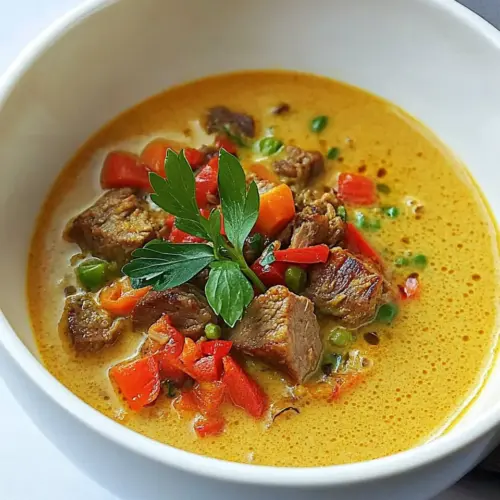
Thai Beef Coconut Curry Soup
Thai Beef Coconut Curry Soup is a creamy, aromatic bowl with tender skirt steak, silky coconut milk, and bright herbs. This easy weeknight dinner balances savory beef broth, tangy rice vinegar, and gentle heat for a comforting yet vibrant soup that comes together fast. Make it when you want rich flavor without hours at the stove.
Equipment
- 5 quart pot
- Slotted Spoon
Ingredients
- 2 tablespoons avocado oil, light olive oil, or coconut oil, divided Use as a neutral cooking fat to sauté aromatics and brown beef; split the amount to sear steak first and finish vegetables, providing a light, stable oil with a high smoke point.
- 1 1/2 pounds skirt steak, very thinly sliced across the grain Slice very thinly across the grain so meat remains tender and cooks quickly in the hot broth; adds rich beef flavor and hearty protein to the soup.
- 2 large bell peppers (any color), chopped Chop for sweet, crisp texture and colorful contrast; softens in the broth and contributes a fresh, slightly sweet pepper flavor.
- 1 medium to large onion, chopped Chop to build the soup's savory base; softens and caramelizes slightly to add natural sweetness and depth to the broth.
- 4 medium garlic cloves, crushed Crush to release pungent aroma and sharp flavor; infuses the broth with savory, garlicky notes that enhance overall umami.
- 1 tablespoon fresh grated ginger Grate finely to add bright, warming spice; contributes zesty, slightly peppery flavor that balances the richness of the coconut milk.
- 32 ounces low sodium beef broth Provide the savory liquid foundation for the soup; use low-sodium to control seasoning while delivering beef-forward depth.
- 2 tablespoons soy or tamari sauce Add salty, savory umami and a touch of sweetness; use soy or tamari to season the broth and deepen its savory profile.
- 2 tablespoons rice vinegar Add bright acidity to balance fat and sweetness; rice vinegar lifts flavors and keeps the soup from tasting heavy.
- 2 tablespoons coconut sugar (or light brown sugar) Add mellow sweetness and caramel-like depth; substitute light brown sugar if needed to balance spicy and sour elements.
- 2 teaspoons fish sauce Introduce concentrated savory-salty depth and a hint of oceanic umami; adds complexity when used sparingly.
- 1 teaspoon ground coriander Impart warm, citrusy-earthy notes that complement the curry profile; ground coriander enhances aromatic complexity.
- 1/4 teaspoon crushed red pepper flakes, or 1 minced red Thai bird’s eye chili pepper (more or less to taste) Provide adjustable heat and a bright chile flavor; crushed red pepper or a minced bird’s eye chili adds kick to taste.
- 1/4 teaspoon turmeric (optional, for yellow color) Optional for adding warm color and subtle earthy bitterness; turmeric can enhance visual appeal without strong taste.
- 1/2 teaspoons salt Season to enhance all flavors and control overall saltiness; adjust to taste during cooking to avoid oversalting.
- 1/8 teaspoon black pepper Season with mild pungency to balance flavors; black pepper brings subtle heat and aromatic sharpness.
- One 14 ounce can full fat coconut milk Contribute creamy richness and tropical coconut flavor; full-fat coconut milk creates a silky texture and melds flavors.
- 2 tablespoons chopped fresh cilantro or parsley leaves Add fresh herbaceous brightness and a pop of color; chopped cilantro or parsley finishes the soup with aromatic lift.
- fresh chopped herbs, such as cilantro, parsley, or mint Garnish with fresh chopped herbs for aromatic freshness; cilantro, parsley, or mint brighten each spoonful.
- crushed red pepper flakes Use sparingly as a finishing heat element; crushed red pepper flakes provide crunchy, lingering spice to taste.
Instructions
- Heat the oil in a 5 quart pot over medium high to high heat; add half the steak in an even layer on the bottom and cook until browned. Use a slotted spoon to transfer the browned steak to a bowl; cook the remaining steak the same way and transfer it to the bowl.: Right away you will notice the satisfying sizzle as the surface of the skirt steak hits the hot oil, releasing a nutty, roasted aroma and producing a deep brown crust that smells almost sweet and savory at once. The sizzling sound is your cue that the pan is hot enough to create fond, the browned bits that stick to the bottom and will later flavor the broth. Work in batches to avoid crowding, because when meat is crowded the pan temperature drops and the steak steams instead of browns, leading to gray, flabby pieces rather than flavorful, caramelized edges. As you transfer the seared steak with a slotted spoon, you will see juices collect in the bowl, which is normal; these concentrated juices matter for texture and mouthfeel. One common misstep here is cooking the steak too long; since the slices are thin, they only need a short time to develop color and can become tough if overcooked. Resting the seared steak briefly in the bowl allows carryover heat to finish it without drying the meat, and saves the fond for the next step.
- To the pot that you cooked the steak in, add the bell peppers and onion; cover the pot and cook over medium heat until the vegetables start to soften, about 4 minutes, stirring occasionally. Add the garlic and ginger and cook 1 minute more, stirring constantly.: As the bell peppers and onion meet the hot pan, they will hiss and release a sweet, vegetal aroma; cover the pot to trap steam and coax them to become tender while still retaining some texture. Stirring occasionally prevents uneven browning and helps the vegetables sweat, drawing out natural sugars that add depth to the broth. When you add the crushed garlic and grated ginger , the scent will brighten, producing a peppery and aromatic perfume that fills the kitchen, but keep stirring to prevent burning which can introduce bitter notes. The one trap here is rushing the heat too high to speed things up, which can char tiny bits of garlic and impart a charred taste. Gentle medium heat for the short time specified lets the aromatics bloom, laying a flavorful foundation for the liquid to come.
- Stir in the broth, soy sauce, rice vinegar, sugar, fish sauce, coriander, crushed red pepper flakes, turmeric, salt, and black pepper. Bring to a boil, and then cover the pot, turn the heat down to simmer, and cook 5 to 10 minutes. Add the cooked beef back to the pot.: When you add the beef broth and the seasoning ensemble, the pot will immediately steam and the kitchen will get a complex fragrance, with savory, tangy, and sweet notes mingling. Bring it to a boil to quickly marry the flavors and then reduce to a gentle simmer so the ingredients can meld without aggressive evaporation. The simmer time softens the peppers and onions and allows the powdered coriander and optional turmeric to release subtle background flavors, while the fish sauce and soy deepen umami. Return the seared skirt steak to the pot toward the end of the simmer so it warms through without overcooking; this keeps the beef tender. A common error is simmering too rapidly or too long which can evaporate flavors and toughen the meat, so aim for a steady, low simmer for the time suggested.
- Stir in the coconut milk and cilantro or parsley and turn off the heat; taste and add additional salt as desired.: As you pour in the can of full fat coconut milk , you will see the broth transform to a creamy, opaque finish that softens the spices and offers a luscious, velvety mouthfeel. Swirling in chopped cilantro or parsley at this stage introduces a green, herbaceous note that lifts the richness. Turn the heat off to keep the herbs vibrant and avoid breaking the coconut fat with prolonged boiling. Taste carefully for salt because the combined impact of soy , fish sauce , and the broth can vary; adding salt at the end lets you tailor the bowl to your palate. Over seasoning early is a typical mistake, so adjust gradually and taste between additions to avoid an overly salty final soup.
- Serve garnished with suggestions above anything you like!: When you ladle the soup into bowls, notice how the steam rises, carrying the fragrant mix of ginger , garlic , and coconut, and how the beef pieces float warmly in the creamy broth alongside colorful bell peppers . Garnish with extra fresh chopped herbs or a sprinkle of crushed red pepper flakes to add visual contrast and a final kick. Serving hot preserves the silky texture of the coconut and the tenderness of the steak, while allowing guests to add extra heat or herbs at the table. A frequent serving mistake is letting the soup sit too long before plating, which dulls aromas and cools the coconut fat, so serve immediately for the best sensory impact.
Notes
- Preheat well: Ensure your pot and oil are hot before adding meat to achieve a proper sear and create flavorful fond, which enhances the broth intensely.
- Slice against the grain: Thinly slice the skirt steak across the grain to shorten muscle fibers, resulting in a consistently tender bite even after simmering briefly in the soup.
- Control salt incrementally: Because the recipe uses beef broth, soy, and fish sauce, add salt at the end after tasting to avoid over salting the final dish.
- Finish with fresh herbs: Add chopped cilantro or parsley right before serving to retain their bright, fresh flavors and visual contrast against the creamy broth.
- Keep garnishes separate: Offer extra crushed red pepper flakes and herbs at the table so diners can customize heat and freshness to their liking without altering the communal pot.