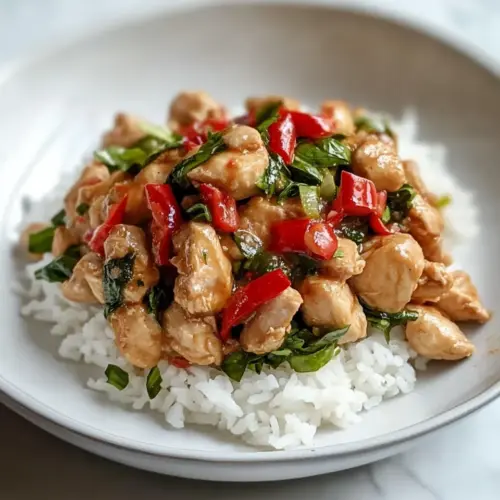
Thai Basil Chicken
Thai Basil Chicken is a quick, aromatic stir fry with savory soy and oyster sauce, bright fish sauce, and fresh basil, perfect for an easy weeknight dinner. Tender pieces of chicken seared to golden perfection mingle with garlic and Thai chilies for a punchy, crave worthy meal. Serve it over steaming rice for a satisfying, fast dinner you will want to make again and again.
Equipment
- Large Skillet or Wok
- Small Bowl
- Whisk
Ingredients
- 1/3 cup chicken broth Provide savory liquid and mild depth to the sauce, helping to loosen and combine other seasonings while keeping the dish moist; simmer briefly to concentrate flavor without evaporating entirely.
- 2 teaspoons oyster sauce Add rich umami and subtle sweetness to build complexity in the stir-fry; blend with soy and fish sauces to create a balanced savory backbone.
- 1 tablespoon soy sauce Contribute salty, savory foundation and brown color to the dish; dissolve quickly to season the chicken and bind with other liquid components.
- 1 1/2 teaspoons fish sauce Introduce briny, aromatic complexity and an extra layer of savory character; a small amount amplifies overall flavor without overwhelming the dish.
- 2 teaspoons white sugar Bring subtle sweetness to balance salty and spicy elements; dissolve into the sauce to round out flavors and help caramelize ingredients during cooking.
- 2 tablespoons vegetable oil Provide a neutral frying medium with a high smoke point, enabling quick, hot stir-frying to sear the chicken and bloom aromatics without imparting strong flavors.
- 1 pound chicken thighs boneless, skinless, and coarsely chopped Supply tender, juicy protein and a slightly fatty richness that absorbs sauces well; cut into coarse pieces to ensure quick, even cooking and succulent texture.
- 1/4 cups shallots thinly sliced Deliver a mild, sweet onion-like aroma and gentle crunch when lightly sautéed; slice thinly so they soften quickly and meld into the sauce without dominating.
- 4 cloves garlic minced Offer pungent, aromatic heat and savory depth when minced and briefly cooked; releases essential oils that form the aromatic base of the dish.
- 3 tablespoons Thai chilies minced, use more or less depending on spice preference Impart concentrated heat and fruity spice to the stir-fry; mince finely to distribute consistent chili flavor and adjust quantity to desired spiciness.
- 1 cup fresh Thai basil leaves thinly sliced Provide bright, peppery herbal aroma and fresh, slightly sweet flavor that defines the dish; tear or slice leaves to release fragrance just before finishing.
- 2 cups steamed rice Serve as a neutral, comforting carbohydrate to absorb sauce and balance strong flavors; steam until fluffy so grains remain separate and soak up the savory juices.
Instructions
- In a small bowl, whisk together the chicken broth, oyster sauce, soy sauce, fish sauce, and white sugar until the sugar is dissolved. Set aside.: The moment you mix these liquids you can smell the interplay of savory and sweet, the oyster sauce offering a glossy umami scent while the fish sauce gives a faintly briny perfume. Whisk until the sugar is fully dissolved so there are no gritty textures in the finished sauce, and set the bowl aside so it's ready to go when the pan is hot. A common mistake is under dissolving the sugar which leaves a sandy mouthfeel; stir until smooth and taste for balance. This step matters because a well combined sauce ensures even seasoning on each piece of chicken and helps the sauce thicken uniformly when it hits the hot pan.
- Heat the vegetable oil in a large skillet or wok over high heat. Add the chopped chicken and stir-fry until it starts to brown, about 2-4 minutes. If there is excess liquid in the pan from the chicken, drain it.: You will hear an energetic sizzle as the chicken hits the hot oil, and the aroma of searing meat will quickly fill the kitchen. Let the pieces sit momentarily to form golden edges before moving them, this browning adds texture and flavor through Maillard reactions. If the pan becomes crowded or releases a lot of water, the meat will steam instead of sear, so drain excess liquid to restore the high heat sear. A common pitfall is stirring too often which prevents proper browning; allow short, focused contact time for the best color. Proper searing creates a savory crust that contrasts beautifully with the glossy sauce later on.
- Add more oil to the skillet if needed. Add the sliced shallots, minced garlic, and minced Thai chilies. Stir-fry until they become fragrant, about 2 minutes.: When you introduce the aromatics the pan's scent profile changes, with sweet shallots softening and garlic releasing a warm, toasty perfume. The chilies will add a sharp, bright heat that wakes up the other flavors. Keep everything moving to avoid burning the garlic, which can turn bitter in seconds at high heat. A typical mistake is using too much oil or letting aromatics sit long enough to char; moderate oil and constant stirring preserve tenderness. This fragrant base infuses the entire dish with layers that the sauce will later bind together.
- Pour in the sauce mixture. Stir continuously over high heat until the sauce slightly thickens and coats the chicken, about 1-2 minutes.: As the sauce hits the pan you will see it reduce and intensify, turning glossy as it clings to the chicken . The steam will carry a concentrated aroma of savory and sweet notes, and you should see the edges of the sauce tighten around the meat. Stirring continuously prevents sticking and encourages even coating, which is essential for consistent flavor in every bite. Avoid walking away during this reduction because the sugars can burn if left unattended. This brief thickening step concentrates flavor and ensures the sauce adheres to the chicken rather than pooling on the plate.
- Stir in the Thai basil leaves and cook until wilted, about 20-30 seconds.: Tossing in the basil releases a pop of green, herbaceous fragrance that lifts the rich sauce. You will see the leaves quickly soften and darken, and the smell will become intensely fresh and peppery. Add the basil at the end to preserve its aromatic oils; if you cook it too long the delicate notes fade. A common error is adding the herb earlier which causes it to lose vibrancy, so wait until the sauce is nearly finished. This final toss brightens the dish and gives it the signature Thai fragrance everyone expects.
- Remove from heat and serve immediately with steamed rice.: As soon as the pan is off the heat, plate the chicken over hot steamed rice so the rice soaks up the savory sauce. You should feel the warmth rising and notice the mingled scents of basil, garlic, and soy. Serving promptly preserves the contrast between tender meat and glossy sauce, and keeps the basil lively. A frequent slip is letting the dish sit, which dulls flavors and softens textures, so serve quickly. Immediate plating locks in the appeal and ensures each mouthful is balanced and fresh.
Notes
- Use boneless thigh pieces: Thighs stay juicier than breasts during high heat stir frying, and they tolerate short cooking without drying out.
- Control heat with chilies: If you want milder flavor remove the seeds from the Thai chilies or use fewer tablespoons, the membrane and seeds hold most of the heat.
- Swap oils carefully: If you do not have vegetable oil, use another high smoke point oil, but avoid strongly flavored oils which will compete with the sauce.
- Pre mix the sauce: Whisk the chicken broth, oyster sauce, soy sauce, fish sauce, and sugar before cooking so everything combines smoothly and seasons evenly.
- Resting is not needed: This dish is best served straight from the pan to the plate so the basil retains its fragrance and the sauce stays glossy.