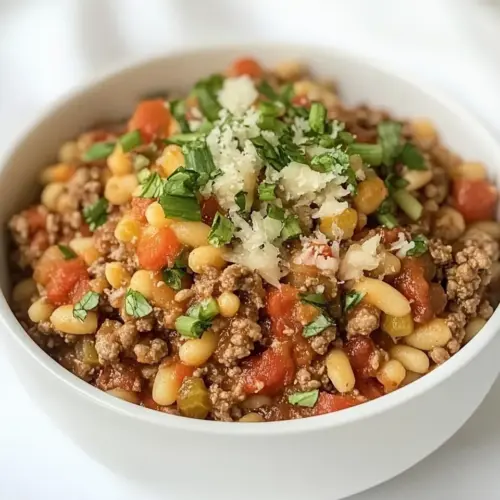
Texas Goulash
Texas Goulash is a creamy, savory, easy weeknight dinner that combines browned ground beef, tender macaroni, and melty American cheese in a rich tomato and beef stock sauce. With bright pops of corn and peppers, it delivers a comforting, crowd pleasing meal that reheats beautifully, making it a go to for busy evenings and casual gatherings.
Equipment
- Large rondeau or Dutch oven
- Pot for boiling pasta
Ingredients
- 2 tablespoons olive oil Heat and provide a cooking fat that prevents sticking and promotes browning; adds a subtle fruity flavor when gently heated. Use at the beginning to sauté aromatics and develop the base for the goulash.
- 2 pounds 85/15 ground beef Brown and contribute rich meaty flavor and body while supplying protein and texture; renders fat that helps carry seasonings. Cook until nicely browned to build depth and savory richness in the dish.
- 1 large peeled small diced yellow onion Soften and add sweet, aromatic depth when sautéed; contributes moisture and a mild oniony backbone to the sauce. Dice small to distribute its flavor evenly throughout the goulash.
- 1 seeded small diced poblano pepper Add a mild heat and vegetal brightness with a slightly smoky, earthy note; provides textural contrast and fresh pepper flavor. Seed and dice small so it melds well with the other vegetables during cooking.
- 1 seeded small diced red bell pepper Bring sweet pepper flavor and vibrant color while adding crunch and mild sweetness; helps balance heat and acidity. Seed and small dice to integrate into the sauce and complement the poblano.
- 4 finely minced garlic cloves Infuse sharp, savory aromatic notes and a depth of flavor; offers pungency that mellows when cooked and enhances the overall savory profile. Finely mince and add early to avoid raw garlic bites.
- 1 cup corn kernels Contribute bursts of sweetness and a hint of texture, offering freshness and seasonal character; balances savory and acidic components. Stir in so the kernels remain tender but retain some bite.
- 1 cup diced fresh tomatoes Provide fresh tomato acidity, texture, and a bright, juicy component that lightens the sauce; contributes natural sweetness and small tomato pieces. Dice fresh to create pockets of tomato flavor throughout the goulash.
- 2 tablespoons chili seasoning Season and enliven the dish with a blend of chili spices that adds warmth, complexity, and a touch of heat. Sprinkle in and adjust to taste to define the Tex-Mex character of the goulash.
- 1 cup tomato puree Supply body, viscous texture, and concentrated tomato flavor to thicken and deepen the sauce; acts as a cohesive element for other liquids. Add with the stock to create a smooth, saucy consistency.
- 2 cups beef stock Provide savory liquid, richness, and beefy umami that enhances depth and thins the sauce to a spoonable consistency. Pour in and simmer to meld flavors and reduce to the desired thickness.
- 8 ounces American cheese, cut into 1" cubes Melt into rich, creamy pockets of cheesy flavor that add smoothness, saltiness, and a slightly processed, nostalgic character. Cut into cubes so it melts evenly into the hot goulash, creating a silky finish.
- 1 pound macaroni noodles Deliver tender pasta body and comforting starch that soaks up the sauce and makes the dish hearty; supplies bulk and chew. Cook separately or in pot as directed to al dente before combining with the sauce.
Instructions
- Add the oil to a large rondeau or Dutch oven pot over high heat. Once it begins to lightly smoke, add the ground beef and cook while frequently stirring and breaking up the meat for 8 to 10 minutes or until it’s browned and cooked throughout.: You'll smell the oil almost immediately as it warms, and when it begins to shimmer and move fluidly that's your cue that the pan is ready. The hot oil promotes a fast sear which gives the ground beef a rich, caramelized crust full of savory aromas, and that fond is key for flavor. If the oil smokes heavily, reduce the heat slightly to avoid burning, because burned oil will add a bitter edge. A common mistake is not heating the oil enough, which leads to the meat releasing moisture and simmering rather than browning, so be patient until the pan is properly hot.
- Set the beef to the side and then add the onion to the pot with the rendered meat fat, gently season with salt, and sauté over medium heat for 5 minutes. Turn the heat down to low and occasionally stir for 10 more minutes until well browned.: As the meat sears you'll hear an energetic sizzle and see brown bits form on the surface and bottom of the pot, which create deep flavor. Breaking the meat into small pieces increases surface area and helps even browning. Keep the pan hot but not so hot the beef blackens too fast, because overly fast browning can char the exterior without developing the full flavor. Troubleshoot by adjusting the heat and scraping the fond to incorporate it into the meat as it cooks.
- Next, add the peppers and saute over medium heat for 5 minutes or until lightly browned.: In the warm fat the diced onion will begin to soften and release sweet aromas, and after a few minutes you should notice a light translucence. The initial medium heat helps the onion soften without browning too fast. If your pan seems dry, add a splash of oil, but avoid adding too much liquid which prevents proper caramelization. A frequent error is rushing this stage with high heat, which can lead to bitter, burnt edges instead of sweet, golden notes.
- Stir in the garlic and corn and cook for 2 to 3 minutes. Add in the tomatoes and then stir in the chili seasoning. Mix to combine.: Lowering the heat allows the onion to caramelize slowly, transforming into deep, sweet pieces that amplify the sauce. You'll smell a toffee like richness as sugars caramelize. Stir occasionally to prevent sticking and to encourage even browning. If you skip this patience step, the sauce will lack depth, so give it time and attention.
- Next, pour in the tomato puree, cooked beef, and beef stock. Adjust any seasonings with more chili seasoning and cook over low to medium heat for 30 minutes.: The diced poblano pepper and red bell pepper will soften and pick up a hint of char that adds smoky sweetness. You'll see their edges blister and their color deepen, which signals good flavor development. Avoid overcooking them into a puree, as you still want texture contrast. If the peppers steam instead of sear, increase the heat briefly to get a bit more color.
- In the meantime, boil the macaroni in a pot of salted boiling water until al dente. Drain under cold water and then toss in a container with a small amount of oil to keep it from sticking. Set it aside.: As the garlic hits the hot pan it will release a fragrant, heady aroma that quickly becomes a backbone of flavor, and the corn will begin to pop slightly and sweeten. This stage is brief because garlic cooks fast, and letting it brown too much will add bitterness. If you detect any burned notes, lower the heat immediately and scrape the pan to refresh the flavor base.
- Finish the beef mixture by stirring in the cheese cubes and mix until it is completely melted.: The fresh tomatoes introduce a juicy acidity that brightens the pot, while the chili seasoning layers in earthy, spicy complexity. As you stir, you'll see the tomatoes break down and mingle with the aromatics, releasing vibrant steam and a fresh scent. Taste as you go, because the seasoning potency can vary; if it feels flat, a pinch more seasoning will wake it up. Remember, you can always add more, but you can't take it out.
- If you are serving right away, add the macaroni and mix until combined. If you are waiting until later, it’s best to serve the noodles in individual portions in a bowl and mix in some of the Texas goulash. Optionally garnish with shredded cheese and sliced green onions.: When the liquid hits the pan it will loosen up any fond, dissolving those concentrated flavors into the emerging sauce. The mixture should come together into a glossy simmer, and you will notice a deeper, unified aroma. Let the pot come to a gentle simmer so flavors meld slowly. A common issue is boiling too vigorously which can evaporate liquid too quickly, throwing off texture, so maintain a patient, low to medium heat.
- Adjust any seasonings with more chili seasoning and cook over low to medium heat for 30 minutes: During this period the sauce concentrates, softening the tomatoes and allowing the spices to permeate the mixture. You'll see the surface develop gentle, rhythmic bubbling, and the aroma will deepen into something rich and rounded. Stir occasionally and taste, adjusting seasoning gradually to avoid over spicing. If the sauce seems too thin after simmering, let it reduce uncovered to thicken naturally.
- In the meantime, boil the macaroni in a pot of salted boiling water until al dente: The water should be rolling when the dry macaroni noodles go in, and you will hear lively bubbling as the pasta cooks. Al dente means tender with a slight bite, which helps the noodles hold up when mixed into the sauce. Drain under cold water to stop the cooking and toss with a little oil to keep them from sticking. Overcooking is the usual mistake here, resulting in mushy noodles that break apart in the sauce.
- Finish the beef mixture by stirring in the cheese cubes and mix until it is completely melted: When the cubed American cheese hits the warm sauce it will slowly collapse into silky strands, creating a creamy texture that clings to meat and noodles. Stir gently until the cheese is fully incorporated and glossy, watching the texture change from lumpy to smooth. Using too high heat here can cause separation, so keep the pot warm but not boiling. If the cheese seems grainy, reduce the heat and whisk gently to bring it together.
- If you are serving right away, add the macaroni and mix until combined: As you fold the hot macaroni noodles into the cheesy beef mixture the sauce will cling and the whole dish will steam invitingly, releasing concentrated, savory aromas. Serve immediately so the textures are at their best. If serving later, keep the components separate to avoid the pasta absorbing too much sauce. A common mistake is combining too early, which leads to a stodgy final texture.
Notes
- Make it milder: Reduce the chili seasoning slightly and rely on the poblano for gentle warmth so the dish is friendlier to sensitive palates.
- Boost umami: Stir in a splash of Worcestershire sauce during the simmer to deepen the savory notes without changing texture.
- Thicker sauce: Simmer uncovered longer to allow liquid to reduce, or whisk a small cornstarch slurry into a portion of the sauce to quickly thicken.
- Slow cooker option: Brown beef and onions first, then transfer everything to a crockpot and cook on low for 6 to 8 hours for effortless prep day cooking.
- Prep ahead: Cook components ahead and store separately; reheat gently and combine before serving to maintain pasta texture.