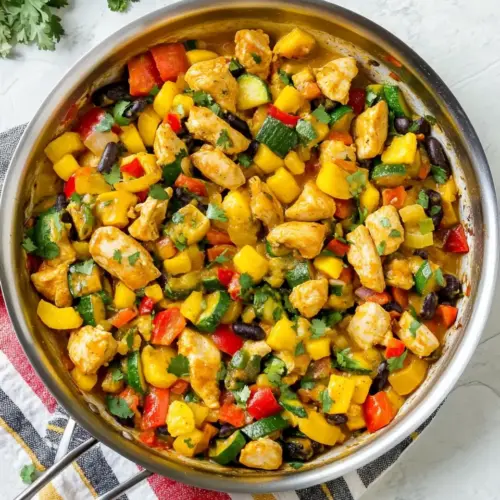
Tex Mex Chicken and Vegetable Skillet
Tex Mex Chicken and Vegetable Skillet is a vibrant, easy weeknight dinner that combines seared chicken, smoky spices, sweet corn, and colorful peppers. It offers a crispy sear, saucy tomato base, and melty habanero cheddar for a creamy finish. Perfect for busy evenings when you want bold, comforting flavor with minimal cleanup, this skillet is a fast crowd pleaser worth making tonight.
Equipment
- Large high sided skillet
- Knife
- Cutting Board
- Spatula
Ingredients
- 1 pound boneless skinless chicken breast Trimmed and cubed to provide the primary lean protein that absorbs spices and keeps the skillet hearty and satisfying; cooks quickly over medium-high heat to brown and lock in juices. Sliced or diced pieces help the chicken integrate evenly with vegetables for consistent texture. Season before cooking to enhance flavor and ensure the meat complements the Tex-Mex profile.
- 2 tablespoons olive oil Heated to coat the pan and prevent sticking while imparting a subtle fruity richness; helps carry and meld the spices and aromatics throughout the dish. Used at the start for sautéing onions, peppers, and garlic to develop depth and color. Choose extra virgin for flavor or regular olive oil for a higher smoke point when searing chicken.
- 1 small yellow onion, diced Sautéed until translucent to build a savory aromatic base that sweetens and balances the dish; diced pieces release natural sugars that create depth. Cooked first with oil to soften and marry with peppers and garlic, providing a foundation for the tomato and spice layers. Small dice ensures even cooking and pleasant texture in each bite.
- 1 green bell pepper, cored and diced Cored and diced to add a bright, slightly bitter crunch and fresh vegetal flavor that contrasts richer elements; softens when sautéed to meld with onions and tomatoes. Provides color and textural variation while absorbing the chili and cumin seasonings. Evenly diced pieces ensure consistent cooking and distribution throughout the skillet.
- 1 red bell pepper, cored and diced Cored and diced to contribute a sweet, crisp note and vibrant red color that balances heat and earthy spices; softens with cooking to release natural sweetness. Enhances visual appeal and flavor complexity while pairing well with corn and beans. Diced uniformly for even cooking and integration with other vegetables.
- 3 cloves garlic, minced Minced to release a pungent, aromatic punch that deepens savory flavors and complements chili and cumin; added early to infuse oil and build a fragrant base. Provides a subtle heat and complexity without overpowering other ingredients when cooked briefly. Properly minced garlic blends into the sauce and enhances overall aroma.
- 1 (14.5 ounce) can fire-roasted diced tomatoes Opened and added with juices to supply bright acidity, smoky flavor, and chunky tomato texture from fire-roasted preparation; forms the saucy component that coats other ingredients. The roasted pieces add a subtle charred sweetness that complements smoked paprika and chili powder. Can be simmered to reduce and concentrate flavors for the skillet.
- 1 (14 ounce) can black beans, drained and rinsed Drained and rinsed to introduce creamy, protein-rich beans that add body, fiber, and a hearty mouthfeel; rinsing removes excess sodium and packing liquids. Black beans absorb spices and meld with tomatoes and corn, helping make the meal more filling and balanced. Added near the end of cooking to warm through without disintegrating.
- 1 (4 ounce) can diced green chiles Opened and stirred in to contribute mild heat and a tangy, slightly smoky flavor with small diced texture; green chiles add classic Southwestern character. Provides moisture and a zesty kick that complements tomatoes and cheese. Adjust quantity to manage overall dish heat while preserving other flavors.
- 3 ears fresh sweet corn, cut from the cob Cut from the cob to deliver sweet, crisp kernels that add freshness, color, and pop to each bite; corn balances spicier elements with natural sugars. Fresh ears provide better texture than canned and caramelize slightly when sautéed for added depth. Stirred in to maintain bite and contrast with softer beans and cooked chicken.
- 2 small zucchinis, diced Diced to provide tender, mildly sweet rounds that absorb seasonings and contribute to vegetable bulk and nutrition; zucchini softens when cooked while retaining shape. Adds moisture and subtle flavor that pairs well with squash and tomatoes. Even dicing ensures rapid, even cooking and consistent texture throughout the skillet.
- 1 small yellow squash, diced Diced to add a delicate, slightly nutty sweetness and tender texture that complements zucchini and peppers; cooks quickly and blends into the vegetable mix. Yellow squash contributes mild flavor and helps create a well-rounded vegetable medley. Provides extra volume and nutrition without overwhelming other components.
- 1 tablespoon chili powder Sprinkled to deliver warm, earthy heat and classic Tex-Mex flavor; chili powder ties together the tomatoes, beans, and vegetables with a familiar spice profile. Balanced use provides depth without overpowering, and it toasts briefly in oil to release aromatic oils. Adjust amount to control overall spiciness of the skillet.
- 2 teaspoons smoked paprika Added to bring a smoky, slightly sweet depth that enhances roasted flavors and pairs beautifully with fire-roasted tomatoes and chiles; smoked paprika deepens color and aroma. Used sparingly to avoid overshadowing other spices while contributing complexity. Toasting it briefly in oil helps bloom its flavor.
- 2 teaspoons ground cumin Ground to supply warm, citrusy earthiness and aromatic lift; cumin adds a distinctive Southwestern note that works with chili powder and oregano. A small amount goes a long way toward rounding the spice blend and enhancing savory elements. Mixed into the dish early so its flavor distributes evenly.
- 1 teaspoon dried oregano Sprinkled to contribute herbal, slightly floral undertones and a subtle Mediterranean contrast that complements the Mexican-inspired spices; dried oregano adds background complexity. Used sparingly to avoid medicinal taste, it supports tomato and bean flavors while blending with cilantro garnish. Incorporate during simmering to soften its intensity.
- 1/4 cup minced cilantro Minced and stirred in near the end to deliver fresh, bright, herbaceous lift that lightens the richer, spiced components; cilantro adds a fragrant finish. Fresh cilantro complements lime or acidic elements and refreshes the palate between bites. Added just before serving to preserve color and vibrant flavor.
- Kosher salt, to taste Seasoned to taste to enhance and balance all flavors; kosher salt brings out natural sweetness in vegetables and intensifies savory notes in chicken and beans. Adjust according to canned ingredient sodium levels and personal preference. Sprinkle gradually and taste as the dish reduces.
- 1 cup shredded Cabot habanero cheddar cheese Shredded and melted on top to add creamy, spicy heat and a sharp cheddar richness that binds the skillet components; habanero cheddar contributes both flavor and a lively kick. Melted cheese creates a satisfying, gooey finish and contrasts with crunchy vegetables and fluffy rice. Use as a finishing touch so it melts evenly over the warm skillet.
- 3 cups cooked white rice, optional Served optionally to make the meal more substantial by providing a neutral, fluffy base that soaks up juices and melted cheese; cooked white rice stretches the dish to feed more people. Keeps flavors cohesive and balances the spice and acidity of the skillet. Offer on the side or scoop directly into the skillet for plating.
Instructions
- Cut chicken into bite-sized pieces.: Warm, neutral kitchen air and the metallic tang of a clean knife meet the faint scent of raw chicken . As you cut, notice even shapes so pieces cook uniformly, which prevents some bits from drying while others remain underdone. This matters because bite sized pieces sear quickly, forming flavorful browned edges that lock in juices. A common mistake is cutting pieces unevenly, which leads to inconsistent doneness; keep a steady rhythm and rest the cut pieces briefly so surface moisture evaporates for better browning.
- In a large high sided skillet add olive oil and set over medium-high heat.: The skillet should feel hot to the touch on the underside after a minute, and the oil will shimmer and spread easily across the pan, releasing a faint fruity aroma. Preheating ensures the chicken sears instead of steams, creating those coveted golden edges. If the oil smokes, reduce heat slightly to prevent burning, because charred oil can introduce bitter notes. Avoid adding ingredients before the oil is ready, as that prevents proper browning.
- When the oil is hot add in the chicken, onion, and peppers. Stir to combine.: You'll hear an immediate lively sizzle as the chicken and vegetables hit the pan, and the sound should remain steady without sputtering wildly. This sizzle is a sign of proper searing that develops complex flavor through the Maillard reaction. Stir to distribute heat and encourage even contact with the skillet, but do not overcrowd the pan which reduces browning. A typical misstep is stirring too frequently and preventing any piece from resting on the pan long enough to color; give items brief pauses between stirs.
- Cook just until the vegetables start to soften and the chicken is almost fully cooked.: Look for the onion to turn translucent, peppers to lose raw crunch but keep bright color, and the chicken to shift to opaque with only a faint hint of pink left. You will smell sweet cooked pepper and a toasty meat aroma. This timing is crucial because the remaining steps introduce moisture; undercooked vegetables or chicken will not absorb flavors properly. A common error is overcooking now, which leads to mushy vegetables and dry chicken later.
- Add in the garlic and cook for 30 seconds.: The garlic should release a warm, aromatic scent quickly, becoming fragrant but not brown. This brief cooking mellows sharpness and infuses the oil with garlic flavor. Because garlic burns fast and turns bitter, keep the window short and attentive; if you see dark flecks, reduce heat immediately and consider discarding burnt pieces to avoid bitterness in the whole skillet.
- Add in the tomatoes with their juice, black beans, can green chiles with their juice, sweet corn kernels, zucchini, yellow squash, chili powder, smoked paprika, ground cumin, and dried oregano. Stir to combine.: As these ingredients meet the pan, steam will rise with a layered aroma of spice, tomato, and sweet corn. The liquids from canned goods create a saucy envelope that carries spices into every piece, while the beans add creaminess and the corn gives pops of sweetness. Stir gently to marry flavors and distribute spices evenly. A typical mistake is adding spices too late, missing their chance to bloom into the oil; adding them now lets their oils open and deepen the overall taste.
- Cook just until the squash starts to soften but is not soggy and the chicken is fully cooked through.: Watch for the squash to become tender with edges that glisten, and test a bite of chicken to ensure no pink remains, juices running clear. You should notice a savory steam and a melded aroma of tomato and spice. This step preserves texture balance, because overcooking makes squash limp and releases excess water. If the pan seems watery, raise heat briefly to reduce liquid, but avoid vigorous boiling which can toughen the meat.
- Remove from heat and stir in the minced cilantro.: Off the heat, the cilantro will release a fresh, citrusy scent that brightens the skillet without wilting into dullness. Stirring in at this stage preserves its color and aromatic lift, providing a counterpoint to smoky and savory notes. A common slip is adding cilantro too early, which cooks away its vibrant flavor; always add delicate herbs near the end.
- Taste and season with the desired amount of kosher salt.: The moment when you taste the pan is full of savory, smoky, and sweet layers. Adjust salt slowly, stirring and tasting between additions, because canned items and cheese can already contain sodium. Salt enhances all other flavors, but over salting is easy; remedy too salty a dish by adding a neutral starch like the optional warm white rice , or a splash of water and simmer briefly to redistribute seasoning.
- Top with shredded Cabot habanero cheddar cheese, cover and let sit for 5 minutes to help melt the cheese.: The cheese will sink into warm pockets, melting into creamy, slightly spicy ribbons that glisten on the surface. Covering traps residual heat and creates gentle steam so the cheese melts evenly without drying out. You should hear a whisper of settling steam and see melted glossy cheese when you lift the lid. Avoid leaving it covered too long, which can over soften crisp edges you may want to preserve.
- Serve alone or overtop cooked rice.: The final sensory moment is plating, where the smoky, spicy, and fresh scents meet the visual of colorful vegetables and melted cheese. Serving over warm white rice soaks up juices and stretches the meal for more people. A common serving mistake is waiting too long, which cools the cheese and tightens texture; serve promptly for the best contrast of warm filling and melty topping.
Notes
- Preheat the skillet: Make sure your skillet is hot before adding oil, so the chicken sears on contact and develops golden color rather than steaming. A properly heated pan gives you deeper flavor through browning.
- Pat dry the chicken: Removing surface moisture before cutting and cooking helps pieces brown more efficiently and prevents the pan from becoming watery, preserving both texture and flavor.
- Toast spices briefly: When spices meet the hot oil they release essential oils and fragrance, enhancing the overall dish; just watch closely because spices can burn quickly and turn bitter.
- Reserve can juices strategically: The liquid from canned tomatoes and green chiles carries concentrated flavor. Add them to build sauce, but adjust quantity to control sauciness and avoid thinning the skillet too much.
- Control vegetable doneness: Add heartier vegetables first and tender ones later so everything finishes tender but not mushy; this keeps each component texturally distinct and enjoyable.
- Rest under a lid for melting: After adding the shredded Cabot habanero cheddar cheese, cover the skillet to melt evenly, producing a silky finish without overcooking the rest of the ingredients.
- Adjust heat to reduce liquid: If the skillet becomes too watery, raise the heat for a short period to evaporate excess moisture, but avoid vigorous boiling which can toughen the chicken.
- Rinse canned beans: Rinsing removes excess sodium and improves texture, especially when using canned black beans so they blend seamlessly into the dish.
- Keep cilantro fresh: Add minced cilantro off the heat to preserve its bright flavor and color, which provides a fresh contrast to smoky spices.
- Serve immediately for best texture: The contrast between warm, melty cheese and crisp edged vegetables is most enjoyable right away, so plan plating close to when the skillet finishes resting.