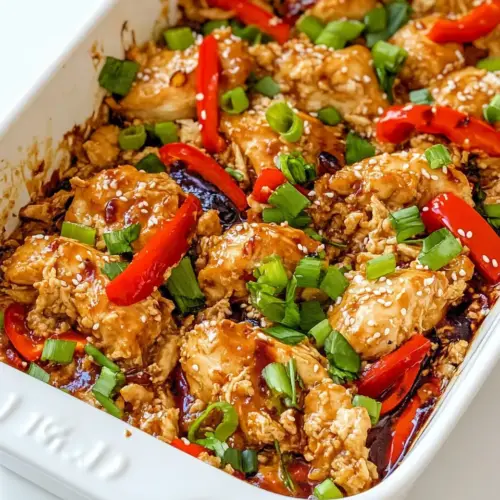
Teriyaki Chicken Casserole
Teriyaki Chicken Casserole is a sticky, savory, and easy weeknight dinner that combines tender shredded chicken, glossy teriyaki sauce, and fluffy rice for a comforting family meal. With bright vegetables and a simple bake-and-stir method, this casserole is both quick and satisfying, perfect for feeding a crowd or prepping ahead. Make it for busy evenings when you want big flavor with minimal fuss.
Equipment
- 9x13-inch Baking Pan
- Aluminum Foil
- Instant read thermometer
Ingredients
- 1 pound boneless, skinless chicken breasts Trim and slice into bite-sized pieces to ensure even cooking; provides the primary protein and texture for the casserole. Absorbs teriyaki sauce and browns nicely when seared, contributing savory richness to the dish.
- 12 ounces pre-cut fresh stir-fry vegetables, see notes Use as-is from the package without chopping for convenience; supplies a mix of crunchy, colorful vegetables that add nutrients and variety. Stir-fry vegetables wilt and meld with sauce during baking, balancing the protein and starch components.
- 1 cup teriyaki sauce, more for top Pour over the chicken and vegetables to coat them thoroughly; acts as the main seasoning and glazing agent that delivers sweet-salty teriyaki flavor. Adds moisture and caramelizes on top when baked, enhancing color and depth.
- 3 cups cooked rice Serve as the starchy base for the casserole and distribute the flavors throughout the dish; provides bulk and a neutral backdrop for the saucy mixture. Helps soak up excess sauce so the casserole holds together when served.
- olive oil spray Lightly coat the pan to prevent sticking and promote even browning; contributes negligible flavor but makes cleanup easier. Creates a nonstick surface so chicken and vegetables can sear before baking without adhering to the dish.
- salt and pepper Season to taste to enhance overall flavor balance; used sparingly to bring out natural flavors and adjust saltiness. Sprinkle during cooking and before serving to fine-tune the savory profile of the casserole.
Instructions
- Preheat the oven to 400ºF. Spray the bottom of a 9×13" pan with olive oil cooking spray.: As the oven warms, you will notice a faint toasty smell, a sign the heat is ready to transform raw ingredients into cohesive comfort food. Preheating ensures even baking from the start, so the chicken will cook at the right pace without drying. Avoid skipping preheat, because putting the pan into a cold oven changes the timing and can lead to uneven doneness.
- Place the chicken breasts in the middle of the pan. Add the vegetables along the sides. Spray the chicken and vegetables with olive oil. Then sprinkle salt and pepper over top of the chicken and vegetables.: When the chicken hits the pan you may hear a faint sizzle from the oil, which is a good sign. The visual balance of meat centered and vegetables around helps them roast rather than steam. The oil encourages gentle browning and the seasoning builds a base of flavor. A common error is piling vegetables on top of the chicken , which traps steam and prevents browning, so arrange them as instructed.
- Pour 3/4-1 cup teriyaki sauce over chicken and cover pan with foil.: As the sauce wets the surface, you will see it darken and coat the proteins and vegetables, releasing an inviting sweet soy aroma. Covering with foil traps steam which helps the chicken cook through without drying out and lets the sauce penetrate. Too much sauce at this stage can make the dish soggy, so use the recommended range and reserve some for finishing.
- Bake covered with foil for 25 minutes or until chicken is cooked through and no longer pink inside (165 degrees).: While baking you might catch a warm, caramelized fragrance as edges begin to cook. The foil keeps moisture in so the chicken stays tender; checking internal temperature is the most reliable way to confirm doneness. Avoid overbaking, which will dry the meat; testing a piece early is better than waiting too long.
- Remove pan from oven and remove chicken and allow to rest 5 minutes. Stir vegetables and place back in oven for 10 minutes, or until fork tender.: Resting allows juices to redistribute, making shredded chicken moist and flavorful. When you stir the vegetables and return them to the oven, listen for a softer sizzle and look for gently blistered edges, a sign they are caramelizing slightly. A mistake here is shredding immediately without resting, which causes juices to run out and leaves the meat dry.
- Shred chicken and then add back to the pan with the cooked rice. Drizzle an extra 1/4-1/2 cup sauce over top and gently stir to combine. Bake an additional 5 minutes.: The shredded chicken should be moist and pull apart easily, and mixing it with warm rice helps the grains absorb sauce. Drizzling more teriyaki at this stage refreshes the glossy finish and deepens flavor. Stir gently to avoid breaking rice grains; vigorous stirring can make the texture gluey.
- Dish into bowls and serve with extra teriyaki sauce and sprinkle with sesame seeds and sliced green onions if desired.: Served hot, the casserole emits a sweet soy aroma while the rice steams up, inviting you to dive in. The optional garnishes add visual contrast and a bright finish. Be mindful that adding garnishes too early can wilt them, so add just before serving for the best texture.
Notes
- Temperature matters: Ensure your oven is fully preheated to 400ºF so the chicken cooks evenly and the vegetables roast properly.
- Don’t skip the rest: Allow the chicken to rest five minutes after baking, so it retains juices and shreds cleanly, preventing dryness.
- Reserve sauce: Save some teriyaki to drizzle at the end for a shiny finish and a stronger flavor boost without making the casserole soggy.
- Even pieces: Use similar sized chicken breasts so they cook uniformly, avoiding overcooked edges and undercooked centers.
- Rice texture: Use cooked rice that is slightly dry or day old if possible, which helps the casserole stay fluffy rather than mushy.
- Veggie prep: If vegetables look watery, give them a quick roast separately to prevent diluting the sauce in the main pan.