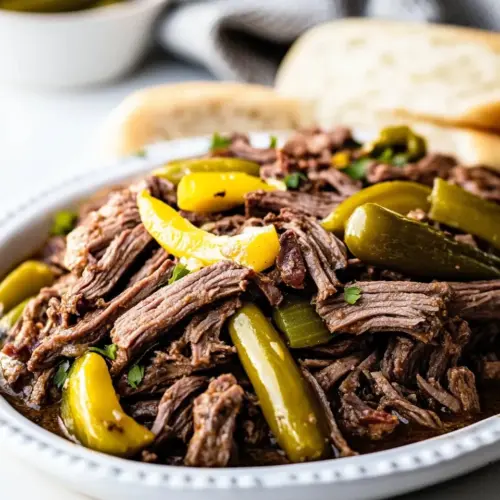
Tender Slow Cooker Italian Beef
Tender Slow Cooker Italian Beef is a juicy, savory, and easy weeknight dinner that yields shreddable, melt in your mouth beef with bright pepperoncini tang. Cooked low and slow, this economical recipe delivers deep, layered flavor with minimal hands on time, perfect for family dinners, gatherings, or meal prep. Make it when you want reliable comfort food that keeps well and pleases a crowd.
Equipment
- Large Skillet
- 5 quart slow cooker
- Tongs
- Forks for shredding
Ingredients
- 3 -4 pounds beef chuck roast Season generously and provide the primary protein focus for the dish; contributes rich, beefy flavor and becomes tender when slow-cooked until shreddable, absorbing the surrounding braising liquids and seasonings.
- salt and pepper Season lightly to enhance overall flavor balance and help bring out the natural taste of the roast; also aids in seasoning the meat surface before browning to develop a flavorful crust.
- 2 tablespoons canola oil Sear briefly to develop a deep browned crust and add fond for deglazing; supplies neutral high-heat cooking fat to brown the roast before slow braising and helps carry aromatics.
- 2 cups beef consommé or beef broth Add as the braising liquid to keep the roast moist and infuse savory depth; supplies concentrated beef flavor and enough cooking liquid for slow cooker shredding and sauce formation.
- 1 package dry Italian salad dressing Season the braising liquid with concentrated herb and spice mix to add robust Italian flavor and savory tang; dissolves into the cooking juices to season the meat and sauce thoroughly.
- 1 teaspoon garlic powder Season lightly to contribute a mellow garlic undertone and aromatic depth; disperses through the cooking liquid to complement the Italian seasoning and dried dressing mix.
- 1 tablespoon Italian seasoning Season and impart an herbaceous Mediterranean blend that enhances savory depth; releases its oils during cooking to create classic Italian flavor layers in the slow-braised beef.
- 1 (12-ounce) jar sliced pepperoncini, drained Add for bright tangy acidity and mild heat to cut through the richness; releases briny juice that flavors the cooking liquid and provides tender, piquant pepperoncini pieces for serving.
- 1/4 cup sliced butter Melt into the finished sauce to enrich mouthfeel and gloss; adds creamy butteriness that helps round flavors and create a luscious coating for the shredded beef.
Instructions
- Season 3-4 pounds beef chuck roast with salt and pepper. Heat a large skillet over high heat with 2 tablespoons canola oil. Add the roast and sear each side for 2-3 minutes until it forms a golden seared crust. Place the roast in a 5-quart slow cooker.: The air will smell faintly metallic as you season, and your hands will feel the texture of the roast. Seasoning now helps the surface begin to build flavor that carries into the interior during the long cook. You should see visible granules of salt and specks of pepper on the surface, which will help the crust form during searing. A common mistake is under seasoning, which leads to bland results once shredded. If your roast looks pale after seasoning, you likely need a touch more salt .
- Add 2 cups beef consommé, 1 package dry Italian salad dressing, 1 teaspoon garlic powder, 1 tablespoon Italian seasoning, and 1 (12-ounce) jar sliced pepperoncini, drained, to the slow cooker. Top the roast with 1/4 cup sliced butter.: When the skillet heats properly, the oil will shimmer and move fluidly across the pan. The noise is minimal, but you may hear the oil thin out as it reaches searing temperature. A hot pan is essential to form a quick browned crust on the outside of the beef , sealing in juices. If the oil smokes heavily immediately, the pan is overheated, so reduce the heat slightly to prevent burned flavor.
- Cook on low for 480 minutes or high for 300 minutes. Shred the roast with a fork. Serve on hoagies topped with provolone cheese and additional pepperoncini if desired.: You will hear a pronounced sizzle as the roast touches the hot oil, and the scent will turn savory and roasted. Look for a deep golden brown color, not black, and use tongs to turn the roast for even browning. This crust creates complex flavors through the Maillard reaction, which deepen the final braising liquid. A typical error is overcrowding the pan, which causes steaming instead of searing. If the roast steams and does not brown, remove it, dry it, and sear in smaller batches.
- Place the roast in a 5 quart slow cooker: After searing, the roast should look richly browned and slightly firm at the exterior. The slow cooker is where the connective tissue will dissolve into gelatin, transforming the texture. Set the roast in the center so juices circulate evenly. Leaving the roast lopsided can lead to uneven cooking, so position it flat if possible.
- Add 2 cups beef consommé, 1 package dry Italian salad dressing, 1 teaspoon garlic powder, 1 tablespoon Italian seasoning, and 1 (12 ounce) jar sliced pepperoncini drained to the slow cooker: As you pour the consommé, you will notice a savory steam and a glossy sheen on the surface. The dry dressing mix and seasonings will dissolve into the liquid, scenting it with herbs and garlic that permeate the beef . Pepperoncini introduce a tangy aroma that balances richness. Stir gently around the roast so the seasonings distribute, but avoid fully submerging the roast which allows top browning to carry more flavor. A common pitfall is skimping on the liquid which can lead to dry meat or uneven cooking.
- Top the roast with 1/4 cup sliced butter: The butter will melt slowly and create a glossy, rich top layer on the braising liquid. As it melts, it softens the acidity from the pepperoncini and adds silkiness to the sauce that will cling to shredded strands. You will see small pools of melted butter mixing with the consommé, creating a slightly thicker mouthfeel. If you skip the butter, the final texture will be slightly leaner and less luxurious.
- Cook on low for 480 minutes or high for 300 minutes: During the long braise the kitchen will gradually fill with deep, savory aromas that become sweeter and more concentrated over time. Low heat yields more even collagen breakdown and the most tender texture, while high heat is faster but may be slightly less fused in flavor. Look for juices bubbling gently at the edge and a soft give when you press the roast with a spoon. A mistake is pulling the roast too early; if it resists shredding, it needs more time to break down.
- Shred the roast with a fork: When it is ready, the beef will fall apart with little resistance and look glossy from the braising liquid. Shredding releases and mixes the flavorful juices back into the meat, making each strand juicy. Use two forks or meat claws and rake in opposite directions to create long, tender shreds. If shreds are stringy and dry, that signals overcooking without enough braising liquid, so reserve some cooking juices to toss back into the meat.
- Serve on hoagies topped with provolone cheese and additional pepperoncini if desired: Assemble sandwiches while the meat is hot so the bread absorbs some juices and the cheese melts slightly. The final aroma will be a pleasing combination of roasted beef , tangy pepperoncini, and herb spice. Toasting the rolls lightly adds texture contrast. A common mistake is making sandwiches too far ahead, which causes bread to become soggy; serve promptly or toast rolls to hold structure.
Notes
- Double the recipe for gatherings, then shred and keep warm in the slow cooker so guests can serve themselves. This saves time and keeps the meat juicier for longer. Be mindful that larger volumes may need slightly longer on low to reach perfect tenderness.
- Reserve some cooking liquid after shredding and toss the meat back in to prevent dryness. I usually taste and add a splash if it feels flat, because the juices concentrate during cooking and can sometimes need a touch of brightness.
- Toast the hoagie rolls briefly under a broiler after filling so cheese melts perfectly and the bread has structure. I keep an eye on the broiler as it works quickly; pull the sandwiches as soon as the cheese blisters.
- Add extra pepperoncini at the end for a spike of acidity if the braising liquid feels too rich. I add a few slices and a teaspoon of the pickle juice to balance richness, tasting as I go to avoid over brightening.
- Make sliders for parties by using smaller rolls and serving toothpicked mini sandwiches. They are easier to eat and great for grazing events, but plan for more buns per guest than you might expect.