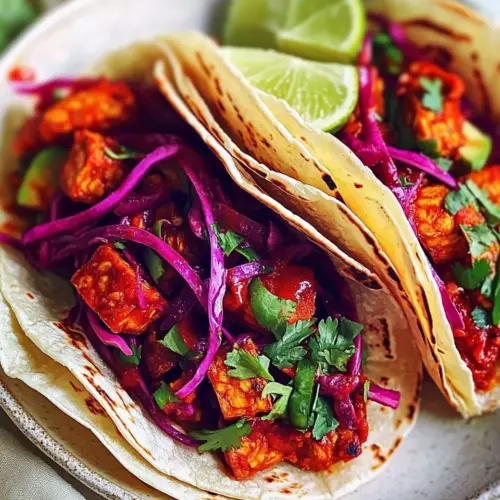
Tempeh Tacos
Tempeh Tacos are a smoky, savory, and slightly sweet plant forward taco that combines crispy pan seared tempeh with creamy guacamole and crunchy cabbage slaw for an easy weeknight dinner. The marinade caramelizes beautifully, while lime and cilantro brighten every bite, making these tacos both satisfying and vibrant. Perfect for casual gatherings or meal prep, they are a delicious reason to cook tonight.
Equipment
- Skillet
- Mixing Bowl
- Mortar and pestle
- Knife
- Cutting Board
Ingredients
- 18 oz package tempeh, diced or broken into large crumble-sized pieces Provide a meaty, nutty base for the tacos while offering protein and a firm texture that holds up to sautéing and saucy coatings; dice or crumble to create bite-sized pieces that mimic ground meat and absorb marinades for robust flavor.
- 1/4 cups soy sauce, or low-sodium soy sauce Add a salty, umami-rich marinade component that helps season and tenderize the tempeh; measure carefully to balance soyiness and avoid overpowering other bright and fresh elements in the tacos.
- 1/4 cup balsamic vinegar Contribute a tangy, slightly sweet acidity that brightens the marinade and helps break down and tenderize the tempeh; pair with soy sauce and sweetener to create a balanced savory-sour glaze.
- 2 tablespoons maple syrup, or agave Introduce sweetness and caramelization to the marinade, enhancing depth and helping the tempeh develop rich, sticky edges when cooked; choose maple or agave for a vegan-friendly syrup with complex flavor.
- 1 tbsp chipotle chili powder Deliver smoky heat and deep chili flavor to the tempeh seasoning, creating a warm, spicy backbone for the tacos; adjust quantity to control spiciness while maintaining a chipotle smokiness.
- 2 ripe avocados, cubed Provide creamy, rich texture and cooling contrast for the spicy tempeh; cube ripe avocados to add healthy fats and a smooth mouthfeel that balances heat and acidity in each taco.
- 1/4 cup red onion, minced Offer sharp, pungent bite and textural contrast to the creamy avocado and tender tempeh; mince red onion finely to distribute bright, aromatic flavor throughout the taco filling or salsa.
- 1/2 cup cilantro, finely chopped Bring fresh herbal brightness and a citrusy, slightly peppery note that lifts heavier flavors; finely chop cilantro to sprinkle over tacos for aroma and a lively finish.
- 1/2 -1 whole jalapeño pepper, minced Deliver concentrated heat and crisp flavor when minced finely, allowing control over the kick in the avocado mixture or salsa; adjust between half to a whole jalapeño depending on desired spice level.
- juice of 2 limes Provide bright, zesty acidity that balances richness and ties together the avocado mixture and overall taco flavors; juice limes freshly for the cleanest, most vibrant citrus note.
- 1/2 tsp sea salt Enhance and balance flavors by bringing subtle salinity that rounds out the lime and avocado components; use sea salt sparingly to season avocado and other elements to taste.
- 1/4 red cabbage, shredded Add crisp texture, color, and a mild peppery crunch as a crunchy taco topping or slaw component; shred red cabbage thinly to provide a vibrant visual contrast and refreshing bite.
- 3 large carrots, peeled and shredded Contribute natural sweetness, moisture, and a tender crunch when shredded, complementing the cabbage and tempeh; use peeled, shredded carrots to bulk up the slaw or taco filling with color and sweetness.
- 1 tbsp extra virgin olive oil Provide a silky mouth-coating fat for sautéing tempeh or dressing the slaw, lending richness and carrying flavors; use extra virgin olive oil for its fruity aroma and healthful monounsaturated fats.
- juice of 1 lime Introduce additional bright acidity and tang to the slaw or avocado mixture, enhancing freshness and preventing oxidation of avocado pieces; squeeze fresh lime juice for immediate vibrancy.
- 8 -12 small corn tortillas Serve as soft, pliable vessels for assembling tacos, offering a neutral, slightly sweet corn flavor that complements the fillings; warm tortillas before serving to improve flexibility and texture.
Instructions
- In a medium-sized mixing bowl, combine the soy sauce, balsamic vinegar, maple syrup, and chipotle chili powder until combined.: The aroma when these liquids mix is bright and pungent, with the balsamic giving a rounded sweet tang while the chipotle adds a smoky backdrop; whisk until the maple syrup is fully integrated so the marinade is uniform. Why this matters, the even emulsion helps every piece of tempeh absorb flavor consistently rather than leaving sweet pockets. A common mistake is under mixing which leads to uneven coating, so taste the marinade briefly and adjust balance before adding the tempeh .
- Add the tempeh pieces to the mixing bowl. Gently toss the tempeh in the marinade to combine. Cover and let it marinate in the refrigerator for 15 minutes to overnight.: When the tempeh hits the marinade the texture starts to soften slightly, and the liquid clings to the nooks of each piece; gently toss so each crumble sized chunk is glossy but not drenched. This step is where the flavors begin to penetrate, and letting it rest allows the surface to absorb enough for caramelization later. Avoid packing the bowl too tight because crowded pieces will not marinate evenly.
- Heat a medium-size skillet over low-medium heat. Add the tempeh and the marinade to it and cook for 5-7 minutes, stirring frequently, or until it is hot and golden and the marinade has cooked off.: As the tempeh chills and soaks, it develops depth and an almost meaty bite; marinating overnight produces the most pronounced flavor and tenderization. The refrigeration also slows any enzymatic changes in the tempeh while letting the acids and salt do their work. A frequent error is marinating at room temperature for long stretches, which can impact safety and texture, so stick to the fridge if you plan to exceed 30 minutes.
- Place the guacamole ingredients in a mortar and pestle or mixing bowl and mash until you reach your desired texture. I like mine with some chunks in it, but you can also mash it until it is smooth and creamy.: When the skillet is warm it gives you a predictable sizzle without burning the sugars in the marinade; test heat by flicking a tiny drop of water to see a gentle dance. You want sufficient heat for browning, not a blast of flames that will char the outsides before the insides warm. A common problem is starting on too high a flame, which causes the marinade to blacken and taste bitter.
- Season the guacamole to taste with more salt and lime if desired. Set aside.: The sound is a steady light sizzle, and visually you will notice edges turning golden brown while the marinade reduces to a sticky glaze that clings to the tempeh . This is when flavors concentrate and textures shift to satisfyingly crisp. Watch for flare ups and avoid leaving the tempeh still for too long, or the sugars will burn instead of caramelizing.
- Combine the shredded red cabbage and carrots in a bowl and toss with olive oil and lime. Season to taste with salt if desired.: You will smell the bright citrus from the lime and the sharpness of the red onion as you press the avocado down, and the texture you choose will determine the mouthfeel in the taco. Chunkier guacamole gives pops of creaminess, while smoother blends coat the fillings evenly. Overworking the avocado can make it pasty, so stop when you reach the texture you like.
- Warm the tortillas over a flame or in a toaster oven at 350° for 2 minutes. Wrap the tortillas in a kitchen towel to keep them warm.: Tasting here is crucial because acidity and salt level shift once it sits with the other fillings; a final squeeze of lime brightens everything and salt amplifies flavors. If you undersalt it, the guacamole will taste muted against the savory tempeh . A common oversight is adding too much lime at once, so add incrementally and taste between additions.
- Assemble the tacos by layering the marinated tempeh, cabbage slaw, and guacamole into the warm tortillas.: Tossing releases a faint vegetal scent and slightly softens the cabbage while preserving crunch; the oil gives a silky coating that helps the lime and salt adhere. This quick dressing keeps the slaw lively and prevents it from tasting dry in the taco. Avoid overdressing which will make the slaw soggy quickly.
- Garnish with more cilantro and a squeeze of lime and/or hot sauce. Enjoy hot!: A small sprinkle of salt at this stage brings out the natural sweetness of the carrots and the subtle spice of the cabbage. Taste and balance because too much salt will dominate the fresh elements and too little will make the slaw fade behind the tempeh .
- Warm the tortillas over a flame or in a toaster oven at 350° for 2 minutes: When warmed, the tortillas give off a toasty corn aroma and become pliable, making folding and filling easier; wrapping them in a towel after heating traps steam and keeps them soft. Avoid overheating which will dry and crack the tortillas, making assembly messy.
- Wrap the tortillas in a kitchen towel to keep them warm: The retained warmth keeps the tortillas flexible and enhances the eating experience, with steam softening them while the towel insulates. This little step ensures each taco stays pleasant to bite into rather than cooling and stiffening on the plate. Skipping the wrap leads to fast cooling and fractured tortillas.
- Assemble the tacos by layering the marinated tempeh, cabbage slaw, and guacamole into the warm tortillas: At assembly the contrast is immediate, with hot browned tempeh meeting cool guacamole and crunchy slaw, creating a satisfying bite. Add components sparingly so the tortilla holds together, and layer in a way that distributes textures evenly. Overstuffing is a common mistake that makes eating awkward and messy.
- Garnish with more cilantro and a squeeze of lime and or hot sauce: The final garnishes brighten and lift the taco, adding herbal notes from the cilantro and a clean citrus finish from the lime. A small drizzle of hot sauce can introduce a vinegary heat that complements chipotle in the marinade. Avoid heavy garnishes that overpower the delicate balance built in the previous steps.
- Enjoy hot: Eating while components are still warm maximizes the contrast of temperatures and textures; the aroma, taste, and mouthfeel are at their peak in the first few minutes after assembly. Let the flavors settle for a moment if you prefer, but these tacos shine when served promptly. Reheating later will change textures, so plan servings accordingly.
Notes
- Make it smokier, increase the chipotle chili powder slightly or add a touch of smoked paprika to deepen the smoky notes in the marinade.
- Swap sweeteners, use agave if you prefer a thinner syrup that blends more quickly into the marinade without crystallizing.
- Oven finish, transfer the marinated tempeh and its juices to a baking dish and bake at 350° for 20 minutes for hands off cooking and evenly caramelized bites.
- Mash texture, vary your guacamole texture by mashing less for more chunks or more for a creamier spread that coats the tortillas.
- Heat control, seed the jalapeño for milder guacamole or leave seeds in for a livelier, spicier kick.
- Make ahead, prepare the slaw and guacamole up to 2 days ahead, storing them separately to preserve crunch and color.
- Presentation, serve on a warmed platter with lime wedges and extra chopped cilantro so guests can customize their tacos.