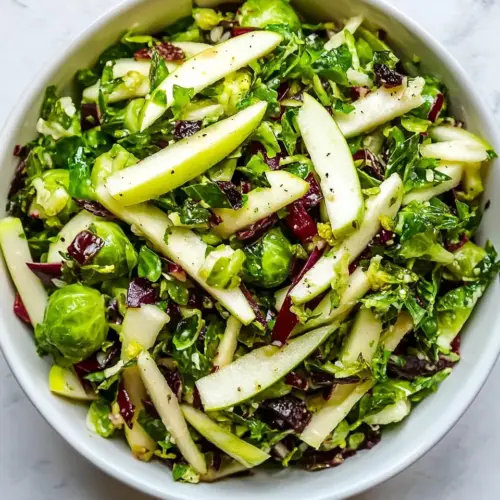
Tangy Brussels Sprout Apple Slaw
Tangy Brussels Sprout Apple Slaw is a crisp, flavorful salad with zesty lemon mustard dressing, crunchy shaved Brussels sprouts, juicy apple matchsticks, and sweet dried cranberries. This easy make ahead side brings bright acidity, savory Parmesan, and herbaceous chives for a balanced, crowd pleasing dish perfect for easy weeknight dinners or holiday spreads. Make it to add refreshing texture and bold flavor to your meal.
Equipment
- Morton Kosher Salt
- Dried Cranberries
- Extra Virgin Olive Oil
Ingredients
- 2 cloves garlic, grated Grated finely to infuse bright, pungent garlic flavor throughout the dressing and slaw; helps build savory depth that balances the sweetness of apple and cranberries. Adds aromatic intensity and a subtle bite without large pieces, melding into the vinaigrette. Enhances overall umami and rounds out the tangy profile of the dish.
- 1 small shallot, minced fine Minced very fine to provide a mild allium sweetness and delicate texture in the dressing; contributes subtle sharpness that complements lemon and mustard. Distributes evenly so each bite has gentle shallot nuance without overpowering the other flavors. Helps create a layered savory base for the slaw.
- 1 lemon, zested Zested to deliver concentrated citrus oil that brightens the dressing and salad; adds fragrant, aromatic notes that lift heavier components. Provides fresh, slightly floral lemon character without extra acidity from the juice. Balances the sweetness and creaminess in the slaw.
- 1 lemon, juiced Juiced to supply fresh acidity which balances the mustard and brown sugar, creating a lively vinaigrette. Adds tartness that tenderizes and complements the cabbage-like Brussels sprouts and crisp apple. Enhances overall brightness and prevents the salad from tasting flat.
- 2 tablespoons whole grain mustard Used whole grain for tangy, textured mustard flavor and visual interest in the dressing; lends a mild sharpness and slight crunch from the mustard seeds. Helps emulsify the vinaigrette with the olive oil and binds flavors together. Contributes savory complexity and a pleasant mouthfeel.
- 1 teaspoon brown sugar Added sparingly to introduce a soft molasses-like sweetness that tempers the lemon and mustard; helps round the dressing’s flavor profile. Enhances caramel notes that play nicely with roasted or raw Brussels sprouts and apples. Balances acidity for a harmonious slaw.
- 1/4 cup extra virgin olive oil Used as the fat component to create a silky vinaigrette and coat the shredded sprouts and apple; provides rich, fruity undertones. Helps carry fat-soluble flavors like garlic and lemon zest across the slaw. Contributes mouth-coating smoothness and body to the dressing.
- Kosher salt, to taste Seasoned to taste to bring out and balance the natural flavors of the vegetables and dressing; adjusts the overall savory level of the slaw. Ensures proper seasoning so sweetness, acidity, and umami are in harmony. Important for personalizing saltiness to preference.
- Black pepper, to taste Freshly ground to taste to add subtle heat and complexity; enhances the overall flavor contrast of the dish. Provides gentle warmth that complements the sweetness of apple and cranberries. Used to finish and brighten each serving.
- 1 pound Brussels sprouts, ends trimmed and thinly sliced Trimmed and thinly sliced to serve as the crisp, cabbage-like base of the slaw; provides hearty texture and slightly bitter, nutty flavor. Offers a sturdy structure that holds dressing and mix-ins well without becoming soggy. Adds green color and vegetable bulk to the salad.
- 2 ounces crumbled Parmesan cheese Crumbled to introduce salty, savory richness and a slightly nutty, umami finish to the slaw; complements the bright vinaigrette. Distributes small bursts of flavor throughout each bite while adding creaminess contrast to crunchy elements. Enhances overall savory depth.
- 1 large crisp red apple, cored and cut into thin matchsticks Cored and cut into thin matchsticks to contribute crisp, juicy sweetness and refreshing texture to the slaw. Adds a fruity contrast to the savory cheese and tangy dressing while maintaining structural crunch. Provides visual appeal with red skin accents.
- 1/3 cup dried cranberries Included to impart concentrated sweet-tart bursts and chewy texture that contrast crunchy sprouts and apple; adds color and festive flavor. Provides pockets of sweetness that balance the mustardy, lemony dressing. Helps create a more complex, layered tasting experience.
- 2 tablespoons minced chives Minced to deliver fresh, mild onion-like herb flavor and a delicate green finish; adds light onion aroma without overpowering. Sprinkled to provide visual freshness and subtle herbal lift that complements the other components. Ties together flavors with a bright, grassy note.
Instructions
- In a medium-large mixing bowl add grated garlic, minced shallot, lemon zest, lemon juice, and whole grain mustard. Whisk to combine.: The aroma of freshly grated garlic and minced shallot blooming with bright lemon zest hits first, giving the dressing a fragrant lift. As you whisk, the whole grain mustard releases its vinegar tang and seeds, creating pockets of texture that will cling to the vegetables. You want a cohesive blend rather than separated components, so whisk briskly until you sense the citrus oils dispersing and the shallot softening in the acid, which takes a few vigorous stirs. A common mistake is under mixing, leaving the mustard clumped and the zest not well integrated, so take an extra 15 to 30 seconds to whisk until the mixture looks uniformly glossy. If the garlic aroma feels too sharp, let it rest briefly to mellow but do not skip the garlic entirely because it provides essential savory depth.
- Drizzle in the olive oil while whisking the mixture to incorporate the mixture to create a thick dressing.: As the extra virgin olive oil is added slowly, the dressing transforms visually from watery to slightly viscous and glossy, a sign the oil is emulsifying with the lemon and mustard. You should notice the dressing cling more readily to a spoon and leave a thin coating on the sides of the bowl. The sound is subtle, a soft whisking rhythm, and the scent becomes rounded rather than sharp. If you pour the oil too quickly, the dressing can separate into oil and citrus, so take your time to incorporate. A typical error is rushing this step, which results in a thin, split dressing that will slide off the Brussels sprouts rather than adhering. Slow drizzle keeps the texture right and ensures every shred will be dressed.
- Taste the dressing and season with kosher salt and black pepper if needed.: The dressing should sing of lemon brightness, mustard tang, and olive oil richness with a hint of sweetness from the brown sugar. When you taste it, pay attention to salinity and balance; add Kosher salt sparingly until the flavors pop, then finish with a crack of black pepper for warmth. Salt accentuates the savory notes of the Parmesan cheese and draws the apple juice forward. Avoid adding too much salt at once because it is difficult to dial back; instead season in small increments. A common oversight is neglecting to taste the dressing alone, which can leave the assembled salad under seasoned.
- Using the bowl you made your dressing in, add the thinly sliced Brussels sprouts, Parmesan cheese, red apple, dried cranberries and chives. Toss to combine.: The visuals shift dramatically as bright green ribbons of Brussels sprouts meet flecks of Parmesan cheese and ruby dried cranberries. Tossing by hand or with tongs ensures the dressing coats each strand, and you will hear a soft rustling as the components move together. The matchstick apple releases little bursts of juice that glaze nearby leaves, adding shine. Toss until the dressing forms a light sheen over the mixture rather than pooling at the bottom. A pitfall is over tossing which can bruise the apple or shred the sprouts too thinly, causing them to become limp, so toss gently until evenly coated.
- Taste the salad and season with more kosher salt and black pepper if needed.: Once combined, tasting is crucial because the dressing clings differently to the components than it did on its own. You may find it needs a touch more Kosher salt to lift the Parmesan cheese or an extra grind of black pepper for brightness. Pay attention to how the dried cranberries and brown sugar affect perceived sweetness and adjust to keep a balanced profile. An avoidable mistake is assuming the dressing measurement is final before seasoning the full salad. Always taste the assembled salad and make incremental adjustments for the complete picture.
- Let the salad sit in the refrigerator for at least 2 hours to help slightly soften the Brussels sprouts and let the flavors of the salad meld together.: Cold resting transforms the texture and melds flavors, as the acid and oil slowly penetrate the Brussels sprouts fibers, slightly tenderizing them while preserving crunch. Over time the dressing integrates with the cheese and dried cranberries, producing more cohesive tastes and aromas. Expect the salad to cool completely and the flavors to round after about two hours, though overnight is also fine. A common misstep is serving immediately when the dressing still tastes sharp; a short rest smooths the edges and gives the salad greater depth.
- Can be made a day before if desired.: Preparing the slaw a day ahead is convenient and often improves flavor as the ingredients harmonize overnight, making it a great make ahead option for entertaining. When storing, use an airtight container to prevent the apple from browning excessively and keep the texture intact. Before serving, taste and if needed refresh with a squeeze of lemon or a quick toss to redistribute the dressing. One frequent error is storing the salad uncovered or in a shallow container which can dry out components, so keep it sealed for best results.
Notes
- Swap sweeteners sparingly Replace the brown sugar with a small drizzle of honey if you prefer a floral sweetness, but add it in tiny increments to avoid overwhelming the citrus and mustard.
- Vary the cheese Try shaved Pecorino or a crumbly aged cheese in place of Parmesan cheese for a subtly different savory note while preserving texture.
- Adjust apple texture If you like softer apple pieces, toss the matchsticks with a teaspoon of lemon juice right after cutting to keep them bright and slightly tender.
- Make it less sweet Reduce the dried cranberries by a tablespoon if you want the salad to lean more savory, tasting as you go to maintain harmony.
- Boost the herbiness Add a sprinkle more of minced chives at the last minute for fresher onion notes and color contrast.