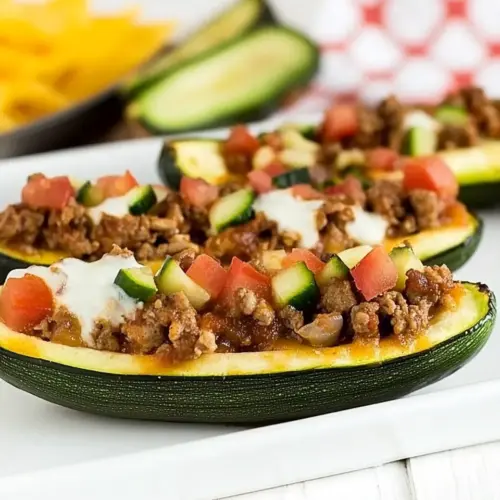
Taco Zucchini Boats
Taco Zucchini Boats are a crispy topped, savory stuffed zucchini dish featuring seasoned ground beef, tangy Pace Picante Sauce, and melty Mexican cheese. This easy weeknight dinner gives you bold taco flavors with a lighter vegetable base, perfect for summer meals or casual gatherings. Try them for a satisfying, family friendly twist on tacos that reheats well and disappears fast.
Equipment
- Large non-stick frying pan
- Baking Sheet
- Melon baller or sharp spoon
- Turner or potato masher
Ingredients
- 4 large zucchinis (see notes) Use to create sturdy edible vessels for the filling; scoop out centers and reserve flesh to mix with the meat for added moisture and texture. Roast or bake until tender to concentrate sweetness and provide a warm base that holds taco flavors well.
- 2 lb ground beef Brown to develop deep savory flavor and provide the main protein and substance for the filling; break into small pieces while cooking for even distribution. Drain excess fat if desired to prevent sogginess and allow spices and sauces to cling to the meat.
- 2 tsp olive oil Heat briefly to soften and act as a cooking fat that boosts flavor; coat the pan to prevent sticking when sautéing aromatics and meat. Use just enough to shimmer, which helps brown the onion and bloom spices for a richer filling.
- 1 onion, chopped small Sauté until translucent and fragrant to add sweet, aromatic depth and texture contrast within the filling; chop finely so it blends well with the meat and reserved zucchini flesh. Caramelize slightly for added sweetness that balances the taco seasoning and salsa.
- 1 T Kalyn’s Taco Seasoning or any taco seasoning of your choice Season to build the characteristic taco flavor profile; sprinkle evenly while cooking the meat so spices toast and release their aroma. Adjust quantity to taste, using as a primary seasoning that harmonizes with cumin and salsa.
- 1 tsp ground cumin Enhance warmth and earthiness; add while cooking to complement taco seasoning and deepen the overall flavor. Use sparingly and taste, as cumin can become dominant if overused.
- salt and fresh-ground black pepper to taste Season to taste to balance and enhance all flavors; add at different stages to control saltiness and bring out sweetness or heat from other components. Finish with fresh-ground black pepper for bright, sharp notes that lift the dish.
- 2 cups Pace Picante Sauce (see notes) Stir in to provide saucy moisture, tang, and a tomato-onion-pepper brightness that binds the filling and keeps it juicy. Use enough to coat the meat mixture so the boats stay flavorful without becoming watery.
- 2 1/2 cups grated Mexican Cheese Blend (divided) Melt over the assembled boats to add creamy, salty, and slightly tangy richness; reserve some for sprinkling midway through baking and more for a gratin finish. Choose a Mexican blend for authentic melting characteristics and balanced flavor.
- one 6 oz can black olives (see notes) Slice and scatter as a salty, briny garnish that adds a contrasting umami pop and textural interest to the finished boats. Drain and pat dry if preferred to prevent excess moisture; add more or less to suit personal taste.
Instructions
- Preheat oven to 375 F/190 C. Spray a baking sheet with nonstick spray.: When you preheat the oven, you should hear the faint hum of the element coming to temperature and feel a gentle warmth if you open the door briefly, this ensures the zucchini will roast evenly and the cheese will melt properly at the end. Doing this early saves you from a lukewarm start where the filling might steam instead of roast. A common mistake is skipping preheat, which can lengthen cook time and yield limp texture instead of tender crisp. Make sure the rack is centered so heat circulates around the baking sheet for even browning.
- Wash zucchini and cut off the stem and flower ends. Cut each zucchini in half lengthwise to make 8 zucchini halves. Use a melon baller or sharp spoon to scrape out most of the fleshy inside part of the zucchini, creating a 'boat' with about 1/2 inch of flesh attached to the zucchini skin.: You will see shiny, pale green flesh and feel the firmness as you scoop, leaving a sturdy shell about half an inch thick. This thickness keeps the boat intact during baking and offers the ideal bite contrast with the filling. A frequent error is hollowing too aggressively, which can make boats floppy and prone to collapse; keep a thin wall. Rinse any residual seeds and pat the boats dry so the filling adheres well and does not slide out when you spoon it in.
- If you prefer your zucchini fairly well done, you can microwave the boats for a couple of minutes before you stuff them; if you do that blot dry with a paper towel before putting the stuffing in. (We didn’t microwave them and ours were just tender crisp when they were done.): When microwaving, the kitchen will quickly fill with the mild vegetal aroma of zucchini , and the flesh will soften, reducing the oven time needed. Blotting prevents excess moisture from diluting the filling, which helps it brown. Do not skip drying if you microwaved, because wet boats can make the filling soggy. If you prefer a firmer bite, you can skip microwaving and rely solely on oven roasting for texture control.
- Heat the oil in a large non-stick frying pan; add the ground beef and cook over medium-high heat until the beef is nicely browned, breaking the meat apart with the turner or a potato masher as it cooks.: As the olive oil warms, you’ll smell a faint fruity note, then the skillet will begin to sizzle noticeably once the ground beef hits the pan. Browning produces caramelized bits that deepen flavor, so allow the meat to sit briefly between stirs to create golden edges. Break it into small pieces so the filling feels cohesive. A common mistake is overcrowding the pan which causes steaming instead of browning, so use a broad pan and don’t dump the meat all in at once if your skillet is small.
- When the beef is browned, push it to one side and add the chopped onion and cook for 3-4 minutes, until the onion is starting to soften.: You’ll hear a lighter sizzle as the onion hits the pan and smell its sweetening aroma as it softens; this softening draws out sugars that balance the savory meat. Cooking the onion slightly before mixing helps it develop a translucent edge without turning mushy in the filling. Avoid letting the onion brown too much here unless you want deeper caramel notes, because burnt edges can add a bitter tone. Stir occasionally and watch for a glossy, softened look.
- Stir the onion and beef together and add the taco seasoning, cumin, salt, pepper, and Pace Picante Sauce or salsa of your choice.: When the spices hit the warm meat mixture you should catch an immediate burst of aroma from the taco seasoning and ground cumin . Adding the Pace Picante Sauce introduces a tangy moisture that helps the flavors meld. Stir thoroughly so the seasoning coats every morsel, this ensures a uniform flavor profile. A common misstep is under seasoning, so taste a small bite of the filling as it simmers to adjust salt and heat before stuffing.
- Stir together, then reduce heat to low and simmer until most of the liquid has evaporated.: The mixture will go from glossy and saucy to thicker and more clinging, and you will hear softer bubbling rather than vigorous splatter. Reducing concentrates flavor and prevents watery filling that will make the boats soggy. If too much liquid remains, let it simmer a bit longer; patience here makes a firmer, more satisfying texture. A typical error is rushing this step, which leads to a runny filling and a longer bake time.
- While the mixture simmers, drain and slice the olives and measure out the cheese.: Draining the black olives removes excess brine and slicing them releases a briny perfume that complements the meat. Measuring the cheese ahead keeps the assembly smooth and helps you layer it correctly. Avoid skipping this mise en place, because pausing mid assembly can cool the filling unevenly and make stuffing more fiddly.
- Put the zucchini boats on a large baking sheet that you’ve sprayed with nonstick spray.: Arrange them cut side up so each boat has room and heat can flow between. The spray prevents sticking and helps the cut edges develop a slight roasted edge. You should see the glossy inner canal of the boat waiting to receive filling. Placing them too close can prevent browning and create unevenly cooked centers, so leave space between boats.
- When the meat mixture looks dry if you draw a spoon across the bottom of the pan, turn off the heat and let it cool for 2-3 minutes. Then stir in the sliced olives and 1 1/2 cups cheese.: Cooling briefly prevents the cheese from melting into the pan and keeps the filling from becoming overly loose; you will notice the steam ease as the temperature drops. Stirring in the olives and partially reserved cheese distributes texture and binds the mixture. Avoid adding cheese while the mixture is piping hot, because it can separate and create an oily texture instead of a cohesive fill.
- Use a large spoon to stuff the mixture into the zucchini boats, packing it tightly so you use it all.: As you spoon in the filling you should feel a slight resistance as the mixture compacts, and you will see the boats brim with a rich, textured blend of meat, cheese , and olives. Packing tightly prevents gaps that can cause uneven baking and ensures every bite has a balanced ratio of zucchini to filling. Be careful not to overpack to the point of spilling, because that can burn on the pan and create clean up work later.
- Bake the stuffed zucchini 25 minutes, or until the zucchini is starting to feel soft when you stick a fork into it.: During baking you will hear faint bubbling and notice the edges of the zucchini taking on a lightly roasted color while the filling firms. The fork should meet slight resistance, indicating tender crisp texture. If the fork slides in too easily the boats may be overdone and soft; watch closely near the end of the time to hit your preferred doneness.
- Remove the baking sheet from the oven and sprinkle the top of each stuffed zucchini with additional cheese. Bake about 15 minutes more, or until the cheese is melted and zucchini is done to your liking.: Sprinkling the remaining cheese creates a melty, browned crown that sizzles and bubbles into golden pockets. The oven will fill with a warm, inviting dairy aroma as the cheese browns. Let the cheese get nicely melted and slightly golden for that irresistible texture. A frequent error is opening the oven too often which cools the oven and lengthens melting time, so check near the end only once or twice.
- Serve hot, with sour cream and additional salsa to add at the table if desired.: Serve the boats straight from the oven so the cheese is gooey and the filling is warm throughout, offering a comforting mix of textures and temperatures. The cool tang of sour cream and extra Pace Picante Sauce at the table brightens each bite and lets guests adjust heat level. Avoid letting them sit too long if you want the ideal melty experience, because the filling firms as it cools and loses some of that just baked charm.
Notes
- Swap the heat level — Use a mild or hot taco seasoning or salsa to dial spice up or down depending on who is eating, tasting as you go so the overall balance stays pleasant.
- Use part leaner beef — Choose a lean ground beef to reduce grease, and if needed drain excess fat after browning to keep the bake from becoming oily on the tray.
- Try a different salsa — If you prefer chunkier texture, pick a chunky salsa in place of the Picante Sauce to add fresh tomato and pepper bits to every bite.
- Prep the filling ahead — Make the filling a day ahead and refrigerate, then stuff and bake when ready for fast assembly on busy nights without flavor loss.
- Make it meatless — Omit the ground beef and use a hearty bean mixture or a crumbled plant based substitute that holds up well when reduced and seasoned.
- Add herbs at the end — Stir in fresh chopped herbs sparingly after cooking to retain their brightness and add a fresh contrast to the warm, spiced filling.