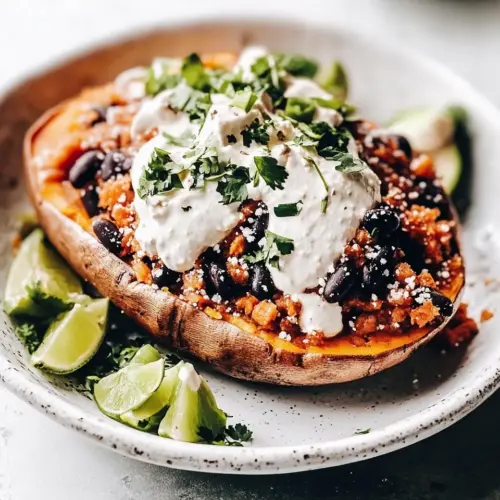
Taco Stuffed Sweet Potatoes
Taco Stuffed Sweet Potatoes are a creamy and savory weeknight favorite that combine roasted sweet potato flesh with a spiced meat and bean filling. The dish offers a delightful contrast of textures, easy assembly, and a quick, customizable sauce. Perfect for an easy weeknight dinner that feels indulgent, this recipe is a crowd pleaser worth making tonight.
Equipment
- Parchment paper or a silicone baking mat
- Sheet pan (15" x 10")
- Large Skillet
Ingredients
- 4 (10-to-13-ounce) medium sweet potatoes scrubbed clean and halved lengthwise Roast halved sweet potatoes until tender to provide a naturally sweet, starchy base for the taco filling and to hold toppings; their soft flesh pairs well with savory beef and spicy sauces. Roast skin-on for structure, scoop slightly to create space, and serve warm so flavors meld. Choose medium potatoes for balanced cooking time and portion size.
- 3 tablespoons olive oil Coat sweet potatoes or sauté vegetables with olive oil to promote even browning and prevent sticking while adding a subtle fruity richness. Use measured tablespoons to control fat content and help disperse seasonings during roasting or cooking. Extra virgin olive oil adds more pronounced flavor; regular olive oil tolerates higher heat.
- Salt and pepper Season with salt and pepper to enhance and balance the overall flavors of the sweet potato and taco filling; a light hand prevents overpowering the natural sweetness. Use kosher salt for a cleaner dissolve or fine salt for precise seasoning, and freshly cracked black pepper for aromatic heat. Adjust to taste just before serving.
- 1 tablespoon olive oil Sauté aromatics or sear the ground meat with a tablespoon of olive oil to encourage Maillard browning and prevent sticking, especially in leaner meats. Add the oil to a hot skillet first to help transfer heat evenly and build a flavorful fond on the pan. Use the oil sparingly with 93/7 lean meat to avoid excess grease.
- 1/2 cup diced yellow onion 1/2 an onion Sweat diced yellow onion to develop sweet, savory depth that forms the aromatic backbone of the taco mixture; cook until translucent to release natural sugars. Dice to a uniform size to ensure even cooking and integration with the meat and beans. Yellow onion provides a balance between pungency and sweetness when cooked.
- 2 teaspoons minced garlic Mince garlic to infuse bright, pungent flavor into the filling and activate savory aromatics; add near the end of sautéing to avoid burning and bitterness. Two teaspoons deliver noticeable garlic presence without overwhelming other spices. Fresh garlic yields a cleaner, more pungent taste than pre-minced alternatives.
- 1 batch taco seasoning see note 1 Season with taco seasoning to introduce a blend of chili, cumin, garlic, and other spices that define the taco profile and tie all components together; use a homemade or pre-mixed batch as specified in the recipe note. Add gradually and taste, as potency varies between blends. Taco seasoning adds warmth, smokiness, and a cohesive savory character.
- 1 -1/2 teaspoons beef bouillon powder Enhance savory depth with beef bouillon powder, dissolving it into the mixture to amplify umami and mimic a richer stock flavor in the filling. Use measured teaspoons to avoid excessive saltiness and to supplement flavor in lean meats or diluted sauces. Stir well to distribute evenly throughout the filling.
- 1 pound lean ground beef or ground turkey (93/7) Brown lean ground beef or ground turkey thoroughly to provide the protein core and hearty texture for the taco-stuffed potatoes; cook until no pink remains and bits are caramelized for maximum flavor. Drain excess fat if necessary, especially when using beef, to prevent sogginess in the potatoes. Choose 93/7 for a balance of flavor and lower fat.
- 1/3 cup tomato sauce Simmer with tomato sauce to add acidity, moisture, and a cohesive saucy component that binds spices and meat while preventing the filling from drying out. A third cup is enough to coat the meat without making it soupy, and it helps meld the taco seasoning into a uniform mixture. Use plain tomato sauce for a neutral tomato flavor.
- 1 (15.5-ounce) can black beans drained and rinsed, optional Fold in drained and rinsed black beans to introduce creaminess, fiber, and extra protein while stretching the filling and adding textural contrast; include them if desired for a heartier vegetarian-friendly option. Rinse to reduce canning liquid and sodium, and drain well to avoid thinning the filling. Black beans complement the spices and sweet potato nicely.
- Toppings as desired see note 2 Top as desired to personalize texture and flavor with choices like shredded cheese, chopped cilantro, diced tomatoes, sour cream, or avocado for freshness and contrast. Layer toppings thoughtfully to balance creaminess, acidity, crunch, and heat according to preference. Offer a variety so eaters can customize each stuffed potato.
- 1/2 cup mayo Mix mayonnaise to create a creamy base for a tangy drizzle or sauce that can temper heat and add richness to the finished stuffed potatoes. Combine with lime juice, spices, or hot sauce to make a versatile crema for topping. Use half a cup to allow for multiple servings and balanced creaminess.
- 2 limes Squeeze limes for fresh lime juice to brighten the filling and any crema, adding acidic lift that cuts through richness and enhances other flavors. Roll limes before juicing to maximize yield and remove seeds for smooth sauces. Two limes typically provide enough juice for both the meat mixture and a dressing component.
- 1/4 teaspoon ground cumin Add ground cumin to contribute warm, earthy, and slightly bitter notes that anchor the taco seasoning and complement both beef and sweet potato flavors. Use a quarter teaspoon to add depth without overwhelming other spices. Toasting cumin briefly can intensify aroma if desired.
- 1/4 teaspoon paprika Sprinkle paprika to introduce mild, sweet pepper notes and a subtle red color that enhances visual appeal and complements the smoky aspects of taco seasoning. Choose smoked paprika for a smoky profile or sweet paprika for gentler pepperiness; a quarter teaspoon offers a hint without dominating. Paprika also helps round out the spice blend.
- 1/2 teaspoon chili powder Dust chili powder to provide gentle heat and complex chili flavor that supports the taco seasoning and gives the filling characteristic spiciness. Half a teaspoon contributes warmth without making the dish excessively spicy for most palates. Use adjusted amounts if using a particularly hot chili powder blend.
- 1 teaspoon Sriracha Stir in Sriracha to add concentrated chili heat, garlicky tang, and a glossy sheen to sauces or the mayo-lime crema for finishing; the amount gives controllable spice and complexity. One teaspoon adds noticeable kick while preserving balance, and it pairs well with lime and mayonnaise for a zesty drizzle. Adjust to taste for desired heat level.
Instructions
- Bake sweet potatoes using your preferred method. Here is my favorite (quick!) way to bake sweet potatoes.: As the sweet potatoes soften, your kitchen will fill with a gently sweet, earthy scent that signals caramelization is happening. Look for tender flesh when pierced with a fork and slightly crisped edges if roasted at a higher heat. This texture contrast matters because a too soft potato will not hold the filling, while an undercooked one will be starchy and dry. A common mistake is baking unevenly, so choose similarly sized potatoes and space them evenly on the tray to promote uniform heat circulation. If you prefer, wrap in foil for softer skins, or leave unwrapped for a more roasted edge. When they are ready, the skin should give slightly when pressed and the flesh should mash easily with a fork, releasing a warm, sweet aroma that tastes intensified compared with raw tuber.
- Heat olive oil in a large skillet over high heat. Add diced onion and sauté for 3–5 minutes, until golden. Push onions to the edges of the skillet. Add ground beef or turkey to the center. Sear, crumble, and brown the meat. While browning, stir in garlic, taco seasoning, and bouillon. Cook until the liquid absorbs and meat is fully browned. Mix in tomato sauce and stir until combined. Add black beans, if using, and cook until warmed through.: When the oil shimmers across the pan surface, you will hear a soft sizzle as you add the diced onion , and that immediate sound is your cue that caramelization is beginning. The onion should become translucent and develop golden edges over three to five minutes, releasing a sweet, savory perfume that forms the base of the filling. Push the softened onion to the skillet edges to create a hot center for the meat; this technique ensures a proper sear, which adds depth. A frequent mistake is overcrowding the pan, which steams rather than browns. If the pan becomes crowded, brown in batches or raise the heat slightly while watching closely to avoid burning.
- Optional Sauce: In a small bowl, mix lime zest (1/4 tsp) and juice (3 tbsp) with mayo, cumin, paprika, chili powder, and Sriracha. Add salt (1/4 tsp) and pepper (1/8 tsp). Whisk until smooth.: As the meat hits the hot center it will sizzle and begin to release juices and a roasted aroma. Sear briefly before breaking it up, this encourages browning and concentrated flavor. Crumble as it cooks so you achieve small, evenly sized pieces that soak up seasoning. While the meat browns, you'll notice a rich, meaty scent and slightly crisped browned bits, which are full of flavor. Avoid stirring too often early on, because that prevents the Maillard reaction. If you see moisture pooling, increase heat slightly to encourage evaporation, or drain excess fat if desired for a leaner finish.
- To assemble, place baked sweet potatoes flesh side up on plates. Lightly mash the insides with a fork. Top with meat filling, drizzle sauce, and add desired toppings (see note 2).: The garlic will bloom quickly, releasing a warm, aromatic note that blends with the savory powder of the taco seasoning and the concentrated saltiness of the bouillon. Mixing these in as the meat cooks allows the spices to toast and attach to the proteins, deepening the filling’s flavor. Be careful not to let the garlic burn, because it turns bitter; add it when the meat is partially browned and stir constantly for the first minute. One common mistake is adding seasonings too late, which prevents them from mellowing into the meat; here they should integrate as the meat finishes cooking.
- Cook until the liquid absorbs and meat is fully browned: You want the skillet aroma to shift from wet to concentrated, with only a glossy coating of sauce left clinging to the meat. Visual cues include mostly dry surfaces on the meat and small browned bits on the pan. This step reduces excess moisture so the filling will not make the potato soggy. A common misstep is stopping too early, leaving the filling watery; continue cooking until the tomatoes have reduced slightly and the meat feels cohesive rather than soupy.
- Mix in tomato sauce and stir until combined: Adding the tomato sauce brings gentle acidity and a smooth binding texture that helps the spices cling to each bite. Stir until you notice the sauce break down and coat the meat evenly, creating a glossy sheen. The sound will be a softer simmer and the aroma will shift to a rounded, slightly tangy profile. If the mixture seems dry, add a splash of water, but avoid making it too wet. Overdoing liquid here will compromise the final texture by making the warm filling slide off the potato rather than nestle in.
- Add black beans, if using, and cook until warmed through: When the beans hit the pan they will soften and integrate with the meat, bringing a creamy contrast in texture. Stir gently to avoid mashing them, and heat until they are just warmed, which usually takes a minute or two. The beans mute some of the spice intensity and add substance, giving you a satisfying mouthfeel. A common mistake is overcooking them in the skillet, which causes them to break apart and turn the filling pasty; hold them back until you are almost ready to assemble.
- Optional Sauce mix lime zest and juice with mayo and spices: The sauce should smell bright and citrus forward, with the mayo smoothing the heat of the chili and Sriracha. Whisk until perfectly emulsified and tasting balanced between tang and heat. This cool component contrasts with the warm filling and cuts richness on the palate. A typical error is under seasoning the sauce, so taste for salt and adjust the lime for brightness. The final texture should be pourable but not watery, clinging to a spoon in a ribbon when drizzled.
- To assemble, place baked sweet potatoes flesh side up on plates: The visual should be inviting, the roasted skins forming a natural bowl that holds the filling. Lightly mash the insides so the meat can nestle into the softened flesh, creating pockets of sweet and savory in each bite. The act of mashing releases steam and a more concentrated sweet aroma that complements the savory topping. Avoid overmashing which can create a paste rather than a fluffy bed; you want a few fluffy peaks and valleys to hold the filling.
- Top with meat filling, drizzle sauce, and add desired toppings: Finish by piling the warm filling into the scooped centers, watching the steam rise and smelling the combined layers of spice and citrus. Drizzle the creamy sauce for contrast and add any toppings for texture and freshness. This final assembly is where the dish comes alive visually and on the palate. A common mistake is adding wet toppings too early, which can make the dish soggy if it sits; instead, add crisp items at the last minute and serve promptly for the best contrast.
Notes
- Choose even size potatoes so they roast uniformly, which prevents some pieces from being underdone while others are overcooked.
- Double oil strategy use oil on the potatoes and oil in the skillet so you get both crisp edges and a well browned filling without sticking.
- Toast spices briefly in the pan with the meat to deepen their aroma, but add garlic later to avoid burning and bitterness.
- Keep toppings separate if storing leftovers, this prevents sogginess and preserves texture for reheating.
- Adjust heat at the end if your filling seems watery, raise the heat slightly to reduce excess liquid before assembling.
- Use fresh lime for the sauce, the brightness is more pronounced than bottled juice and lifts the whole dish.