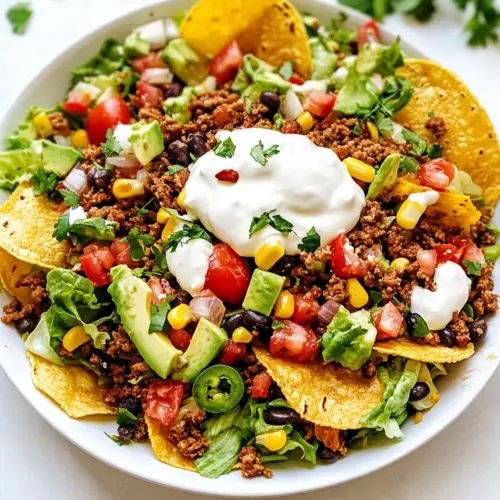
Taco Salad
Taco Salad is a crunchy, flavorful bowl combining warm, spiced ground beef with crisp iceberg lettuce, creamy avocado, and bright lime. This easy weeknight dinner delivers satisfying textures and bold seasoning, perfect for casual meals or feeding a group. Quick to assemble and simple to scale, it is a reliable crowd pleaser worth making again and again.
Equipment
- Large Skillet
- Small Saucepan
- Spoon
Ingredients
- 1 pound 85% lean ground beef Brown and crumble to provide the hearty, savory base of the salad; cooks until no pink remains and develops browned, caramelized bits for extra flavor. Season while cooking so meat absorbs spices, then drain excess fat to keep the salad from becoming greasy.
- 1/2 white onion, diced Dice finely to add a mild, crisp onion flavor and crunchy texture contrast; cook briefly with beef if desired to soften and meld flavors. Sprinkle raw into the salad for brightness or sautéed for sweeter, mellow notes.
- 2 cloves garlic, pressed or minced Press or mince and sauté briefly to release pungent, aromatic oils that deepen savory flavors; avoids large garlic pieces while infusing the beef and dressing. Add during cooking so garlic becomes fragrant but not bitter from overcooking.
- 2 teaspoons ground cumin Measure and toast lightly in the pan or add during cooking to contribute warm, earthy, slightly citrusy notes that harmonize with chili flavors. Use to season the beef and dressing for a classic taco profile.
- 2 teaspoons chili powder Sprinkle into the cooking beef or dressing to lend smoky, mildly spicy depth and authentic Southwestern character. Adjust quantity to control heat and balance with other spices.
- 1 teaspoon garlic salt Use to season the beef and salad layers, offering garlicky, salty enhancement with built-in seasoning convenience. Add cautiously to avoid over-salting when combined with other salts.
- 1 teaspoon kosher salt Add to control overall seasoning and bring out other flavors; dissolves evenly to season beef and salad components. Taste as you go to prevent oversalting, especially if using salted toppings.
- 1 teaspoon freshly ground black pepper Grind fresh and use to add sharp, pungent heat and complexity; enhances the savory profile without overwhelming. Finish with a pinch for freshness or include during cooking.
- 2 cups tomato juice Pour in to create a slightly saucy, tomato-forward component that helps bind ingredients and add moisture and acidity. Simmer with spices and beef to concentrate flavor or use as part of a dressing.
- 1/4 cup finely ground yellow cornmeal Stir in to thicken mixtures and provide subtle corn flavor and body; helps absorb excess moisture from tomato juice or beans. Toast briefly if desired to remove raw floury taste before combining.
- 15 ounce can pinto or black beans Drain and rinse before adding to provide creamy texture, protein, and fiber; choice of pinto or black beans affects color and mildness. Add to salad whole or mashed slightly to help bind ingredients together.
- 8 ounces tortilla chips I prefer white corn chips Crush or break into pieces to provide crunchy, salty scoopable texture and authentic taco crunch; choice of white corn chips contributes neutral corn flavor. Add just before serving to maintain crispness and avoid sogginess.
- 8 cups chopped iceberg lettuce Chop into bite-sized pieces to create a crisp, cooling bed for toppings and deliver high-volume bulk with very low calories. Use iceberg for its crunchy, neutral profile that highlights other flavors.
- 1 cup shredded cheddar cheese Shred and sprinkle to add rich, salty, and slightly tangy dairy notes that melt slightly against warm beef. Use as a finishing touch to provide creamy contrast and visual appeal.
- 1/4 cup salsa Spoon in to add tangy tomato-and-chile flavor and moisture; balances richness from beef and cheese with acidity. Choose salsa with preferred heat level to control spiciness in the salad.
- 1/2 cup chopped tomatoes Chop and scatter to provide fresh, juicy bursts and natural sweetness that lighten heavier components. Use ripe tomatoes for best flavor and drain excess juices to prevent sogginess.
- 1 avocado, chopped Cube or slice to introduce creamy, buttery texture and subtle, nutty flavor; adds healthy fats and richness. Toss gently to prevent browning and incorporate just before serving for best texture.
- 4 tablespoons sour cream Spoon dollops to bring cool, tangy richness that counterbalances spicy and acidic elements; helps create creamy bites. Use to top individual portions so each serving can be customized.
- 1/4 cup sliced jalapeños Slice to provide tangy heat and vibrant color; jalapeños add a bright, peppery kick that livens the salad. Adjust amount or remove seeds for milder heat, and add sparingly if serving heat-sensitive guests.
- 1/4 cup minced white onion Mince finely to add concentrated sharpness and aromatic bite distinct from the diced onion; used as garnish or mixed into dressings for layering flavor. Provides a slightly different textural and flavor note than the larger diced onion.
- 2 tablespoons chopped cilantro Chop to add fresh, citrusy, slightly peppery herbal notes that brighten the dish; sprinkle as a finishing herb for aroma. Use stems sparingly and add at the end to preserve vibrant flavor.
- 1 lime, sliced Slice into wedges to provide zesty acidity and a bright citrus finish; squeeze over just before serving to elevate all flavors. Use as both garnish and interactive seasoning for diners to adjust brightness.
Instructions
- Add the ground beef to a large skillet over medium-high heat. Cook until browned, about 10 minutes, breaking into small pieces as it browns. Add the onion and garlic. Cook until the beef is well browned and the onion is translucent. Add the cumin, chili powder, garlic salt, kosher salt, and black pepper and cook for another 1-2 minutes, stirring often. Stir in the tomato juice and cornmeal. Simmer for 10-15 minutes or until the juice has cooked down and the cornmeal softens, stirring occasionally. Add more tomato juice or water if the mixture clumps.: When you first put the ground beef into a hot skillet you will hear a pronounced sizzle, and that sound tells you the Maillard reaction is starting, which creates deep, savory notes. As the beef cooks, use a sturdy spoon to break it into small pieces so it browns evenly; you should see pockets of golden brown where the meat touches the pan. This browning develops flavor, so do not overcrowd the pan which causes steaming instead. A common mistake is stirring too frequently before the meat has a chance to form a crust, which reduces that toasted aroma and results in blander beef.
- Add the beans to a small saucepan and heat over medium until warm.: The pan will go from raw pink to browned spots and a deeper beefy scent will fill the kitchen. Listen for the sizzle to slow and watch for a consistent brown color across pieces, not gray. When the meat is well browned the fond on the pan will be flavorful, a key base for later deglazing. If you rush this step the meat will be underdeveloped, and the final dish will lack the savory backbone it needs.
- To assemble individual taco salads, place a handful of tortilla chips in the bottom of each bowl. Divide the lettuce between each of the bowls then top with the taco meat. Add a few spoonfuls of the warm beans. Top with cheddar cheese, salsa, chopped tomatoes, avocado, and dollop with sour cream. Add a few jalapeños and sprinkle the minced onion and chopped cilantro. Give each salad a squeeze or two of fresh lime and serve.: As you add diced onion and pressed garlic , they will hiss briefly and then soften, releasing sweet and aromatic notes. Stir them into the meat so they mingle with the browned bits, and stop when the onion becomes translucent and the garlic is fragrant but not browned. Overcooking garlic until it is dark will make it bitter, so keep the heat moderate and watch closely.
- Cook until the beef is well browned and the onion is translucent: At this point the pan should smell rich with toasted beef and sweet onion. The visual cue is softened, slightly glossy onion and uniformly browned meat. This level of caramelization adds a round, slightly sweet complexity to the savory base. If the mixture looks wet instead of browned, increase the heat briefly and let moisture evaporate to restore the proper texture.
- Add the cumin, chili powder, garlic salt, kosher salt, and black pepper and cook for another 1 to 2 minutes, stirring often: Toasting these spices with the meat wakes up their oils and transforms the aroma from flat to lively; you will smell warm, earthy, and slightly smoky notes. Stir continuously so spices do not burn, which would introduce bitterness. This technique keeps the flavors integrated and ensures the spice blends taste fresh. A mistake here is dumping the spices in and walking away, which risks scorching and uneven seasoning.
- Stir in the tomato juice and cornmeal: When the tomato juice hits the hot pan it will loosen the fond and create steam, releasing bright tomato aromas. Adding the finely ground cornmeal thickens the sauce as it simmers, lending a faint corn sweetness and more body to the meat mixture. Stir thoroughly so the cornmeal hydrates and does not clump; you should see the sauce become glossy and slightly thickened as the cornmeal softens. If the cornmeal remains gritty, continue simmering and stir often until it becomes silky.
- Simmer for 10 to 15 minutes or until the juice has cooked down and the cornmeal softens, stirring occasionally: As the mixture simmers, the sauce will reduce and concentrate, and an appetizing steam will rise carrying spiced tomato notes. The texture should change from watery to a cohesive, spoonable meat sauce. Use this visual thickening and the smooth mouthfeel of the cornmeal as your indicators that it is ready. If it looks dry or starts to stick, add a splash of water or more tomato juice to adjust consistency; a common error is letting it reduce completely which results in a pasty texture.
- Add more tomato juice or water if the mixture clumps: If you notice the meat forming clumps or the pan becoming tight with thick residue, adding liquid restores a saucy, spoonable consistency and prevents burning. The extra liquid helps the cornmeal to hydrate evenly, ensuring the final texture is creamy rather than lumpy. Be conservative with additions, you want a rich sauce, not a soup; too much will dilute the seasoning.
- Add the beans to a small saucepan and heat over medium until warm: Warming canned beans gently prevents them from breaking apart and keeps them creamy. You will see steam and a faint bean aroma as they reach serving temperature. Stir occasionally so they heat uniformly, and if they look dry add a teaspoon of water. Overheating will cause the skins to split and become mealy, which affects texture in the finished salad.
- To assemble individual taco salads, place a handful of tortilla chips in the bottom of each bowl: The crunch of the tortilla chips forms the foundation, and you should hear a satisfying snap as you place them. Use enough chips to create structure but not so many that they overwhelm the other components. If you layer chips too early with hot ingredients they will soften, so build bowls right before serving for maximum contrast.
- Divide the lettuce between each of the bowls then top with the taco meat: Chilled, crisp iceberg lettuce provides a cool counterpoint to the warm meat. When you add the meat, distribute it evenly so every bowl has a balanced warm to cool ratio. The sight of steam meeting crisp greens is part of the appeal and signals the contrasting temperatures that make the salad satisfying. Avoid piling meat in one spot which leads to uneven bites.
- Add a few spoonfuls of the warm beans: Spoon the gently warmed beans beside the meat so they nestle into the chips and lettuce, offering creamy pockets in each bite. The warm beans harmonize textures and keep the salad hearty. Don’t overload, as too many beans can mask the seasoned meat.
- Top with cheddar cheese, salsa, chopped tomatoes, avocado, and dollop with sour cream: Sprinkle shredded cheddar cheese so it slightly melts onto the warm meat, then add bright salsa and fresh tomatoes for acidity. Add chopped avocado for creaminess and finish with a dollop of sour cream to cool the spice. The visual mix of colors should look vibrant and appetizing. If you add these too early, the warm elements will wilt the lettuce and soften textures prematurely.
- Add a few jalapeños and sprinkle the minced onion and chopped cilantro: The sliced jalapeños bring heat, while raw minced onion and chopped cilantro add brightness and herbal lift. Scatter them evenly so heat and freshness are present in each forkful. Taste before adding more jalapeño, because you can always increase heat but not take it away.
- Give each salad a squeeze or two of fresh lime and serve: A final squeeze of lime wakes up the whole bowl with acidity, and the citrus aroma is the finishing touch that ties the flavors. Serve immediately so chips remain crisp and the contrast of hot and cold is preserved. Waiting too long to serve will allow the chips to soften and the textures to blend into a less interesting mouthfeel.
Notes
- Make ahead: Cook and cool the seasoned ground beef and store it in the refrigerator for up to 4 to 5 days, which makes assembly on busy nights effortless.
- Keep chips separate: Store tortilla chips in an airtight container until just before serving to prevent them from going stale or soggy from any residual moisture.
- Avocado timing: Chop the avocado just before serving and toss with a tiny squeeze of lime to slow browning if you need a short hold time.
- Control heat: Remove seeds from the jalapeños for milder heat, or add more slices for people who like extra kick.
- Adjust thickness: If the meat sauce reduces too far, stir in small amounts of tomato juice until it reaches a spoonable consistency to avoid pastiness from the cornmeal.