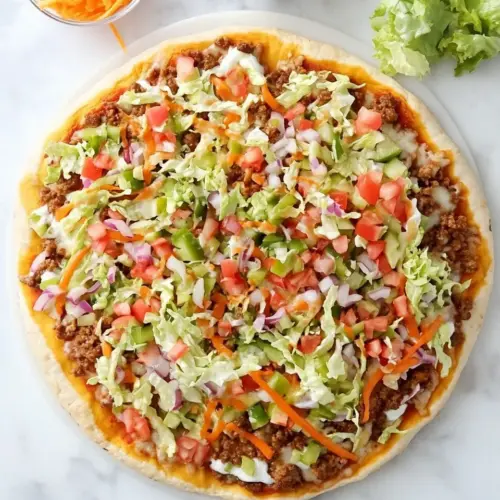
Taco Pizza
Taco Pizza melts savory seasoned ground beef and cheddar cheese over a crisp pre baked pizza crust with a creamy refried beans and salsa base, creating a crispy, creamy, easy weeknight dinner. It combines taco flavors with pizza comfort for a crowd pleasing meal that reheats well and is perfect for parties or casual family dinners.
Equipment
- Large saucepan
- Pizza pan or baking sheet
- Medium Bowl
- Oven
Ingredients
- 2 (12-inch) pre-baked pizza crusts (see note 1) Warm and ready-to-use pre-baked pizza crusts provide the sturdy base for assembling the taco pizza, saving time on baking raw dough; two 12-inch crusts yield family-sized pies. Use crusts as-is or briefly heat to ensure a crisp bottom before layering toppings for best texture.
- 16 ounces refried beans (about 2 cups) Smooth and creamy refried beans add a thick, savory layer that mimics refried-bean-style sauce, helping other toppings adhere and contributing a rich, earthy flavor. Spread evenly over each crust to create a hearty foundation and boost protein and fiber content in the finished pizza.
- 3/4 cups salsa (see note 2) Bright and zesty salsa lends moisture, acidity, and a touch of spice when combined with refried beans, enhancing overall taco flavor and balancing richness. Adjust quantity or heat level based on preference to keep the pizza lively without making it soggy.
- 1 pound ground beef Lean ground beef brings traditional taco meat flavor and savory texture when cooked and seasoned, forming the primary protein topping for the pizza. Brown thoroughly and drain excess fat before seasoning to prevent greasiness while maintaining juicy, well-textured crumbles.
- 1 packet taco seasoning (see note 3) Savory taco seasoning packet provides a balanced blend of spices—cumin, chili, garlic, and oregano—to infuse the cooked beef with classic taco flavors quickly and consistently. Stir seasoning into the meat with water to create a cohesive, flavorful topping that ties the pizza components together.
- 1 cup water Clear water is used to dissolve the taco seasoning and create a saucy coating for the cooked beef, ensuring the spices distribute evenly and the meat remains moist. Add gradually and simmer until the liquid reduces to a thick, clingy consistency that won't overly wet the pizza.
- 2 cups shredded cheddar cheese Mild, tangy shredded cheddar cheese offers meltiness and rich flavor, creating the cheesy layer that binds toppings and provides familiar pizza satisfaction. Sprinkle evenly over the sauced crust to achieve a golden, bubbly finish that complements the taco-seasoned beef.
- 2 cups tortilla chips crushed Crunchy crushed tortilla chips supply textural contrast and a corn-forward crispness, adding a playful crunch when scattered over the baked pizza or used as a finishing garnish. Add chips after baking or toward the end to preserve their crunch and enhance each bite.
- 1 cup shredded lettuce Crisp shredded lettuce introduces freshness, coolness, and a light crunch that offsets warm, rich toppings and provides a crisp mouthfeel typical of taco salads. Toss or layer lightly just before serving to prevent wilting from residual heat.
- 2 medium tomatoes chopped Juicy chopped tomatoes contribute acidity, moisture, and bright color, complementing heavier elements and adding a fresh, slightly sweet burst in each bite. Use evenly diced pieces to distribute tomato flavor without making the pizza soggy.
- hot sauce for serving Fiery hot sauce for serving offers an adjustable heat element and concentrated chili flavor that diners can add to taste, amplifying the taco profile. Drizzle sparingly or pass on the side to allow customization of spiciness per slice.
- sour cream for serving Cool sour cream for serving supplies a smooth, tangy finish that tempers heat and richness while adding a creamy contrast to crunchy and spicy components. Dollop or thin into a drizzle to complement toppings without overwhelming other flavors.
Instructions
- Preheat oven to 450 degrees. In a large saucepan over medium-high heat, brown ground beef. Drain well. Stir in taco seasoning and water. Bring to a boil. Reduce heat and simmer uncovered until thickened, about 10 minutes.: As you heat the oven to 450 degrees , notice the faint dry scent of warming air that promises a crisp crust. A properly hot oven is crucial because it creates rapid steam release from the crust leaving it firm instead of gummy. If your oven is slow to reach temperature, wait until the built in indicator signals readiness; baking too early gives a pale, soft base. Avoid opening the door frequently once the oven is hot because that drops temperature and prolongs baking.
- Place crusts on ungreased pizza pans or baking sheets. In a medium bowl, combine refried beans and salsa. Spread evenly over pizza crusts. Top with taco meat mixture.: When the ground beef hits the hot pan you should hear an immediate sizzle, and after a few minutes it will release fat and start to brown and caramelize, which develops savory depth. Use a wooden spoon to break the meat into small pieces so it cooks evenly. A common error is crowding the pan, which causes steaming instead of browning; if that happens, cook in batches for the best color and flavor.
- Top with shredded cheese. Bake until the cheese is melted, about 8 to 10 minutes. Remove from oven. Sprinkle with lettuce and tomatoes. Drizzle with hot sauce or pass separately. Serve sour cream on the side.: After the meat has browned, draining off excess fat reduces greasiness and helps the seasoning cling to the meat, resulting in a cleaner mouthfeel. Pour carefully and press the meat with a spoon to remove trapped liquid. If you skip draining, the pizza can become oily and the cheese will slide instead of baking into cohesive pockets.
- Stir in taco seasoning and water: Stir the packet of taco seasoning into the hot meat, then add water so the spices bloom and distribute evenly, coating each morsel. You will see the mixture loosen into a glossy sauce, which helps it integrate with the other layers. Add too little water and the seasoning will cling and taste powdery, too much and the filling will be diluted.
- Bring to a boil: Bring the seasoned meat to a gentle boil so the spices fully infuse and the liquid starts to concentrate, releasing a warm, fragrant steam heavy with cumin and chili notes. This brief vigorous heat helps marry the flavors quickly. If you boil too hard for too long you may overreduce the mixture, making it dry and crumbly instead of saucy.
- Reduce heat and simmer uncovered until thickened, about 10 minutes: Lowering the heat and simmering lets the moisture evaporate slowly, concentrating flavors until the mixture clings to a spoon. You should smell a deeper, roasted aroma and see the sauce become glossy and syrupy. Stir occasionally to prevent sticking, and if the pan runs dry before ten minutes, add tiny splashes of water to maintain the right consistency. A frequent mistake is skipping this reduction, which leaves the meat too wet and makes the pizza soggy.
- Place crusts on ungreased pizza pans or baking sheets: Setting the pre baked pizza crusts on pans lets them heat evenly in the oven. You should feel how light and rigid the crusts are compared to raw dough. Using ungreased pans prevents a greasy underside, and a cold pan can slow browning, so use room temperature pans for consistent results. Avoid stacking or overlapping crusts, which leads to uneven baking.
- In a medium bowl, combine refried beans and salsa: When you mix the refried beans with the salsa , you will sense a tangy scent and notice the beans become easier to spread, taking on bright flecks of tomato and onion. This step ensures the base has balanced moisture and acidity to complement the meat. If your beans are too thick to spread smoothly, stir in a small splash of water, but do it sparingly to avoid watery base.
- Spread evenly over pizza crusts: Use the back of a spoon or an offset spatula to spread the bean and salsa mixture into a thin, uniform layer across each pizza crust . A uniform layer prevents pockets of soggy or dry spots and gives a stable surface for the taco meat. If the layer is too thick it will interfere with crisping the crust; too thin and the pizza will taste dry.
- Top with taco meat mixture: Spoon the seasoned ground beef over the bean layer, distributing it evenly so each slice gets a balanced amount of meat. You want a hearty but not overloaded topping so the crust can support it and the cheese can bind everything. Piling meat too high can cause sliding and uneven baking.
- Top with shredded cheese: Scatter the shredded cheddar cheese in an even blanket over the meat, watching as the pieces begin to glitter and compress. The cheese melts into pockets that keep components together and create those irresistible strings when you pull a slice. Overloading cheese can insulate the meat and keep it from browning properly.
- Bake until the cheese is melted, about 8 to 10 minutes: As the pizzas bake, listen for the gentle bubbling and watch the cheese turn from pale yellow to golden brown at the edges, emitting a warm, toasty aroma. The crust should feel firm and slightly browned at the edges when you touch it with a spatula. If your oven runs hot, check at 6 minutes to prevent burning, and avoid leaving it in too long which will dry the toppings.
- Remove from oven: Pull the pans out carefully, using oven mitts, and set them on a heat safe surface where the hot air will escape without steaming the toppings. The cheese will continue to settle and the crust will firm as it cools slightly. Letting the pizza sit untouched for a minute helps the toppings set so slices hold together better when cut.
- Sprinkle with lettuce and tomatoes: Scatter shredded lettuce and chopped tomatoes across the hot pizza so they add immediate contrast in texture and temperature. The residual heat warms them slightly without wilting, so they stay crisp and refreshing. Adding them too early will cause limp, lifeless greens, so always finish pizzas with fresh produce.
- Drizzle with hot sauce or pass separately: A final drizzle of hot sauce elevates flavors by introducing sharp acidity and heat, brightening the entire pie. Passing sauce on the side lets guests control their spice level. Pouring too much on before serving can mask the other flavors, so offer it as a finishing touch rather than a core ingredient.
- Serve sour cream on the side: Place a bowl of cold sour cream alongside the pizza so diners can add a cooling counterpoint to spicy bites. The creamy tang calms heat and adds silkiness to each mouthful. If incorporated too early, it will melt and lose its refreshing contrast, so keep it as a condiment.
Notes
- Use a different crust Replace the pre baked pizza crust with a thin flatbread for a lighter bite, or a deep dish crust if you want a heartier, thicker base.
- Make it vegetarian Omit the ground beef and boost the beans with sautéed mushrooms or seasoned lentils to keep savory depth while staying meat free.
- Swap the cheese Try a mix of sharp cheddar and Monterey Jack for extra melt and a slightly creamier finish while maintaining that classic flavor.
- Turn it into a party platter Bake one pizza plain and one extra topped, then slice small squares so guests can sample a variety without committing to a whole slice.
- Prep ahead Assemble through the cheese step, refrigerate, and bake just before serving so you maintain crispness and save active time.
- Crunch upgrade For extra texture, pulse the tortilla chips with a handful of toasted pumpkin seeds before sprinkling to add a nutty note.
- Salsa switch Use mango salsa for a sweet spicy twist that plays well with the savory ground beef and cool sour cream.