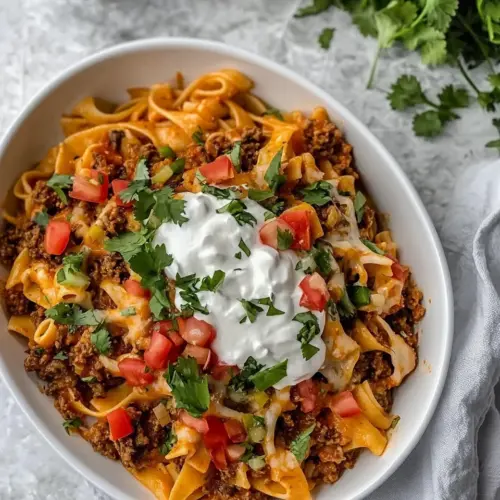
Taco Pasta
Taco Pasta is a creamy, spiced one pot meal that combines tender whole wheat pasta with seasoned ground chicken, salsa, and black beans for an easy weeknight dinner. It delivers bold taco flavors with melty sharp cheddar and fresh toppings, making it both comforting and bright. Make it when you want a quick, family friendly meal that satisfies everyone and cleans up fast.
Equipment
- Large deep skillet with lid
- Spoon
- Can opener
Ingredients
- 1 tablespoon extra-virgin olive oil Adds richness and helps brown the meat while imparting a fruity, peppery flavor; heats quickly and prevents sticking when sautéing aromatics.
- 1 pound ground chicken or ground turkey Provides lean protein and a mild base to carry taco seasonings; browns and crumbles easily, absorbing flavors from spices and sauces.
- 1 yellow onion diced Offers a sweet, savory backbone and moisture when sautéed; softens and melds with peppers to build the dish's aromatic base.
- 1 green bell pepper diced Contributes a fresh, slightly bitter crunch and sweet notes when cooked; pairs with onion to create classic taco flavor layers.
- 1 red bell pepper diced Delivers a sweet, bright flavor and vibrant color; softens with cooking to add both taste and visual appeal to the pasta.
- 2 cloves garlic minced Imparts a sharp, aromatic bite and depth; releases flavor when minced and sautéed with onions and peppers.
- 1 tablespoon chili powder Provides smoky, warm heat that defines the taco flavor profile; blends with cumin and oregano to season the meat and sauce.
- 1 1/2 teaspoons ground cumin Adds earthy warmth and a slightly citrusy note; complements chili powder to deepen the overall spice profile of the dish.
- 1/2 teaspoon dried oregano Brings a subtle herbal, slightly bitter undertone; rounds out the Mexican-inspired seasoning blend for complexity.
- 1/2 teaspoon kosher salt Enhances and balances flavors while drawing out moisture from vegetables and meat; helps season the entire dish evenly.
- 1/4 teaspoon ground black pepper Adds mild heat and bright bite to balance richness; seasons the mixture and lifts other flavors when used sparingly.
- 1 3/4 cups water plus more as needed Supplies the liquid needed to cook the pasta and combine ingredients into a saucy texture; adjusts consistency as needed.
- 1 cup prepared salsa medium or mild Introduces tangy, tomato-based flavor and chunky texture; contributes seasoning and moisture to create a saucy base.
- 1 (8-ounce) can tomato sauce Adds concentrated tomato flavor and body to the sauce; deepens color and gives a smooth, saucy consistency.
- 1 1/2 cups uncooked whole wheat pasta such as rotini, fusilli, penne, or shells Provides the starch foundation to the dish and soaks up sauce; whole wheat variety adds nutty flavor and extra fiber.
- 1 (15-ounce) can reduced-sodium black beans rinsed and drained Adds protein, fiber, and a creamy texture when stirred in; black beans complement the taco flavors and bulk up the meal.
- 1 cup shredded sharp cheddar cheese divided (use pepper jack for a kick!) Melts into the hot pasta to create a creamy, cheesy finish; sharp cheddar offers tang and richness to bind ingredients.
- Sliced avocado Contributes creamy texture and cool contrast when served on top; avocado adds healthy fats and a buttery mouthfeel.
- Nonfat plain Greek yogurt Provides a tangy, creamy alternative to sour cream and brightens flavors; Greek yogurt adds protein and a smooth finish.
- Chopped fresh cilantro Adds a burst of fresh, citrusy herbal flavor when sprinkled on top; cilantro brightens and balances the richness.
- Jalapeño Offers crisp heat and bright vegetal flavor when sliced and added; jalapeño can be adjusted for desired spice level.
- Any taco topping you love Allows customization and extra texture or flavor at serving; favorite toppings personalize the taco pasta experience.
Instructions
- In large, deep skillet with a lid (or a dutch oven), heat olive oil over medium-high heat. Once the oil is hot but not yet smoking, add the ground chicken, onion, and red and green bell peppers. Brown the meat, breaking it apart with a spoon, until it is fully cooked through and the onions are translucent, about 8 minutes.: The moment the hot oil meets the pan you will notice a faint shimmer and a soft heat radiating from the surface, a sign it is ready to brown the proteins and aromatics. As you add the extra virgin olive oil , tilt the pan and watch how it spreads, giving you a glossy canvas for the next ingredients. This stage is essential because properly heated oil promotes even browning of the ground chicken , creating those caramelized bits that deepen the sauce. If the oil smokes, reduce heat immediately to avoid a bitter flavor, and never add cold meat to scorching oil which can cause uneven cooking. Keep a wooden spoon nearby for breaking the meat apart so it cooks in separate, golden pieces rather than one dense clump.
- Add the garlic, chili powder, cumin, oregano, salt, and pepper and cook just until the garlic is fragrant, about 30 seconds. Add the water, salsa, tomato sauce, pasta, and beans.: When the ground chicken , diced onion , and bell peppers hit the pan you will hear an immediate soft sizzle as juices meet the hot surface, and that sound means flavor development is beginning. Stir them to spread heat, and you will see the meat gradually lose its pink color while the onions become translucent and glossy. Letting the vegetables sweat in contact with the meat helps release their sweet notes into the pan, contributing to a layered base for the sauce. If you crowd the pan, ingredients steam rather than brown, so give them room and work in batches if needed. Keep stirring occasionally to avoid sticking and to ensure uniform color.
- Reduce the heat to medium low, then cover the pan. Let simmer gently, stirring occasionally, just until the pasta is al dente and most of the liquid is absorbed (more liquid will absorb as it cools), about 12 to 15 minutes. As you stir the pasta while it cooks, check to make sure it's not becoming dry. If it is, stir in water as needed to keep it moist and simmering.: As the meat browns you will notice little browned bits forming on the skillet surface, and those bits carry concentrated savory flavor that will enrich the sauce when deglazed. Break the meat into small pieces so each bite has a pleasant ratio of meat to pasta. The onions should be soft and almost melting into the meat, which signals they have released their sugars and mellowed. A common error is rushing this step; underbrowned meat lacks the complex savor that makes the finished dish sing. If the mixture looks too dry while browning, splash a tablespoon of water to loosen fond and prevent burning.
- Remove the pan from the heat and stir in half of the cheese, then sprinkle the remaining cheese on top. Serve hot with any of your favorite toppings.: Once you stir in the minced garlic and spices you will immediately detect a lift in aroma, a warm, toasty perfume that tells you the spice oils are blooming. This brief heat allows the flavors to open without risking burnt garlic, which turns bitter quickly. Stir constantly and keep the heat moderated because microscopic burned bits will taint the whole pan. If you sense any bitterness, wipe the pan and start again on fresh oil for the best result.
- Add the water, salsa, tomato sauce, pasta, and beans: Pouring in the measured water , salsa , and tomato sauce will transform the pan as steam rises and colors meld, creating the liquid environment the pasta needs to cook. Stir in the black beans and uncooked pasta, making sure the pasta is submerged so it can hydrate evenly. The mixture should look saucy not soupy, and as it comes to a gentle simmer you will see bubbles forming and a faint hissing sound. If the pasta is not fully covered, press it under the sauce and add a splash more water if necessary. Forgetting to submerge pasta can produce unevenly cooked pieces.
- Reduce the heat to medium low, then cover the pan: Lowering to medium low calms the bubbling so the pasta can slowly absorb flavorful liquid rather than frantically cook at the edges. The cover traps steam and helps the pasta become tender while leaving most of the sauce intact on the surface. As the pot simmers you will hear a soft, steady whisper of steam and see the sauce gently bubble, a good indicator everything is progressing properly. Avoid lifting the lid too frequently, which lets heat escape and lengthens cooking time, but do stir occasionally to ensure nothing clings and that moisture is even.
- Let simmer gently, stirring occasionally, just until the pasta is al dente and most of the liquid is absorbed, about 12 to 15 minutes: During this quiet simmer you will notice the sauce thickening and the pasta swelling, the shapes plumping and taking on a glossy coating of spice and tomato. Stir every few minutes to release starch that naturally helps the sauce cling, and press a piece of pasta against the side to check doneness for that tender yet firm bite of al dente. If the mixture seems to tighten up and cling too aggressively, add a splash of water to maintain a silky texture. Overcooking will make the pasta collapse and the dish heavy, so aim for a slight chew at the center of each piece.
- As you stir the pasta while it cooks, check to make sure it's not becoming dry: Paying attention to moisture will keep the final dish creamy and prevent a pasty result, and you'll learn to feel when to add small amounts of hot water so the sauce continues to simmer smoothly. The sound changes from aggressive bubbling to a gentle simmer when the balance is right, and visually the sauce should look saucy not thick and glued to the bottom. A typical mistake is waiting too long to add liquid, which can cause scorching and uneven cooking, so top up earlier rather than later.
- If it is, stir in water as needed to keep it moist and simmering: Adding water in measured amounts keeps you in control, allowing the pasta to reach perfect tenderness without thinning the flavor. Stir after each addition so you can see how quickly the liquid absorbs, then adjust again if necessary. Hot water is preferable because it maintains steady temperature and avoids shocking the pasta. Using cold water can stall the cooking and lengthen the process unnecessarily.
- Remove the pan from the heat and stir in half of the cheese, then sprinkle the remaining cheese on top: Once off the heat stirring in half of the cheddar cheese will create a silky, cohesive sauce that clings to every piece, and the residual warmth melts it into the mix. Sprinkling the remaining cheese on top produces a melty, comforting finish that looks inviting. Let the pan sit for a minute with the lid off so the cheese on top softens without sitting in steam, which keeps it from becoming watery. If you stir the cheese in while the pan is too hot it can separate slightly, so remove from heat first.
- Serve hot with any of your favorite toppings: Present the dish steaming and bright, and finish with slices of avocado , a dollop of Nonfat plain Greek yogurt , a scatter of chopped cilantro , and a few jalapeño rings as desired to add fresh contrast. The contrast of creamy, cool toppings with warm, spiced pasta elevates each bite. Serve immediately because the pasta continues to absorb sauce as it cools; letting it sit too long will dry it out. If making ahead, keep toppings separate to preserve texture and color.
Notes
- Choose the right pasta shape: Pick rotini, fusilli, penne, or shells so sauce gets trapped in the curves, ensuring each bite is saucy and satisfying.
- Control spice intensity: Use mild salsa to keep heat approachable, or swap to medium for more warmth; add a sliced jalapeño if you want more bite.
- Keep toppings separate: Serve sliced avocado, yogurt, and cilantro on the side so guests can customize texture and freshness to their liking.
- Rinse canned beans: Rinse and drain the black beans to reduce sodium and remove starchy canning liquid that can cloud the sauce.
- Browning matters: Take the time to brown the meat and vegetables properly to build deep savory flavor, which is the backbone of the sauce.
- Adjust moisture gradually: Add hot water in small amounts while simmering to maintain a creamy texture without diluting the flavor.