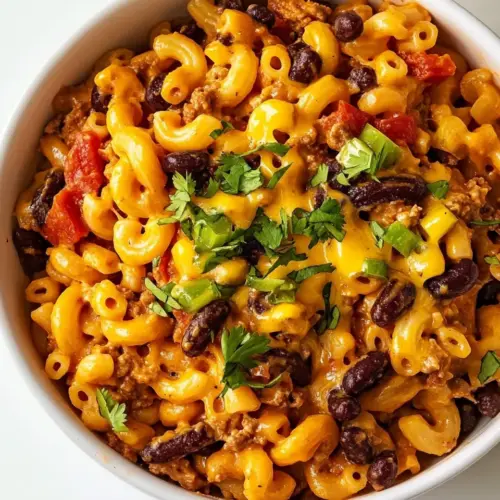
Taco Mac and Cheese
Taco Mac and Cheese is a creamy, savory skillet meal that combines seasoned ground beef with tender elbow macaroni, melty cheese, and hearty black beans and corn. This easy weeknight dinner is full of bold taco spices and a silky finish from cream cheese, making it irresistibly comforting and perfect for family dinners or casual gatherings.
Equipment
- Cast-Iron Skillet
Ingredients
- 1 pound 85% lean ground beef Brown and crumble to develop savory flavor and provide the hearty protein base for the dish; cook until no longer pink and drain excess fat if desired. Add seasoning later so the beef absorbs taco spices and complements the macaroni and cheese texture.
- 1 onion diced Sauté until translucent to add mild sweetness and aromatic depth; dice small so it integrates with pasta and meat. Use medium heat to soften without browning too quickly, which balances the dish's overall flavor profile.
- 15 ounces canned corn drained (1 can) Stir in after sautéing to add natural sweetness, texture, and a bit of moisture; drain thoroughly to prevent the pasta from becoming too watery. Corn kernels also add a pop of color and contrast to the savory taco flavors.
- 15 ounces canned black beans drained and rinsed (1 can) Rinse and drain well before adding to provide a hearty, fiber-rich component and a creamy texture that complements the beef. Black beans absorb spices and increase the meal's protein and nutritional value while adding visual contrast.
- 10 ounces diced tomatoes and chilis (1 can) Add for tangy, slightly spicy tomato flavor and to contribute moisture and acidity that brightens the rich cheese and beef. Include with its juices to meld flavors into the sauce and give a subtle kick from the chilis.
- 3 tablespoons taco seasoning (1 1/2 packets) Sprinkle in to infuse the mix with classic taco flavors; use the measured amount to avoid overpowering other seasonings. Combine evenly so the spice blend flavors the meat, beans, and pasta for an authentic taco-inspired profile.
- 1 teaspoon ground black pepper Season to taste to add mild heat and aromatic warmth while balancing the spice blend; adjust if more heat is desired. Grind fresh or use preground pepper for consistent seasoning throughout the dish.
- 1 teaspoon chili powder Dust into the mixture to enhance smoky heat and deepen the overall chili profile; use sparingly to avoid overwhelming the dish. Combine with other spices to create a well-rounded, layered flavor rather than a single-note spiciness.
- 3 cups water Pour in to create the cooking liquid for the pasta and to help dissolve seasonings and cheeses into a cohesive sauce. Use the exact amount so the macaroni cooks properly and the final consistency allows the cheese to form a creamy coating.
- 16 ounces dry elbow macaroni (1 box) Add dry to the simmering liquid to provide the comforting carb base; cook until al dente so it holds up when combined with saucy ingredients. Stir occasionally to prevent sticking and ensure even cooking and sauce absorption.
- 2 ounces cream cheese (1/4 brick) Soften and stir into the hot mixture to create a silky, tangy component that helps bind cheeses and enrich the sauce. Cut into small pieces to melt quickly and evenly, producing a creamier mac and cheese texture with a slight tang.
- 1 cup shredded Mexican blend cheese Fold in shredded to deliver gooey meltiness and a layered, savory flavor typical of mac and cheese; sprinkle gradually while stirring for smooth melting. Choose freshly shredded if possible to ensure optimal melting and a luscious finish.
- Diced green onions optional, for topping Garnish just before serving to add a fresh, sharp bite and a pop of green color to the finished dish; slice thinly for even distribution. Offer optional to accommodate preferences for freshness and mild onion flavor as a topping.
Instructions
- In a large skillet (mine is 13") cook the ground beef over medium-high heat for about 5 minutes. Add the diced onion and cook for an additional 2 minutes. Drain any excess fat or grease.: The first aromas you will notice are deep, toasty meat notes and a light sizzle as the ground beef hits the pan, indicating the Maillard reaction that builds savory flavor. Use a sturdy Cast Iron Skillet if you have one, because it maintains even heat. As the meat browns break it up with a spoon so pieces are small and uniform, that helps even seasoning distribution. A common mistake is crowding the pan which causes steaming instead of browning, so give the skillet room and brown in batches if needed. When the meat is richly colored with little browned bits, you are ready for the next step.
- Stir in the corn, black beans, tomatoes and chilis, taco seasoning, black pepper, chili powder, water, and bring to a boil.: You will hear a softened sizzle and smell a sweet, savory lift as the onion turns translucent, which mellows its sharpness. Stir frequently so edges do not char, and lower the heat if they start to brown too fast because burnt onion will impart bitterness. The softened onion blends into the meat, creating a base that carries the taco spices. A common misstep is undercooking the onion, leaving a raw bite that competes with the sauce rather than harmonizing.
- Add the elbow macaroni to the skillet and mix well until fully combined.: Pockets of hot fat can make the final dish greasy and heavy, so carefully tilt the skillet and spoon out or pour off excess. You should still retain enough rendered fat to coat the pan lightly, which helps bind flavors. Be cautious while removing fat to avoid splatter burns. If you skip draining you may end up with an oily sauce that separates instead of emulsifying, so this small step matters.
- Add the cream cheese and stir until mixed well.: A symphony of smells will build as the spices bloom in the hot pan and the tomato juices mingle with the rendered beef juices. Stir so the spices dissolve and distribute evenly, and watch for a rolling boil which is the signal the pasta will cook properly. If the mixture seems too thick before boiling, add a splash more water to ensure the pasta hydrates. A frequent error is not stirring enough, which can cause clumps of seasoning or sticking on the pan bottom.
- Reduce the heat to a simmer and cook for 12-15 minutes, or until the pasta is fully cooked and tender.: You will see the elbow macaroni sink and then bob as it hydrates, soaking up the flavorful liquid. Mix to separate any pieces so they cook uniformly, and maintain a gentle boil so water circulates around the pasta. If the pasta layers at the bottom it can clump and cook unevenly; stirring occasionally keeps it free and ensures even texture.
- Garnish with cheese and diced green onion (optional) before serving.: The cream cheese will melt into the hot liquid and create a glossy, velvety sauce that coats the pasta and filling. Use a spoon to gently press and swirl the chunks so they dissolve smoothly. If you add cold cream cheese it can form lumps, so soften a bit at room temperature or cube it for faster melting. The goal is a uniform, silky texture; if you see streaks of unmelted cheese, keep stirring over low heat until smooth.
- Reduce the heat to a simmer and cook for 12 15 minutes, or until the pasta is fully cooked and tender: During this time the pasta absorbs flavor and the sauce thickens, producing a comforting, cohesive dish. You will hear a softer bubbling and the surface will look creamier as water reduces. Test a piece for doneness; it should be tender with a slight bite and the sauce should cling to it. Overcooking will make the pasta mushy and leach starch that can thicken excessively and turn gummy, so check early and often towards the end.
- Garnish with cheese and diced green onion (optional) before serving: As soon as you remove the skillet from heat, sprinkle the shredded Mexican blend cheese so it melts from residual warmth and creates a stretchy, luscious top. The crisp green of the green onions provides freshness both visually and on the palate. A typical mistake is letting the skillet cool too long before serving, which prevents the cheese from melting and the dish from feeling cohesive, so serve promptly for best texture and appeal.
Notes
- Swap short pastas Use penne, ziti, shells, or rotini in place of the elbow macaroni to change how the sauce clings to pasta shapes, each shape offers a slightly different bite and sauce distribution.
- Make it gluten free Replace the elbow macaroni with a certified gluten free pasta and follow package cook times, as some gluten free shapes hydrate differently and may require slightly less or more liquid.
- Choose your cheese blend Substitute the Mexican blend with cheddar, Colby, Monterey jack, or pepper jack for varying sharpness and melting behavior; freshly shredded cheese melts more smoothly than pre shredded varieties.
- Adjust spice level Reduce the chili powder or use mild taco seasoning to tone down heat, or add an extra pinch for a bolder kick; always tweak gradually and taste before serving.
- Add veggies Stir in quick cooking vegetables like broccoli florets midway through simmering so they become tender but retain some bite, which boosts nutrition and texture without diluting flavor.